



 Ha Giang
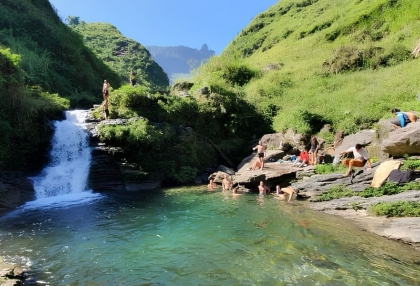
Ha Giang Waterfall: 5 Falls to Visit On and Off the Loop
Ha Giang waterfall guide to five stops on and off the Loop, with Du Gia swimming advice, western detours, seasonal conditions and practical travel tips.
Ha Giang food includes egg rice rolls, thang co stew, cornmeal, smoked buffalo and buckwheat cakes from Hmong, Dao and Tay cooking. These dishes appear in breakfast shops, market kitchens and homestays. A Ha Giang Loop tour connects breakfast in Dong Van with shared village dinners.
The Ha Giang Loop map connects food stops with overnight stays. Dong Van combines old quarter dining with a Sunday market, while Meo Vac has restaurants and market kitchens along the route. Village dinners usually center on shared dishes prepared by the homestay host.
| Dish | What it is | Where to look | Main ingredients | Typical meal |
|---|---|---|---|---|
| Banh cuon trung | Egg rice rolls | City, Dong Van | Rice batter, egg; pork broth | Breakfast or evening |
| Thang co | Meat and offal stew | Markets | Horse or other meat, offal, spices | Market breakfast or lunch |
| Chao au tau | Bitter root porridge | Porridge shops | Au tau root, rice, pork broth | Evening |
| Xoi ngu sac | Colored sticky rice | Markets | Sticky rice, plant-based colors | Breakfast |
| Men men | Steamed cornmeal | Markets, homestays | Ground corn | Lunch or dinner |
| Thit trau gac bep | Smoked buffalo | Specialty shops | Buffalo meat, seasonings | Snack |
| Thit lon den | Black pork | Restaurants, homestays | Pork from local black pig breeds | Lunch or dinner |
| Banh tam giac mach and banh chung gu | Two local cakes | Markets | Buckwheat; or sticky rice, beans, pork | Snack or light meal |
Food in Ha Giang draws on the cooking traditions of 19 ethnic communities, including Hmong, Dao and Tay people. Corn, buckwheat, sticky rice and local meat feature across the region, with seasonings such as mac khen pepper, doi seeds and cardamom.
Market stalls serve individual bowls and snacks, while a homestay dinner brings several dishes to a shared table. Cornmeal and meat stews reflect everyday highland cooking; colored sticky rice and wrapped cakes add other local traditions. Serving styles and portions differ between these settings.
The best food in Ha Giang depends on the meal and setting. Egg rice rolls are a breakfast shop staple, thang co is associated with market kitchens, and cornmeal accompanies shared meals. Smoked buffalo and buckwheat cakes offer smaller portions between the main meal stops.
Banh cuon trung is an egg rice roll served with hot bone broth. Other fillings include pork and wood ear mushrooms. The broth distinguishes Ha Giang's version from rice rolls served with fish sauce. Dong Van shops serve this meal at breakfast and in the evening.
Thang co is a Hmong stew of meat, bones and offal. Horse is traditional, but versions use beef, buffalo or pork too. Seasonings include cardamom, star anise and lime leaves. Kitchens serve individual market bowls or larger restaurant pots, with meat and spice mixes varying.
Chao au tau is a porridge of au tau root, rice and pork broth, often topped with minced meat and egg. Its bitter flavor differs from ordinary rice porridge. Commonly served in the evening, it requires specialist processing because the root contains toxic compounds.
Xoi ngu sac is sticky rice colored with plant ingredients. The colors represent five elements: yellow for earth, green for wood, red for fire, white for metal and black for water. Market portions can include meat toppings or side dishes alongside the rice.
Men men is steamed cornmeal, a staple of Hmong cooking. Corn is ground, sifted and steamed, traditionally in a wooden vessel (baotuyenquang.com.vn). Its grainy texture differs from boiled rice and is commonly paired with soup or meat. It forms part of a meal rather than a sweet corn snack.
Thit trau gac bep is buffalo meat seasoned and dried above a kitchen fire, then torn into strips. It has a firm texture and smoky flavor. Specialty shops and markets sell it as a snack or packaged food, with quantities measured by weight.
Thit lon den means black pork from local pig breeds. The Lung Pu breed is raised around the plateau, including Meo Vac. Pork may be grilled, roasted or cooked for a shared meal with rice, vegetables and soup. The cut and preparation determine its texture.
Banh tam giac mach is a buckwheat cake made from ground seeds and sold at highland markets. Banh chung gu is a wrapped sticky rice cake from Red Dao cooking, filled with mung beans and pork. The buckwheat cake is a snack; the filled rice cake is more substantial.
Where to eat in Ha Giang depends on the overnight stop. The city has restaurants for meals before departure, Dong Van combines rice roll shops with vegetarian dining, and Meo Vac has roadside restaurants. Yen Minh and Du Gia provide lunch and overnight meal stops.
Nha Hang Chay is listed at 101B Nguyen Thai Hoc for vegetarian dining in Ha Giang city. A meal here fits time before departure or after returning from the Loop, offering an alternative to the shared dinners served during village overnight stays.
Banh cuon Ba Ha at 31 Pho Co serves rice rolls with bone broth at breakfast and in the evening. ToTo-Chan Vegetarian Food & Drink is listed at 04 Pho Co. Both addresses are in the old quarter, where a meal fits time spent around the Ha Giang attractions in Dong Van.
Adventure Restaurant is listed at 202 Duong Hanh Phuc for Vietnamese meals. On Sundays, the market food area offers a different stop for thang co, cornmeal and local cakes. The town is a meal stop before or after crossing Ma Pi Leng Pass, depending on the direction of travel.
Yen Minh is a lunch stop on Beka's route from Ha Giang city to Dong Van. Du Gia is an overnight homestay stop on Beka's itinerary of 4 days and an option on the itinerary of 3 days, with dinner served at the homestay. Shared village meals usually include rice, vegetables, soup and meat prepared for that evening's guests.
Dong Van and Meo Vac hold their main weekly markets on Sunday mornings. Food stalls serve breakfast alongside shopping and trading, making the visit part of a meal stop. Lung Phin follows a different calendar, with its cycle of 6 days sometimes falling on a weekday.
| Market | Main schedule | Meal planning |
|---|---|---|
| Dong Van | Sunday morning | Stay nearby on Saturday night |
| Meo Vac | Sunday morning | Leave time for the food stalls before riding |
| Lung Phin | Every 6 days, on Tiger and Monkey days | Visit date follows the local calendar |
At Meo Vac Sunday market, stalls serve thang co, men men and local cakes (baotuyenquang.com.vn). It is a meeting place for surrounding villages, with people eating together between shopping and trading. Corn spirit accompanies some shared meals, although drinking is optional during a visit.
Vegetarian dining options include Nha Hang Chay in Ha Giang city and ToTo-Chan in Dong Van. At village homestays, rice, tofu with tomato sauce and cooked vegetables can form a meat-free meal. Advance dietary arrangements give the host time to prepare dishes separately from the group's meat dishes.
Vegetarian and vegan requirements differ, particularly around eggs, dairy, fish sauce, meat broth and lard. Plain-looking rice rolls may still arrive with pork broth, and banh chung gu normally contains pork. A written dietary note gives the guide and each overnight host the same ingredient requirements throughout the route.
Food safety depends on cooking, handling and drinking water. Meat, offal and eggs should be cooked through, with meals served steaming hot. Sealed drinking water and handwashing reduce avoidable risks between stops. Hand sanitizer is useful alongside the other essentials on the Ha Giang Loop packing list.
Au tau contains aconitine, a toxin that can affect the heart and nervous system. Incorrectly prepared porridge can cause poisoning, and processed root can still be toxic. A hot bowl or its taste does not establish safety. Do not prepare the root yourself or drink spirits containing it. If tongue or limb tingling, vomiting, breathing difficulty or an unusual heartbeat develops after eating it, seek medical care immediately.
Before you go, confirm restaurant opening times, prices and serving sizes, and give the host any dietary requirements or allergies in writing. This single note can cover meat choices, broth, sauces and separate preparation for shared dinners. Corn spirit is a strong alcoholic drink and is best left until riding has finished for the day.
Beka arranges trips with local partners. Starting prices for 2 days, 3 days and 4 days are $135, $175 and $205 per person. A Ha Giang easy rider tour includes planned meal stops. Across the three published itineraries, the first riding day includes lunch in Yen Minh and dinner in Dong Van's old quarter.
| Itinerary | Breakfasts | Lunches | Dinners |
|---|---|---|---|
| 2 days | 2 | 2 | 1 |
| 3 days | 3 | 3 | 2 |
| 4 days | 4 | 4 | 3 |
The published inclusions list these meal counts and exclude drinks. On a 3 day Ha Giang loop tour, later meals continue along the route and at the homestay. The itinerary of 4 days adds breakfast at a local market on Day 2 and a homestay dinner in the Dao village of Nam Dam on Day 3. Sunday markets depend on the departure date; specific dishes depend on the kitchen's menu.
Not usually. Ha Giang cooking uses aromatic seasonings such as cardamom and star anise, which are different from chili heat. Spice levels depend on the recipe and any dipping sauce. Mild preferences can be included in the same dietary note used for restaurant and homestay meals.
Traditionally, yes, but horse is not the only version served today. Restaurants and market kitchens also use beef, buffalo or pork, including offal. The name identifies a style of stew rather than one guaranteed meat. Its ingredients depend on the kitchen, with bowls and shared pots differing in portion size.
Au tau porridge carries a specific poisoning risk because its root contains aconitine. Incorrect processing can leave the dish toxic, and heat or taste cannot confirm safety. Even processed root can cause poisoning. Tongue or limb tingling, vomiting, breathing difficulty or an unusual heartbeat after eating it require immediate medical attention.
Published examples include 25,000-40,000 VND for a rice roll meal in 2023 and 30,000-40,000 VND for an au tau bowl. These figures are historical references, not current menu prices. Shared meals, additions and drinks affect the total, with a per-person meal and a shared pot priced differently.
No. Five-color sticky rice uses rice and plant-based colors, but meat toppings or side dishes can change the complete meal. Banh chung gu is a different sticky rice food with pork inside. A rice-based dish therefore needs to be considered with its filling, accompaniments and cooking ingredients.
Yes. Beka's published inclusions list 2 breakfasts, 2 lunches and 1 dinner for 2 days; 3 breakfasts, 3 lunches and 2 dinners for 3 days; and 4 breakfasts, 4 lunches and 3 dinners for 4 days. Drinks are excluded, and the included meals do not guarantee a particular specialty dish.
Ha Giang
Ha Giang waterfall guide to five stops on and off the Loop, with Du Gia swimming advice, western detours, seasonal conditions and practical travel tips.
 Ha Giang
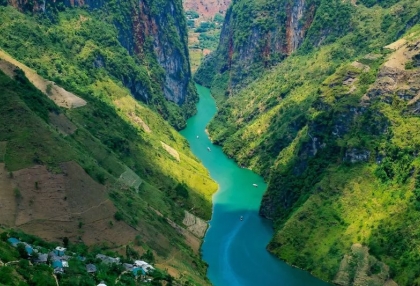
Plan a Nho Que River Ha Giang boat trip through Tu San Canyon with ticket prices, dock access, safety advice and the best months to see the green water.
 Ha Giang
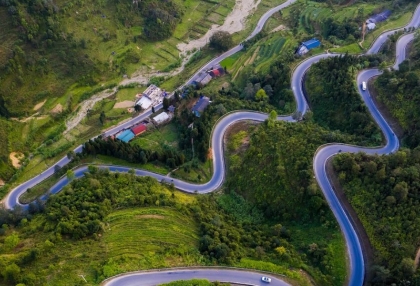
Ma Pi Leng Pass in Ha Giang: panorama viewpoints, the Ha Giang Skywalk, the Nho Que River view, how to get there, road safety and when to go.
 Ha Giang
Ha Giang loop packing list: what to pack, how to pack, riding gear, rain protection, documents and what to do with luggage.
 Ha Giang
Compare the Ha Giang loop and the Cao Bang loop by scenery, main stops, road difficulty, crowds and best season, with transport between the two and suggested routes for 2 to 8 days.
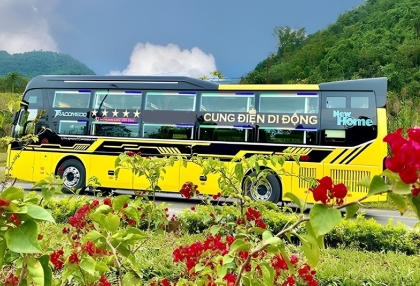 Ha Giang
Plan your Ha Giang to Ninh Binh trip with bus options, travel time, distance, Hanoi connections, private car prices and practical tips.
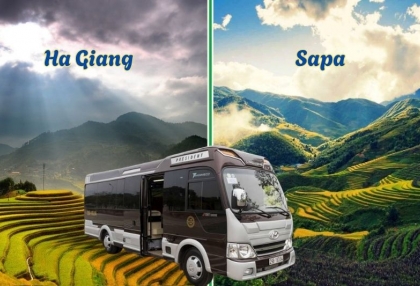 Ha Giang
Compare travel time and price for the bus, motorbike and private car routes from Ha Giang to Sapa, plus the exact distance and FAQs on the Ha Giang loop.
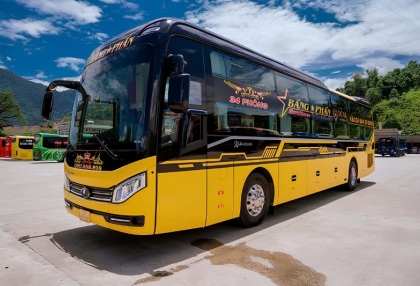 Ha Giang
Hanoi to Ha Giang is about 300 to 320 km and takes 5 to 8 hours by road. The overnight sleeper bus costs about 250,000 to 300,000 VND and arrives before dawn.
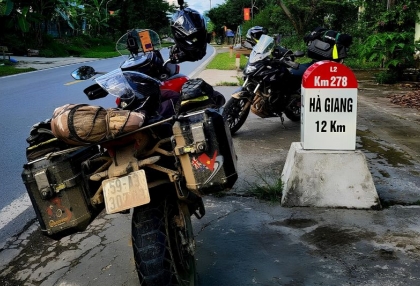 Ha Giang
Ha Giang motorcycle rental guide: which bike to choose, daily prices, license and IDP rules, pre-ride checks and safety tips for riding the loop yourself.
 Ha Giang
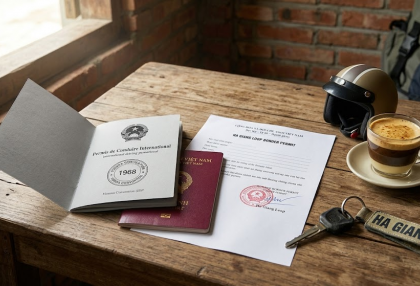
Ha Giang loop permit 2026: official 10 USD fee, where to apply, who needs it, plus road safety, flood risks and travel insurance for the Ha Giang loop.
