



 Ha Long
Best Time to Visit Halong Bay, Month Guide
Planning your Halong Bay trip? Compare spring, summer, autumn, and winter weather, crowd levels, and booking tips to find your ideal travel month.
Last updated: July 2026
Halong Bay is a UNESCO World Heritage site, and one of the most visited places in Vietnam. Keeping it in shape for future generations takes collective effort. Responsible travel Halong Bay is not just a trend. It is a necessity if the emerald waters and limestone karsts are to stay in the state they are in. By choosing a lower-impact cruise and following sustainable practices, you take some of the pressure off this place.
| Heritage name | Ha Long Bay – Cat Ba Archipelago, joint listing since 16 September 2023 |
| Single-use plastic | Banned on the bay since September 2019, enforced with suspensions |
| Visitors in 2025 | About 3.4 million sightseeing visits, 2.2 million of them international |
| UNESCO concerns | Water pollution, coal and cement industry, mass tourism pressure |
| Safety rules from 2026 | GPS, AIS and VHF radio required on every tour vessel |
| What helps most | A small boat, the core route at quiet hours, your own bottle |
| What barely helps | A green label nobody has explained to you |
| Beka Travel option | Orchid Premium Cruise, Lan Ha Bay overnight, 15 guests, $290 adult |
Updated July 2026. Sources: Ha Long Bay – Yen Tu World Heritage Management Board, UNESCO decision 45 COM 8B.3.
Responsible travel Halong Bay means working with a set of rules that already exist rather than inventing your own. Quang Ninh province banned single-use plastic on the bay in 2019. It requires safety equipment on every tour vessel from 2026, and reports to UNESCO on water quality each year. Your choices sit on top of that framework. The two that move the needle are boat size and timing.
Halong Bay took about 3.4 million sightseeing visits in 2025, and 2.2 million of them were international. UNESCO lists three standing pressures on the site: water pollution, the coal and cement industry along the shore, and mass tourism. The bay is not collapsing. It is being asked to carry more than it was built for.
The ecosystem of Halong Bay faces increasing pressure from mass tourism, plastic pollution and habitat degradation. Responsible travel Halong Bay focuses on minimising your environmental footprint while maximising your positive impact on the local community.
Every small action, from refusing a single-use plastic water bottle to choosing a cruise operator with a real sustainability policy, contributes to the long-term health of the bay. None of it works if you are the only one doing it.
Sustainable tourism in Vietnam is changing fast, and the bay sits at the front of that shift. Travellers now ask about wastewater treatment and community hiring. Opting for those providers supports operators who spend money on treatment systems nobody forces them to install.
Single-use plastic has been banned in tourism activity on Halong Bay since September 2019. It is enforced. In May 2025 the management board suspended a tour boat for seven days after inspectors found passengers using disposable plastic bottles on board. Over 270 businesses have signed the commitment since 2019.
The Quang Ninh rule covers cups, straws, containers, bowls, plates and bags. It is written into the operating contract every tour boat signs, not left to the operator's conscience.
Enforcement is real and occasionally blunt. That suspension ran from 24 to 30 May, and the penalty fell on the operator rather than the passengers. Vietnamese broadcasters reported divided opinion on punishing a boat for what its guests carried aboard. The rule stands anyway.
The consequence for you is simple. Bring a refillable bottle, and check the Halong Bay packing list before leaving Hanoi. Turn up with a six-pack of bottled water and the crew will ask you to leave it on the pier.
Safety rules tightened in 2026 too. Every tour vessel now carries GPS, AIS transponders and VHF radio, and 332 of them passed a review in March 2026. Responsible travel Halong Bay is not only about waste. A tracked boat counts as well.
State of conservation reporting flags three things: third-party reports of water pollution, industry along the shoreline, and tourism projects approved without impact assessment. Quang Ninh has committed to closing power plants, cement plants and mines around Ha Long and Cam Pha by 2030.
The site is no longer called Halong Bay in UNESCO's own records. Decision 45 COM 8B.3, dated 16 September 2023, extended the listing to take in the Cat Ba Archipelago.
It is now inscribed as Ha Long Bay – Cat Ba Archipelago, and most operator websites have not caught up. That matters, because the protection framework now covers Lan Ha Bay and the Cat Ba forest.
| Pressure | What the record says |
|---|---|
| Water quality | Third-party pollution reports keep arriving while state monitoring stays within national limits. That gap is the open question |
| Industry on the shore | A March 2023 provincial programme sets the 2030 closure deadline for those plants and mines |
| Tourism pressure | Eight coastal projects were approved without assessing their effect on Outstanding Universal Value |
Source: UNESCO World Heritage Centre, state of conservation reporting.
Nobody publishes a number for how much tourism the bay can take, and the study UNESCO asked for is unfinished. Anyone quoting you a capacity percentage is making it up.
The crowding is concentrated, not general. Most day boats run the same central sightseeing route, so Sung Sot Cave and Titop Island absorb the bulk of 3.4 million annual visits. The management board's answer has been to open routes further out, towards Bai Tu Long in the east and Lan Ha in the south.
Overtourism on Halong Bay is a distribution problem, not a headcount. Almost every day boat sold in Halong runs that central route, and the same caves take the traffic between ten and two.
Sailing outside that window changes your day more than any other single decision. The best time to visit Halong Bay breaks the pattern down by month.
New itineraries link Halong with Bai Tu Long Bay to the east, to take load off the core. Say this plainly. Beka Travel does not run Bai Tu Long trips, so book that one elsewhere.
What Beka runs is Lan Ha Bay, inside the same 2023 listing and taking a fraction of the boat traffic. The Halong Bay vs Lan Ha Bay comparison sets the two side by side on boat density.
Ask three questions before you look at the photos. How many guests does the boat carry at capacity, does it treat sewage on board or discharge it, and which route does it run. A 15-guest boat on an outer route puts less on the water than a 200-guest boat on the core loop.
When selecting your cruise, look for companies that state their sustainability measures in specific terms. Some ships have invested in sewage treatment on board, which nothing obliges them to do. The plastic ban is different, so an operator selling it as their own initiative is selling you the law.
On board, try to minimise your water usage and turn off air conditioning or lights when you are not in your cabin. Even if the cruise provides amenities, bringing your own reusable water bottle and toiletry kits cuts the waste generated.
Avoid touching or damaging the stalactites and stalagmites in the caves. These are living, growing geological structures. Oil from human skin stops them growing and leaves a permanent stain.
| Choice | Actual effect | Notes |
|---|---|---|
| A boat capped under 25 guests | High | Less sewage, less anchor damage, smaller footprint |
| Travelling off the core route at peak hours | High | Shifts pressure off the busiest sites |
| Carrying a refillable bottle | Moderate, and it is the law | Required of you regardless |
| Asking whether the boat treats sewage | Moderate | Few publish it. Asking changes that |
| Buying from rowers rather than pier shops | Moderate | Money reaches the household |
| A green label with nothing behind it | Low | No certification scheme covers these cruises |
| Offsetting the flight after booking | Low | Does nothing for water quality here |
Two Beka Travel boats make the point. The Orchid Trendy Cruise runs Lan Ha Bay overnight with 20 balcony cabins and a 50-guest cap at $155 per adult. The Orchid Premium Cruise caps at 15 guests across five suites at $290.
Buy from the people who row the boats, not from the shop on the pier. Bear in mind that nobody has lived permanently on the bay since 2014, when 364 households moved ashore to Ha Phong. The villages you visit are worked, not inhabited. Never feed the macaques on Monkey Island.
True responsible travel Halong Bay extends beyond nature conservation; it also involves social responsibility. The local fishing communities are the heart of the bay. They no longer live on the water.
A resettlement programme approved in December 2012 moved 364 households, about 2,195 people, into new housing at Ha Phong. It finished in 2014, and 652 house rafts came off the bay.
Former residents come back on shift to row visitors and staff the displays. A souvenir from a village stall reaches no household that lives there, because none does.
You can still support them. Pay the rowers directly, take tours that are managed by local community members, and eat ashore in Ha Phong. This ensures that the economic benefits of tourism reach those who need it most.
Regarding wildlife, always prioritise ethical observation. Never feed the monkeys or any other wildlife you encounter while kayaking or exploring the islands. The animals that approach boats are golden-headed macaques on Cat Dua, which operators call Monkey Island.
Feeding wild animals disrupts their natural foraging behaviour and can lead to aggressive interactions. The species actually at risk is the Cat Ba langur, with fewer than 70 individuals left. It keeps well away from boats.
When you admire nature from a distance, you are practising ethical travel that respects the bay's inhabitants.
Yes, since September 2019, across tourism and service activity on the bay. It covers cups, straws, containers, bowls, plates and bags, and sits in the contract every tour boat signs. In May 2025 one boat lost seven days of operation after inspectors found passengers using disposable bottles. Over 270 businesses have signed it.
No. A resettlement programme completed in 2014 moved 364 households, roughly 2,195 people, into housing at Ha Phong on the mainland. The villages you visit are places of work, not homes. Former residents return on shift to row boats and run the displays. That is why a village looks emptier than old guidebook photographs suggest.
The crowding is real but concentrated. About 3.4 million sightseeing visits landed in 2025, and most funnelled through the same caves between ten and two. Move outside that window, or take a route further out, and the same water feels different. The bay is not full. Two or three of its stops are.
Since 2023 they sit inside one UNESCO listing, so the protection framework is identical. The difference is traffic. Lan Ha takes a small share of the boat volume, runs smaller overnight vessels, and is reached from Cat Ba rather than Tuan Chau. For a lighter trip, the southern water is the easier answer.
It is a reasonable choice. Bai Tu Long sits east of the core, the board has opened routes there to spread visitor load, and the boat count is far lower. Be aware that Beka Travel does not sell Bai Tu Long itineraries, so you would book it with another operator.
Not automatically. Price buys cabin size and food, and neither affects the water. Ask the three questions that matter: guest capacity, whether sewage is treated on board or discharged, and which route the boat runs. A cheap boat carrying 15 people beats a costly one carrying 200.
Travelling responsibly does not mean sacrificing comfort; it means travelling with a conscience. By making informed choices, you can enjoy sustainable tourism in Vietnam while knowing that you are protecting a piece of world heritage. The choices you make today help ensure that Halong Bay stays a place worth the trip.
Responsible travel Halong Bay is not one big decision. It is a handful of small ones made before you book.
The rules here are the same for every operator, and no cruise line gets to opt out. What you control is the boat size, the season and what you carry aboard. Beka Travel runs small-boat itineraries in Lan Ha Bay, and the smallest caps at fifteen guests.
Ready to book a trip that does less damage? Start with the boat capacity, not the brochure. For seasons and ports, the Halong Bay travel guide covers the planning side.
Ha Long
Planning your Halong Bay trip? Compare spring, summer, autumn, and winter weather, crowd levels, and booking tips to find your ideal travel month.
 Ha Long
Dau Go Cave is one of Ha Long Bay's largest historic caves, tied to a 13th-century Tran Hung Dao legend. Find the Route 1 ticket price, accessibility notes, and what to expect inside.
 Ha Long
Planning to cruise Halong Bay with kids? Compare family cabins, child pricing by age, kid-friendly itineraries, and safety tips for a stress-free trip.
 Ha Long
Wondering what to pack for Halong Bay? Check out our ultimate packing list, including travel essentials and seasonal tips for your cruise vacation.
 Ha Long
Exploring Halong Bay cuisine on your cruise? Discover must-try seafood like Cha Muc, Sa Sung, and Sam Bien, plus dining formats and dietary tips.
 Ha Long
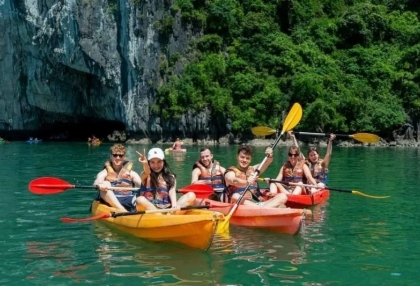
Looking to stay active in Halong Bay? Explore our top 5 experiences including kayaking, cave trekking, cycling, and more, plus what changed under the 2026 safety rules.
 Ha Long
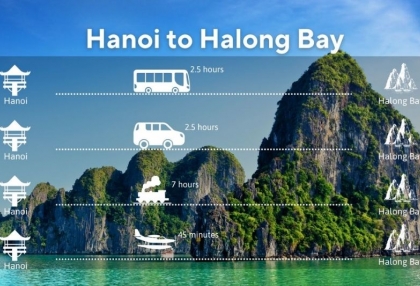
Complete 2026 guide to traveling from Hanoi to Halong Bay: bus, minivan, private car, and helicopter options, distance, price, and which port to use.
 Ha Long
A practical guide to choosing a Halong Bay cruise: which bay to sail (Halong, Lan Ha, or Bai Tu Long), how many days, which comfort tier fits your budget, and when to go.
 Ha Long
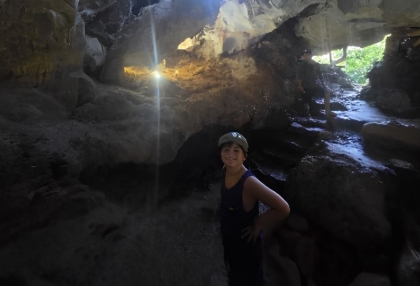
Thien Canh Son Cave (Hang Co) sits on Hon Co Island in quiet Bai Tu Long Bay, reached by a jungle climb of about 100 stone steps. Find directions, prices, and how it compares to Ha Long Bay's main caves.
 Ha Long
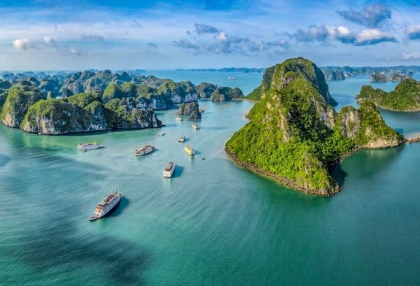
Nếu Vịnh Hạ Long là một bức tranh sơn thủy lộng lẫy và nổi tiếng toàn cầu, thì Vịnh Bái Tử Long lại tựa như một "nàng thơ" ẩn mình, giữ trọn vẻ đẹp tĩnh lặng, nguyên sơ và đầy quyến rũ. Đối với những tín đồ du lịch đang tìm kiếm một không gian thực sự tách biệt để hòa mình vào thiên nhiên, Bái Tử Long chính là thiên đường mà bạn nhất định phải đặt chân đến một lần trong đời.