Quick summary: Pack layers, not outfits: a light windproof jacket, quick-dry clothing, trainers with grip and flip-flops, swimwear, a reusable water bottle, and a dry pouch for your phone. Vietnam runs on 220V with flat or round two-pin sockets. Single-use plastic has been banned on the bay since 2019.
Nobody packs badly on purpose. They pack for the Vietnam they saw in photos, which is always sunny. Then they arrive in Ha Long in January to a grey sky and wind coming off the water. This Halong Bay packing list is built the other way round: from what actually goes wrong on the boat.
The short version
If you read nothing else, take these six things from the Halong Bay packing list below. Everything after them is detail.
A reusable water bottle. Single-use plastic has been banned on the bay since 2019, and boats do get suspended over it.
Two kinds of shoes. Something with grip for cave floors, something you can kick off on deck.
A light layer, in every season. The deck is always cooler than the shore.
A dry pouch for your phone. You will be in a kayak, and you will want photos.
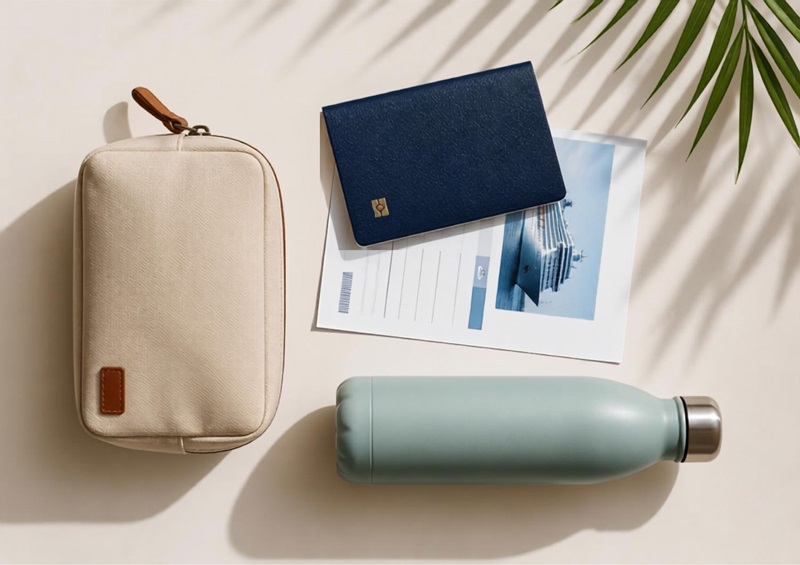
Your passport or a clear photo of it. Harbour staff check documents before boarding.
Cash in Vietnamese dong. Bars, tenders and tips are rarely card-friendly.
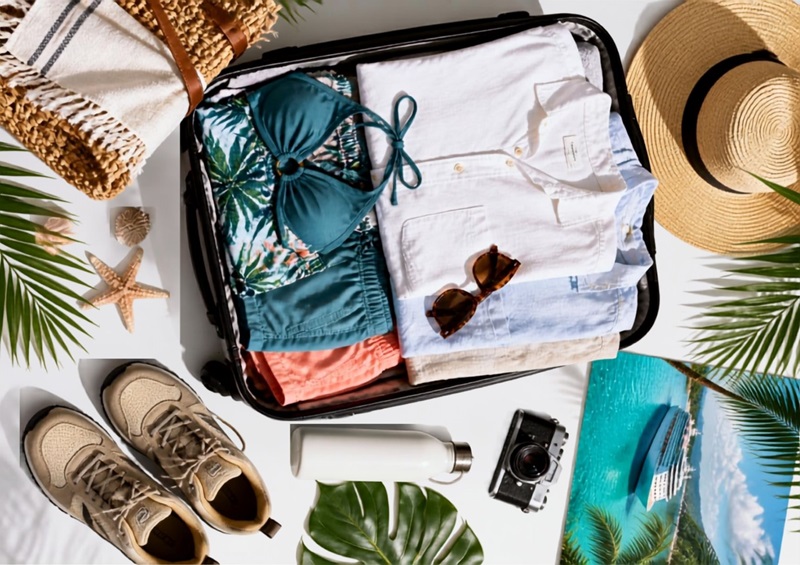
Pack for a boat, not a beach. A working Halong Bay packing list is one warm layer, one waterproof layer, shoes with grip, swimwear, a reusable bottle and your documents. Everything else is comfort. Cabins and daypacks are both small, so the useful skill here is leaving things behind.
Documents and money
Bring the passport itself if you can. Harbour staff check identity documents at the gate, and a photo on your phone works at some piers but not all.
Carry cash in Vietnamese dong. Onboard bars, the tender boat to Ti Top beach and tips all run more smoothly with small notes than with a card.
Clothing that earns its place
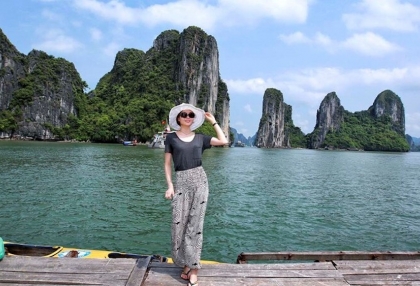
The honest answer to what to wear in Halong Bay is layers rather than outfits. A t-shirt, a long-sleeved shirt and a light windproof jacket cover almost every day of the year on the water.
Quick-dry fabric beats cotton. You will get splashed on the kayak leg, and cotton stays wet for hours in the humidity.
One smart-casual item is worth packing for an overnight cruise. Dinner on board is not formal, but most guests change out of the shirt they kayaked in. This is the main way what to pack for a Halong Bay cruise differs from a day trip.
Footwear, the thing people get wrong
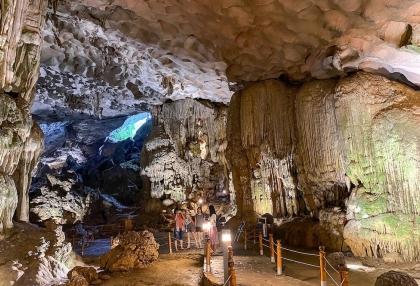
Cave floors stay damp all year, and the worn limestone steps in Sung Sot Cave are genuinely slippery. Trainers with a proper sole are the right call.
Bring flip-flops as the second pair. They are what you will actually wear on deck, on the beach and in the cabin.
Leave the hiking boots at home unless you are adding Cat Ba National Park to the trip. They take up half a daypack and you will not use them.
Water gear
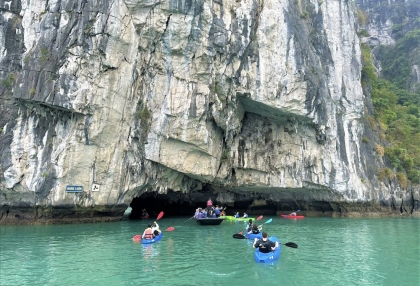
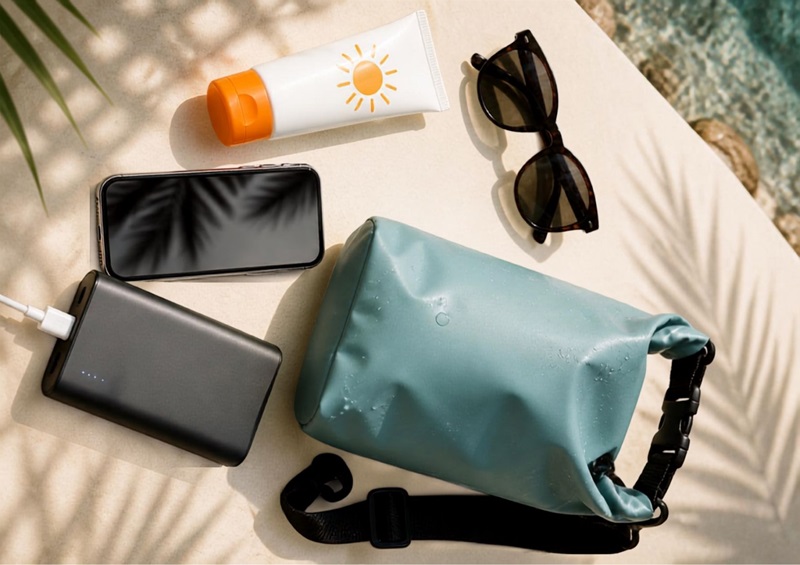
A dry bag or a zip pouch for your phone is the single most useful item on this list. The paddle into Luon Cave is the wettest twenty minutes of the itinerary.
Wear your swimsuit under your clothes on the day. Changing space on a tender boat is limited, and the swim stop is usually short.
Health and comfort
Take motion sickness tablets before boarding rather than after. The central bay is sheltered, but the road out of Hanoi has a winding final stretch that catches people out.
Pack sunscreen even in winter. Glare off the water is stronger than the air temperature suggests, and there is very little shade on a sundeck.
A power bank matters more than it sounds. Sockets are limited outside the restaurant on most boats, and a full day of photos empties a phone.
What should you wear in Halong Bay by season?
What to wear in Halong Bay depends on which of four seasons you land in, not two. Winter runs cold enough for a proper jacket. Summer is hot and wet, with the year's heaviest rain in August. The two shoulder windows are the reason most people come.
Use this table as your Halong Bay cruise packing reference. Air and sea temperatures are typical monthly averages, and rainfall is the monthly total.
March to May
June to September
October to November
December to February
Air temperature
18–30°C
24–32°C
19–29°C
14–22°C
Sea temperature
22–27°C
29–30°C
25–28°C
21–23°C
Monthly rainfall
40–170mm
280–445mm
35–160mm
20–25mm
Base layer
T-shirts, one long sleeve
Lightest quick-dry you own
T-shirts, one long sleeve
Thermal or merino base
Outer layer
Light windproof jacket
Packable rain shell
Light jacket for evenings
Proper insulated jacket
Legs
Trousers and shorts, both
Shorts, plus trousers for caves
Trousers, shorts optional
Trousers only
Swimming
Cold in March, fine by May
The best swimming of the year
Comfortable through October
Most guests skip it
The thing people forget
Rain shell for the May showers
Dry bag, because August is the wettest month
A jacket, because November evenings drop fast
Warm socks for the deck at night
Climate figures are typical monthly averages for Ha Long. Storms pass through the area from late May to early November, with the highest frequency between July and October.
The practical takeaway is narrower than the table looks. October and November need the least gear and carry the lowest cancellation risk. August needs the most, because 445mm of rain in a month is not drizzle.
If your dates are still open, the Halong Bay travel guide covers how the seasons affect sailing, not just what to wear.
What should you not pack for a Halong Bay cruise?
Half of a useful Halong Bay packing list is subtraction. Leave behind single-use plastic bottles, hiking boots, a hairdryer, formal clothes and anything valuable you would hate to drop in the sea. Cabin storage is small, and a boat gives you nowhere to put a large bag once it is open.
Single-use plastic bottles. This is a rule, not a preference. Bring a refillable bottle instead.
Hard-shell suitcases over 24 inches. They do not fit under a cruise bed and they do not travel well on a tender.
A hairdryer. Cabins on the boats Beka sells provide one, and the voltage difference makes travel dryers a poor idea anyway.
Drone, unless you have written permission. The bay sits inside a managed World Heritage area and flight permission is not automatic.
Jewellery and anything irreplaceable. Cabins are secure, but kayaks tip and beaches have sand.
Heavy books. Evenings on board are shorter than you expect, because squid fishing and dinner fill them.
Excessive toiletries. Overnight boats provide the basics, and you are on board for one night.
How much luggage can you bring on board?
There is no published weight limit on the overnight cruises Beka sells, but cabin storage is the real constraint. A carry-on sized bag per person fits comfortably. Anything larger is better left in Hanoi, since most hotels store luggage free for guests returning after the cruise.
For a day trip the answer is simpler. Take a daypack and nothing else, because you are on a shared boat with no cabin and no storage of your own. That is the whole difference between what to pack for a Halong Bay cruise and what to pack for a day on the water.
The transfer van is where large bags cause trouble rather than the boat itself. If you are travelling on to Cat Ba or Ninh Binh afterwards, say so at booking so the vehicle is right for the load.
Do you need a plug adapter in Vietnam?
Vietnam runs on 220V at 50Hz, and sockets take flat two-pin plugs as well as round two-pin plugs. European and most Asian chargers fit without an adapter. Travellers from the UK need one, and travellers from North America or Japan should check their device handles 220V before plugging in.
Phone and laptop chargers are almost always dual voltage, so they are fine. Hair tools and small appliances from a 110V country are the ones that fail.
Sockets in cabins are limited, often to one or two. A short multi-plug or a power bank saves an argument at bedtime.
How does the plastic ban change what you pack?
Ha Long Bay has prohibited single-use plastics since 2019, and enforcement is real rather than symbolic. Boats have been suspended from operating for allowing guests to carry plastic bottles on board. Pack a refillable bottle and you avoid the whole issue.
Refill points are standard on overnight boats now. On a day trip, fill up before you leave Hanoi and top up at lunch. It is the one line in any Halong Bay cruise packing guide that has genuinely changed in the last five years.
The same thinking applies to packaging. Loose snacks in a reusable pouch travel better than individually wrapped ones, and they will not get you a conversation with the crew.
This is one of the few packing details that separates a Halong Bay packing list written in 2026 from one written five years ago. Most lists still online predate the rule.
What do you need for the water activities?
Kayaking, swimming and the tender ride each need one specific item. Bring a dry pouch for the kayak, a quick-dry towel for the swim, and shoes you can get wet for the tender. Add reef-safe sunscreen and the water half of the list is finished. That holds for both the day tours and the overnight routes.
Kayak paddles are provided, along with life jackets, on every itinerary Beka sells. You do not need to bring any equipment of your own.
Water shoes are optional but pleasant. Ti Top beach is coarse sand rather than fine, and the Lan Ha swim stops have the occasional shell.
If swimming is the main reason you are going, look at the quieter bay first. The Halong Bay vs Lan Ha Bay comparison explains why the swim stops differ so much between the two.
Printable checklist
Copy this list or print the page. Nothing to download, nothing to fill in.
Passport (or a clear photo of it)
Cash in Vietnamese dong
Reusable water bottle
Trainers with grip, plus flip-flops
Swimsuit, worn under your clothes
Quick-dry t-shirt and one long sleeve
Light windproof jacket or packable rain shell
Dry bag or zip pouch for your phone
Sunscreen, even in winter
Motion sickness tablets, taken before boarding
Power bank
One smart-casual outfit, for overnight cruises only
FAQs
Is there a luggage weight limit on a Halong Bay cruise?
No published weight limit applies on the overnight boats Beka sells, but the practical limit is cabin space rather than kilos. One carry-on sized bag per person fits comfortably under or beside the bed. On day tours there is no cabin at all, so a daypack is the sensible maximum. Confirm at booking if you are carrying oversized sports equipment.
Where do you leave a large suitcase during the cruise?
Most Hanoi hotels store luggage free for guests who are returning after the cruise, and this is the easiest option by a wide margin. Ask at check-out and keep the ticket. Leaving a large case in the transfer van is not reliable, because vehicles are often reassigned between the outbound and return legs.
Is there laundry service on board?
Assume not. These are one-night itineraries, and laundry is not part of the standard inclusions on the boats Beka sells. Pack a spare set of clothes rather than planning to wash anything. A quick-dry shirt rinsed in the cabin sink dries overnight in most seasons, though not in the humidity of July and August.
What kind of swimwear should you bring?
Something you can wear under your clothes for the whole day. Changing facilities on a day boat are limited to a small toilet, and the swim stop at Ti Top or Tra Bau is usually under an hour. A rash vest is worth adding between May and September, when the sun on the water is at its strongest.
Do you need hiking shoes for the caves?
No, trainers with a decent sole are enough. The floors in Sung Sot Cave are paved and lit, but they stay damp all year and the steps are worn smooth. Hiking boots are only worth the space if you are adding Cat Ba National Park or a trekking day to the trip. Flip-flops are the wrong choice for any cave.
Can you buy things you forgot in Halong?
Yes, for the basics. Sunscreen, flip-flops, a hat and a cheap raincoat are all available near Tuan Chau and Bai Chay at tourist prices. Anything specific, including motion sickness tablets in a brand you recognise, is easier to buy in Hanoi before you leave. Onboard shops are limited to drinks and snacks.
Before you book
A Halong Bay packing list gets much easier once the itinerary is fixed, because a day trip and an overnight cruise need very different bags. The Halong Bay trip cost breakdown shows what each option actually costs once transfers and tickets are included, and Beka Travel lists both day tours and the overnight fleet in one place.
Nếu Vịnh Hạ Long là một bức tranh sơn thủy lộng lẫy và nổi tiếng toàn cầu, thì Vịnh Bái Tử Long lại tựa như một "nàng thơ" ẩn mình, giữ trọn vẻ đẹp tĩnh lặng, nguyên sơ và đầy quyến rũ. Đối với những tín đồ du lịch đang tìm kiếm một không gian thực sự tách biệt để hòa mình vào thiên nhiên, Bái Tử Long chính là thiên đường mà bạn nhất định phải đặt chân đến một lần trong đời.
Vịnh Hạ Long từ lâu đã là "tọa độ" vàng trong bản đồ du lịch Việt Nam, thu hút hàng triệu lượt khách mỗi năm. Tuy nhiên, trước mỗi chuyến đi, nỗi băn khoăn lớn nhất của du khách vẫn luôn là chi phí du lịch Vịnh Hạ Long bao nhiêu là đủ và làm thế nào để tránh được các khoản phát sinh không đáng có.
Vịnh Hạ Long từ lâu đã trở thành biểu tượng du lịch của Việt Nam trên bản đồ quốc tế. Không chỉ là một địa danh, đây còn là nơi hội tụ của vẻ đẹp thiên nhiên kỳ vĩ, giá trị lịch sử lâu đời và hệ sinh thái độc bản. Dưới đây là thông tin chi tiết nhất để bạn chuẩn bị cho hành trình tham quan vịnh hạ long đầy cảm hứng.
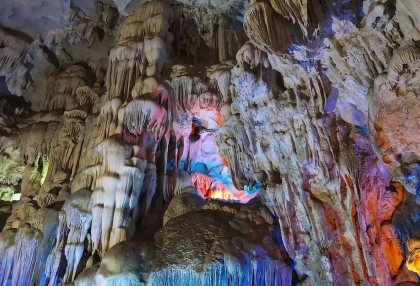
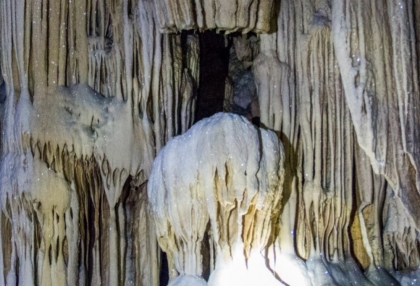
Hệ thống hang động tại Vịnh Hạ Long nổi tiếng thế giới nhờ vẻ đẹp kỳ vĩ của những dải thạch nhũ triệu năm tuổi. Trong số hàng nghìn hang động, Hang Sửng Sốt luôn là cái tên hàng đầu mà mọi du khách phải ghé thăm. Đúng như tên gọi, địa danh này mang vẻ đẹp choáng ngợp, khiến bất cứ ai đặt chân tới cũng phải kinh ngạc trước tài nghệ của tạo hóa.
Discover Luon Cave (Tunnel Cave), a magnificent natural tidal arch cutting through Bo Hon Island along Ha Long Bay's iconic Sightseeing Route 2. This complete travel guide covers updated ticket prices, essential kayaking and bamboo boat tips, wildlife encounters with wild golden monkeys, and the best cruise itineraries.
Cẩm nang khám phá các hang động ở Vịnh Hạ Long tráng lệ và huyền bí nhất. Bài viết tổng hợp danh sách các hang động Hạ Long nổi tiếng theo từng tuyến tham quan, bảng giá vé chi tiết và các gợi ý tour du lịch tối ưu giúp bạn dễ dàng lên lịch trình hoàn hảo.
Khám phá Động Thiên Cung Hạ Long, "cung điện trên trời" nguy nga tráng lệ bậc nhất vịnh di sản với hệ thống thạch nhũ đá kỳ vĩ. Bài viết cung cấp cẩm nang chi tiết từ giá vé mới nhất, cách di chuyển đến lộ trình các tour tham quan Tuyến 1 tối ưu nhất.
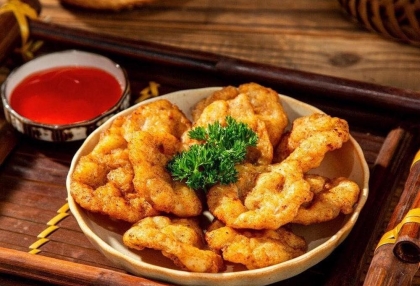
Ha Long Bay is internationally celebrated as a natural world wonder, but for discerning travelers, it is also an incredible maritime culinary paradise. Beyond the towering limestone karsts lies a vibrant, fresh-off-the-boat food culture shaped by the Gulf of Tonkin.
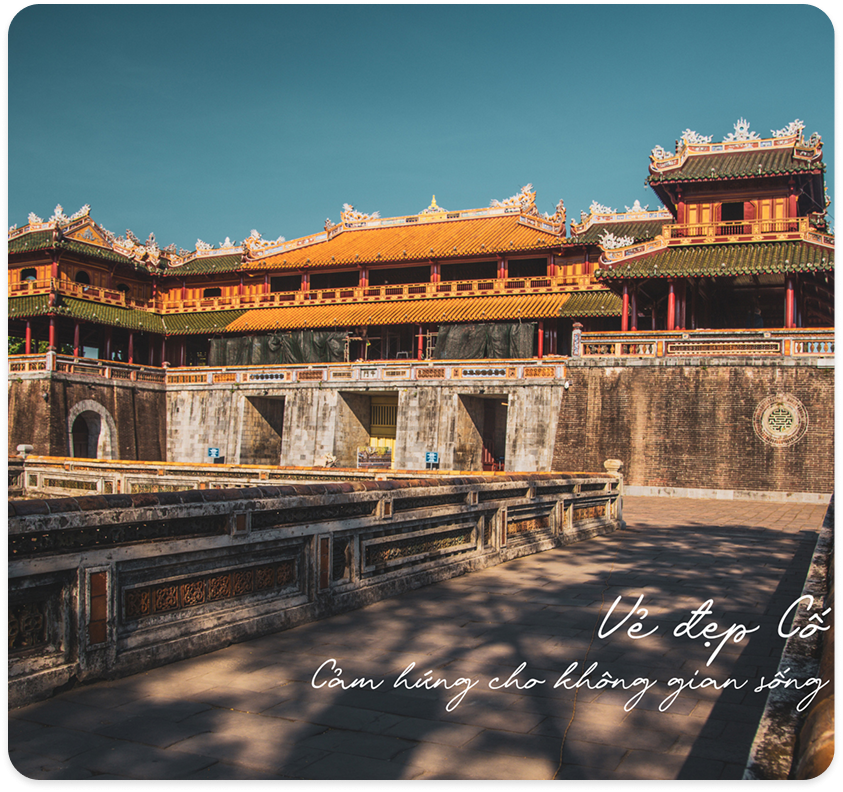
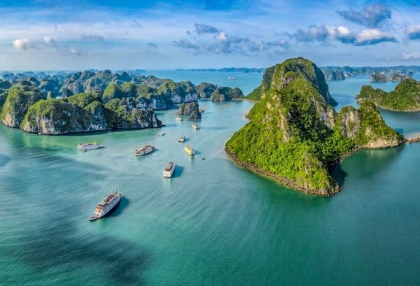
Cùng Beka Travel thực hiện chuyến du lịch Hạ Long, khám phá 1 trong 7 kỳ quan thiên nhiên thế giới, đồng thời là Di sản Thiên nhiên Thế giới UNESCO. Nhờ vẻ đẹp hoang sơ, hùng vĩ của núi non và biển trời, vịnh Hạ Long trở thành sự lựa chọn hàng đầu, thu hút hàng triệu lượt khách ghé thăm mỗi năm.



 Ha Long