
Planning a trip to Halong Bay? Understanding the Halong Bay weather can help you choose the right month for cruising, kayaking, swimming and sightseeing. The bay has four distinct seasons, with cooler and misty winters, warm springs, hot summers and pleasant autumn months.
For most travelers, March to May and September to November offer a good balance of comfortable temperatures, clearer skies and outdoor activities. However, the best time to visit Halong Bay depends on whether you prefer swimming, photography, fewer crowds or lower prices.
Halong Bay weather overview
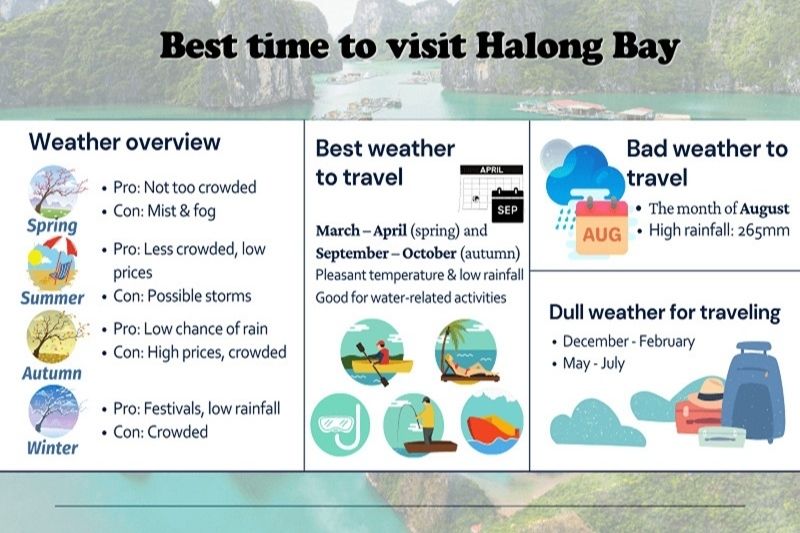
Halong Bay in northern Vietnam has a humid subtropical and monsoon influenced climate. The temperature in Halong Bay ranges from about 14°C on a January night to about 32°C on a July afternoon. Rainfall and tropical storms are more common from June to August, while December to March is typically cooler, cloudier and more likely to have mist.
The Ha Long Bay Management Board describes the bay as having two main seasons, winter from November to March with an average of 15°C to 20°C and summer from May to September with an average of 26°C to 27°C, with April and October as transition months. It gives average annual rainfall of 2,000 mm to 2,200 mm. This guide divides the year into four seasons instead, because that is how most travelers plan a trip.
| Season | Months | Typical conditions | Best for |
|---|---|---|---|
| Spring | March to April | Mild, often cloudy or drizzly | Cruising, caves, photography |
| Summer | May to September | Hot, humid, wetter, storm risk | Swimming, kayaking |
| Autumn | October to November | Mild, drier and clearer | Cruising, sightseeing |
| Winter | December to February | Cool, cloudy and sometimes misty | Quiet cruises, photography |
The table below gives the Halong Bay weather by month in more detail, so you can compare temperature, sea temperature, rainfall and sunshine before choosing a departure date.
| Month | Low to high | Sea | Rainy days | Sun per day | Good for |
|---|---|---|---|---|---|
| January | 14 to 19°C | 22°C | 8 | 3 hours | Quiet cruises, caves, photography |
| February | 15 to 20°C | 21°C | 11 | 1.5 hours | Fewer crowds, misty scenery |
| March | 18 to 22°C | 22°C | 14 | 1.5 hours | Caves, cool sightseeing |
| April | 22 to 26°C | 24°C | 12 | 3 hours | Cruising, kayaking, first swims |
| May | 25 to 30°C | 28°C | 11 | 6 hours | Swimming, kayaking, value |
| June | 26 to 32°C | 30°C | 16 | 6 hours | Swimming, long daylight |
| July | 26 to 32°C | 30°C | 16 | 6.5 hours | Swimming, beaches |
| August | 25 to 31°C | 30°C | 19 | 5.5 hours | Swimming, lower prices |
| September | 24 to 31°C | 30°C | 14 | 6.5 hours | Swimming, fewer visitors |
| October | 22 to 29°C | 28°C | 10 | 6 hours | Cruising and swimming |
| November | 19 to 26°C | 26°C | 6 | 5.5 hours | Cruising, clear views |
| December | 15 to 22°C | 23°C | 5 | 4.5 hours | Quiet cruises, photography |
Weather can also affect cruise routes. During strong storms, tropical depressions or unsafe sea conditions, authorities may suspend sailing or cruise operators may adjust the program, so always check the forecast shortly before departure. Lan Ha Bay follows the same seasonal pattern, so a Lan Ha Bay cruise can be planned from the same table.
Peak season
The main peak season generally runs from October to April, with particularly strong demand around December, January, Christmas and New Year. February to April is also popular because temperatures are more comfortable for sightseeing, cave visits and time on the open deck. The road journey from the capital takes about the same time in any season, and Hanoi to Halong Bay covers the transfer options and prices.
Cruise prices and availability can be higher during popular travel periods, and cabins on the smaller boats sell out first, so booking the Halong Bay cruise early is useful if you have fixed travel dates.
Off season
The lower and shoulder season usually covers May to September. International visitor numbers tend to fall, while domestic travel increases during the summer school holidays, so the bay is rarely empty even in the wettest weeks. The same months apply on the Cat Ba side, and the best time to visit Cat Ba Island guide covers that area in detail.
This period can offer better cruise deals, but weather is less predictable. July and August have a higher risk of heavy rain and tropical storms, with August averaging about 19 rainy days, which can affect cruise schedules and makes a spare day in the plan worthwhile.
Spring (March to April)

Spring is one of the most comfortable periods for exploring Halong Bay. Temperatures are generally mild, although cloudy skies, light drizzle and occasional mist can occur, especially in March, when northern Vietnam gets the fine persistent drizzle that locals call crachin.
The season is well suited to travelers who want to explore caves, kayak, take photographs and enjoy the scenery without the intense summer heat. The one weakness is long distance visibility, because the islands can fade into haze a few hundred meters from the boat.
March
Halong Bay weather in March is usually mild, with temperatures from 18 to 22°C. Days can alternate between sunshine, clouds and light drizzle, and March records the least sunshine of the year at around one and a half hours a day. Rainfall stays low at about 40 mm, although it falls across roughly 14 days.
March is a good choice for sightseeing and cruising, because the cooler conditions are comfortable for cave visits and outdoor excursions, although visibility may be affected by mist or cloudy weather on some days, which is why the Halong Bay caves are the safer plan this month. Sea temperature is only 22°C, so swimming is not yet comfortable, and a light rain jacket with a warm layer for the evening deck is worth packing.
April
April brings warmer temperatures of 22 to 26°C and generally brighter conditions, with sunshine roughly doubling compared with March. The weather becomes more suitable for outdoor activities as spring moves toward summer, and the sea warms to about 24°C, which is swimmable for some travelers although still cool for a long swim.
If you are deciding on the Halong Bay best time to visit, April is one of the strongest choices for travelers who want a combination of pleasant weather, comfortable cruising and outdoor exploration. Book early if you travel in the last week of the month, when the Reunification Day and Labour Day holidays fill boats with domestic travelers.
Summer (May to September)

Summer is the hottest and most humid period in Halong Bay. Sea temperatures reach 30°C and become comfortable for swimming and kayaking, but rainfall increases and tropical storms become an important consideration, since they pass along this coast from late May to early November with a peak from July to October.
May and September can offer a better balance of warm weather and value, while June to August are more likely to bring heavy rain and changing sea conditions. Sunshine is also at its annual high at six hours or more a day, so summer rain rarely lasts the whole day.
May
May marks the beginning of the hotter season, with temperatures of 25 to 30°C and a sea temperature of 28°C. Rain falls on about 11 days, fewer than in March, and sunshine jumps to six hours a day, which makes May one of the better value months of the summer.
For travelers who want to swim or kayak, May can be a good month, and it comes before the Vietnamese school holidays fill the boats. However, afternoon showers may occur, so a flexible program is recommended, along with sun protection, swimwear and a light rain jacket.
June
June is hot, humid and increasingly wet, with temperatures of 26 to 32°C, about 16 rainy days and roughly 300 mm of rain. Long daylight hours are useful for sightseeing, swimming and water activities, but sudden rain can affect outdoor plans.
Cruises normally operate in June, although the domestic holiday season begins and weekends fill quickly. Travelers should monitor the forecast and follow the cruise operator safety updates when storms are expected, and a waterproof bag for cameras and phones is useful.
July
Halong Bay July weather is hot and humid, with frequent rain showers and a greater possibility of storms. Average temperatures run from 26 to 32°C, which makes July the hottest month of the year, and the sea reaches 30°C while sunshine peaks at six and a half hours a day.
The warm water makes Halong Bay in July attractive for swimming, kayaking and beach activities, and the long evenings suit squid fishing and time on the sundeck. However, sudden downpours can occur and July sits inside the main typhoon window, so check the forecast before booking a cruise and keep alternative plans in mind.
August
Halong Bay August weather remains hot, humid and wet, with temperatures of 25 to 31°C and the sea still at 30°C. August is the wettest month of the year at about 19 rainy days, and it is among the months with a higher likelihood of storms, making cruise conditions less predictable.
If you travel in August, choose a reputable cruise operator with a clear weather policy, check weather updates regularly and allow flexibility in your schedule. A rain jacket, quick drying clothes, sunscreen and a waterproof bag are useful, and August is also the cheapest month to book a good cabin.
September
Halong Bay September weather marks the transition from summer toward autumn. Temperatures remain warm at 24 to 31°C and the sea holds at 30°C, but rainfall gradually becomes less dominant as the month progresses, with rainy days falling from about 19 in August to 14.
September can be a practical choice for travelers looking for fewer international visitors and potentially better value, and the last ten days often feel like early autumn. However, tropical weather can still occur, so checking the forecast remains important, and the National Day holiday in the first week brings a short domestic rush.
Autumn (October to November)

Autumn is the driest and clearest period of the year for visiting Halong Bay. Temperatures become more comfortable, humidity decreases and rainy days fall from about 14 in September to 10 in October and just 6 in November.
The combination of calmer conditions and better visibility makes October and November particularly suitable for first time visitors, photography and overnight cruises, because the limestone islands stay visible far into the distance.
October
Halong Bay October weather is typically mild and comfortable, with daytime temperatures around 22 to 29°C and a sea temperature of 28°C, which makes October the last comfortable swimming month of the year. Rainfall is considerably lower than during the wetter summer months at around 160 mm across about 10 days.
October is one of the strongest answers to when to visit Halong Bay if your priority is sightseeing. You can enjoy cruising, caves, kayaking and island stops without the intense heat of summer, and light layers are enough for cooler evenings on the water. This is also when the international season begins, so book ahead.
November
Halong Bay weather November is cooler and generally drier, and it is the driest month of the year with only about 6 rainy days and roughly 35 mm of rain. Temperatures of 19 to 26°C are comfortable for long hours on the cruise deck, the sea holds at 26°C, and the risk of heavy summer rain is much lower.
Halong Bay in November is especially appealing for travelers who prefer comfortable weather rather than hot beach conditions, and the clear air gives the best long views of the year. It is also a popular period, so booking cruises ahead is recommended, particularly for the smaller boats, and a jacket for the evening deck is useful.
Winter (December to February)

Winter brings cooler temperatures, the lowest rainfall of the year at 20 to 25 mm a month, and frequent cloudy or misty conditions. Instead of the bright blue skies associated with summer, the limestone islands can appear through layers of mist, creating a quieter atmosphere.
This season is less suitable for swimming, with the sea between 21 and 23°C, but it works well for scenic cruising, cave visits, photography and travelers who prefer cooler temperatures. For what to pack in each season, see the full guide to Halong Bay Vietnam.
December
Halong Bay weather December is cool and the driest month of the year, with about 5 rainy days and roughly 20 mm of rain, although mist and cloud can reduce visibility. Daytime temperatures run from 15 to 22°C and may fall to around the mid teens at night, and the wind off the water makes the deck feel colder than the reading suggests.
Halong Bay in December is a good option for travelers who enjoy peaceful scenery and cooler weather. Swimming may be uncomfortable because the sea is 23°C, but cruising and cave exploration remain enjoyable. Christmas and New Year are among the busiest weeks of the year, so book early for those dates and pack a warm layer and a windproof jacket.
January
Halong Bay weather January is among the coolest conditions of the year, with temperatures of 14 to 19°C. Cloudy skies, mist and cool temperatures are common, there are about 8 rainy days of mostly drizzle, and the sea drops to 22°C, creating a calm atmosphere across the bay.
Halong Bay January is suitable for travelers who prioritize quiet sightseeing rather than swimming. Bring warm layers, especially if you plan to spend time on the outdoor deck early in the morning or after sunset, and check the date of Tet, which can fall in late January and changes both crowd levels and some services.
February
Halong Bay weather February remains cool at 15 to 20°C, with occasional drizzle, cloud and mist across about 11 days, and the year low for sunshine alongside March at an hour and a half a day. Temperatures gradually begin to rise toward spring, although conditions can still feel chilly and the sea is at its coldest at around 21°C.
Halong Bay in February works well for travelers who want fewer crowds and cooler sightseeing conditions, and the mist suits close range photography of the islands. Pack light layers and a rain jacket for changing weather, and check Tet dates before booking, because some services reduce or close for several days around the holiday.
FAQ
What is the best time to visit Halong Bay?
The best time to visit Halong Bay is generally March to May and September to November. These periods offer a good balance of comfortable temperatures, outdoor activity conditions and relatively stable weather. October and November are especially popular for cruising and sightseeing, with only about 10 and 6 rainy days.
When is the best time to visit Halong Bay for swimming?
May to September is generally better for swimming because the sea is 28 to 30°C. However, July and August have a higher risk of heavy rain and tropical storms, which can affect cruise and beach activities, so May, September and October are the safer picks.
Can you swim in Halong Bay in December?
Yes, swimming may be possible, but can you swim in Halong Bay in December is mainly a question of comfort. The sea is around 23°C, considerably cooler than in summer, so many travelers prefer kayaking, cave visits and sightseeing instead.
Is Halong Bay rainy in summer?
Yes. Rainfall increases from May and is particularly important from June to September. July and August generally have a higher risk of heavy showers and storms, and August averages about 19 rainy days, although showers are usually short rather than all day.
What is the temperature in Halong Bay?
The temperature in Halong Bay changes significantly by season, from around 14 to 20°C in winter to 30 to 32°C in summer, and it can climb higher during a heatwave.
Is October or November better for Halong Bay?
Both are strong choices, but they suit different trips. October is generally warmer and the sea is still 28°C, which suits outdoor activities and swimming, while November is cooler and drier with the clearest long views of the year. Choose October for warmer weather and November if you prefer cooler temperatures.
When is the best time to visit Hanoi and Halong Bay?
For a combined Hanoi and Halong Bay trip, March to April and October to November are strong choices. Both destinations share broadly similar seasonal patterns, although the bay can feel cooler because of sea breezes, so bring one extra layer for the boat.
When is the best time to visit Halong Bay for fewer crowds?
Winter months can be quieter outside major holidays, while May, early June and September may offer a useful balance between lower international demand and warmer weather.
When is the best time to visit Halong Bay for a cruise?
For the most balanced cruise experience, consider March to May or September to November. These periods generally provide comfortable temperatures, good conditions for outdoor activities and lower weather risk than the peak storm months.