



 Ha Long
Best Time to Visit Halong Bay, Month Guide
Planning your Halong Bay trip? Compare spring, summer, autumn, and winter weather, crowd levels, and booking tips to find your ideal travel month.
Last updated: July 2026
Sung Sot Cave does not impress anyone in the first minute. You climb a staircase from the jetty, duck through a low opening, and arrive in a chamber that is damp, dimly lit and fairly ordinary. A good number of visitors decide right there that the cave has been oversold.
The second chamber changes their minds. It opens into a hall large enough that a full tour group stops feeling like a crowd, with stalactite columns running the height of the wall.
That contrast is where the name comes from. Sung sot means astonishment in Vietnamese, and the English signage translates it as Surprise Cave. Both are fair, but only from the second chamber onwards.
Quick summary: Sung Sot Cave sits on Bo Hon Island and is the largest cave open to visitors in the bay. You reach it on the VHL2 ticket route, which costs 250,000 VND per person. Our Ha Long Bay Day Tour (Beka Travel, from $34) runs that route, pairing Sung Sot with Luon Cave and Ti Top Island. Visit before 10am or after 2pm if you can choose.
Sung Sot Cave is the largest cavern open to visitors in Halong Bay, set into the limestone wall of Bo Hon Island. It is arranged as two main chambers linked by a narrow passage, with the second considerably larger than the first. French surveyors documented it in the early 1900s, and it has been on the standard tourist route ever since.
Of the 70-plus caves recorded across the bay, only 19 are open to visitors at all (Source: Ha Long Bay – Yen Tu World Heritage Management Board). Sung Sot is the one that almost every cruise on the southern route stops at.
Its popularity is both the attraction and the drawback. The timing section further down matters more than anything else on this page, because the hour you arrive changes the visit substantially.
Sung Sot is the largest cave you can walk into in Halong Bay, but the specific measurements circulating online deserve some caution.
Two of the most widely cited English guides give different floor areas, one saying 10,000 square metres and the other more than 12,000. Neither names a source. We have not found an official figure published by the management board, so we would rather leave the number out than pick one and present it as fact.
What we can tell you from running the route regularly is more useful anyway:
If you need a precise measurement for research purposes, cite the management board rather than another travel blog.
Sung Sot Cave contains two chambers linked by a narrow passage, and they leave very different impressions. The outer chamber is low, plain and takes only a few minutes to cross. The inner chamber is the reason people come: a vaulted hall of stalactite columns lit from floor level, with a walkway that loops the edge and exits at a viewpoint over the water.
The first room is low, wide and unremarkable. Guides sometimes call it the waiting room, which describes the feeling accurately. The lighting is subdued and the formations are modest.
This is not the place to judge the cave. Most of the disappointed reviews you will find online were written by people who lost interest in this room and never adjusted.
Passing through the gap in the rock, the scale changes completely. This is the space Sung Sot Cave is known for, a vaulted hall of stalactites and columns lit from floor level, with a walkway looping around the edge.
The lighting is theatrical, and some visitors find it heavy-handed. That is a fair criticism, though it is also difficult to see how you would light a chamber this size for a walking tour any other way.
The path exits at a viewpoint over the anchorage below, which is where most people take the photograph they keep.
Every cave in the bay carries a story, and Sung Sot Cave is attached to a legend about a sword and a defence of the coastline. Guides tell versions involving Saint Giong, whose folklore runs through this whole region.
It is worth hearing as folklore rather than as history. The marks people point to as arrowheads or hoof prints are limestone behaving the way limestone does over a few million years.
The story still earns its place in the tour. It tells you more about how this coastline understands itself than any geology explanation would.
You cannot visit Sung Sot independently. The cave is reached by boat as part of a licensed route, and there is no walk-up entrance.
Two things determine whether you get there:
Check the route on your booking confirmation before you pay. A boat licensed for VHL1 will not take you to Sung Sot Cave because you asked at the pier, and this is the most common disappointment we hear about.
At the cave itself there is a staircase from the jetty before you reach the entrance. It is short but steep, and often wet.
Entry is bundled into the government route ticket rather than charged at the cave door. The VHL2 route costs 250,000 VND per person for a day visit, and that single fee covers Sung Sot, Me Cung, Soi Sim and Ti Top together.
If you are staying overnight on the bay on the same route, the structure changes. Overnight fees are 550,000 VND for one night and 750,000 VND for two, and they already include sightseeing access rather than being charged on top.
Reduced rates apply as follows:
Fees updated July 2026. Source: Ha Long Bay – Yen Tu World Heritage Management Board.
One point is worth reading twice. Several of the highest-ranking English pages about this cave still quote fees that are no longer current, including figures around 290,000 and 590,000 VND. Those pages have not been updated in more than two years. If a quote you have been given does not match the rates above, ask why before you hand over cash.
Cruise fares sit on top of the ticket. Our complete Halong Bay trip cost breakdown covers transfers, drinks and tips as well.
Sung Sot wins on scale and loses on peace and quiet. The table below shows where it sits against the other caves you might realistically reach.
| Cave | Ticket route | Scale | Crowd level | Time inside | Choose it for |
|---|---|---|---|---|---|
| Sung Sot Cave | VHL2 | Largest | Heaviest | 45–60 min | The biggest chamber in the bay |
| Thien Cung Cave | VHL1 | Medium | Heavy | 30–45 min | Dense formations, strong photos |
| Dau Go Cave | VHL1 | Large | Moderate | 30–40 min | Less lighting, more geology |
| Me Cung Cave | VHL2 | Small | Light | 30–40 min | Escaping the tour groups |
| Luon Cave | VHL2 | Small | Moderate | 30–45 min | Kayaking, no walking involved |
The route column carries the most useful information. Sung Sot and Thien Cung are not on the same ticket, so you cannot compare them on a single day trip regardless of how much you would like to. Our full Halong Bay caves guide covers all six.
The best times to visit are before 10am or after 2pm. Between those hours the cave fills up, because the day boats out of Tuan Chau and the overnight fleet reach the anchorage in the same window.
During that peak you move around a fixed loop at the pace of the slowest group ahead of you. Outside it, the cave feels like a different place. You can stop where you want, hear the water running down the walls, and photograph the main chamber without a dozen strangers in the frame.
Three ways to land a better slot:
Season matters much less here, since caves are weatherproof. The real question is when you want to be out on the water, and October to November and March to May are the best months for that.
The visit itself is straightforward, but a few practical details are worth knowing in advance.
One detail catches groups out regularly: there is no phone signal inside the cave. If you are travelling with others, agree where to meet at the exit before you go in.
Because the first chamber gives no hint of the second. You enter a modest, low-ceilinged room, then pass through a narrow gap into a hall many times larger. The Vietnamese name means astonishment, and the English signage renders it as Surprise Cave. The effect only works in that order.
Around 45 to 60 minutes at tour pace, including the staircase up from the jetty and the viewpoint at the exit. In the 10am to 2pm peak it can take longer, not because the route changes but because you move at the speed of the group in front of you.
Yes, provided you accept that you will not have it to yourself. It is the largest cave open to visitors in Halong Bay, and the second chamber justifies the trip on its own. If crowds are a dealbreaker, Me Cung on the same route is far quieter, though considerably smaller.
No. The cave is only reachable by boat on a licensed route, and independent access is not permitted. You need to be on a day cruise or overnight cruise running VHL2. There is no ferry, no walk-up entrance, and no way to arrange it at the jetty on the day.
Mostly. The walkway inside is paved and railed, but there is a steep staircase from the jetty and the stone underfoot is often wet. Children generally manage it easily. Anyone unsteady on steps may find Luon Cave, entered by kayak, a more comfortable alternative on the same ticket.
No. Entry is included in the VHL2 route ticket, which your cruise operator normally bundles into the fare. Budget day tours booked on the street sometimes exclude it to lower the headline price, so confirm the ticket is included before you pay rather than at the pier.
Sung Sot Cave is one of the few sights in Halong Bay that survives its own reputation. It is busy because it deserves to be, and it becomes a noticeably better experience at nine in the morning.
Our Ha Long Bay Day Tour runs the VHL2 route from $34, pairing Sung Sot with Luon Cave and Ti Top Island.
If caves matter less to you than swimming and kayaking, our Halong Bay vs Lan Ha Bay comparison sets out what you trade by heading south instead. For everything else, start with the Halong Bay travel guide or browse bekatravel.com.
Ha Long
Planning your Halong Bay trip? Compare spring, summer, autumn, and winter weather, crowd levels, and booking tips to find your ideal travel month.
 Ha Long
Dau Go Cave is one of Ha Long Bay's largest historic caves, tied to a 13th-century Tran Hung Dao legend. Find the Route 1 ticket price, accessibility notes, and what to expect inside.
 Ha Long
Planning to cruise Halong Bay with kids? Compare family cabins, child pricing by age, kid-friendly itineraries, and safety tips for a stress-free trip.
 Ha Long
Wondering what to pack for Halong Bay? Check out our ultimate packing list, including travel essentials and seasonal tips for your cruise vacation.
 Ha Long
Discover how to practice responsible travel in Halong Bay, from the bay's single-use plastic ban to supporting local communities on a sustainable cruise.
 Ha Long
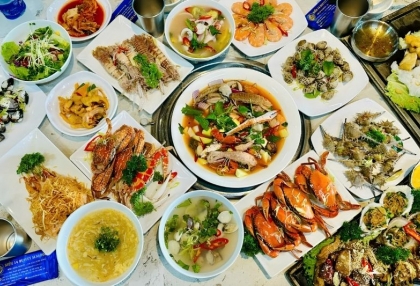
Exploring Halong Bay cuisine on your cruise? Discover must-try seafood like Cha Muc, Sa Sung, and Sam Bien, plus dining formats and dietary tips.
 Ha Long
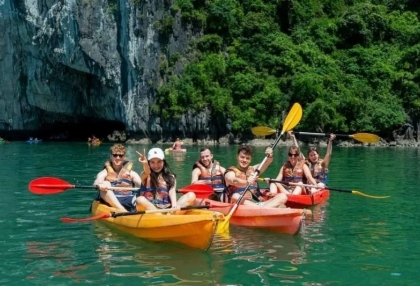
Looking to stay active in Halong Bay? Explore our top 5 experiences including kayaking, cave trekking, cycling, and more, plus what changed under the 2026 safety rules.
 Ha Long
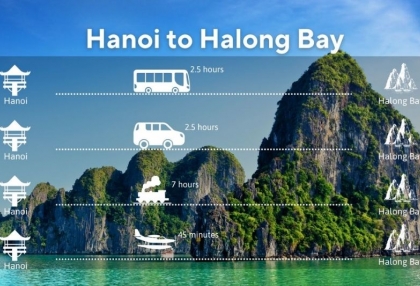
Complete 2026 guide to traveling from Hanoi to Halong Bay: bus, minivan, private car, and helicopter options, distance, price, and which port to use.
 Ha Long
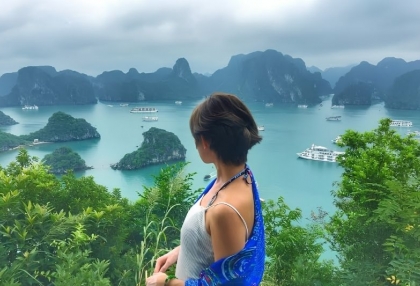
A practical guide to choosing a Halong Bay cruise: which bay to sail (Halong, Lan Ha, or Bai Tu Long), how many days, which comfort tier fits your budget, and when to go.
 Ha Long
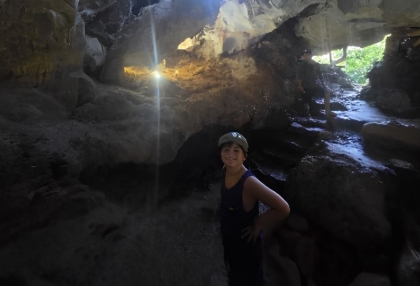
Thien Canh Son Cave (Hang Co) sits on Hon Co Island in quiet Bai Tu Long Bay, reached by a jungle climb of about 100 stone steps. Find directions, prices, and how it compares to Ha Long Bay's main caves.