




 Ha Long
Halong Bay Airport: Which One Should You Fly Into?
There is no airport in Halong City. Travelers fly into Van Don, Cat Bi or Noi Bai and continue by road, about 35 minutes to 3 hours.
Quick summary: What to eat in Halong Bay starts with cha muc, a hand-pounded fried squid patty known across Vietnam. The other local specialties are ngan clams, sa sung sea worms and sam (horseshoe crab), which must be ordered with care. Lunch is included on a Halong Bay day trip or cruise, so the dishes below matter most for meals ashore before or after the boat.
Halong Bay food is coastal northern Vietnamese cooking with a strong focus on shellfish and squid. Four dishes define the region: cha muc (fried squid patty), sa sung (sea worm), ngan (corrugated clam) and sam (horseshoe crab). Most are served in seafood restaurants in Bai Chay and Ha Long city, priced by weight.
Cruise meals in Halong Bay are set menus, so travelers usually choose their own dishes at only one or two meals ashore. This article lists the local specialties, how each dish is served, how seafood is priced and which lookalike species to avoid.
Cha muc is the first dish to try in Halong Bay. It is eaten with xoi (sticky rice) or with banh cuon (steamed rice rolls). After cha muc, the main local shellfish are ngan clams and be be (mantis shrimp). Sam is served at restaurants that know how to prepare it. Sa sung is the most expensive specialty and is usually ordered in small amounts.
All of these dishes are easy to find in Halong. The main points to check are the price per kilogram and the exact species on the plate.
Halong is a coastal area, so local cooking uses fewer fresh herbs and much more shellfish than Hanoi cooking. Many of the clams, crabs and shrimp from the bay rarely appear on menus inland. Local kitchens usually steam or grill them and serve them with a dipping sauce, without heavy seasoning.
Squid is the other difference. In Halong, squid for cha muc is pounded by hand rather than blended by machine. Hand-pounding gives the patty a springy, slightly coarse texture that is different from the smoother cha muc sold in Hanoi.
Menus in Halong have fewer noodle soups and more dishes served in the shell.
Four dishes carry the food reputation of the region, and they differ widely in price. Cha muc is the easiest to start with. Ngan is a simple shellfish dish. Sa sung and sam are specialty choices. Sa sung is expensive, and sam needs care about where it is ordered.
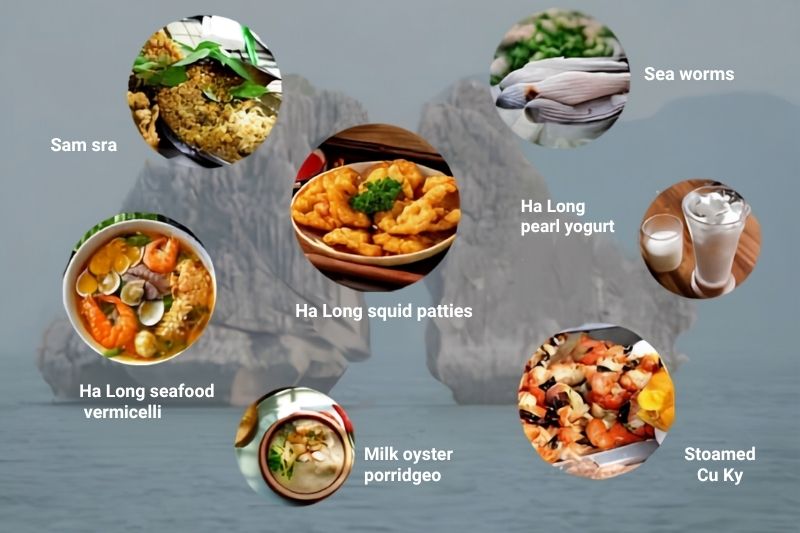
Cha muc is made from fresh squid pounded by hand in a stone mortar into a paste. The paste is seasoned, shaped into small patties and deep-fried until golden. Pounding by hand keeps the texture springy and slightly coarse.
Locals eat cha muc with xoi (sticky rice), or with banh cuon for breakfast. It is also served in bun cha muc, a noodle soup common in Halong.
Cha muc is the simplest local dish to order. It is on the menu at most restaurants in the city, from street stalls to large seafood halls.
Sa sung is the peanut worm Sipunculus nudus. It is collected by hand from sandy tidal flats, mainly around Van Don and Quan Lan. Most sa sung is dried and used in small amounts to add a sweet flavor to soups and noodle broths.
Fried sa sung tastes nutty and slightly sweet, with a crisp texture. Dried sa sung sells for millions of dong per kilogram, as the price table below shows.
A sa sung dish costs several times more than other seafood served in similar portions, so it is worth asking the price before ordering.
Ngan (Austriella corrugata) looks like a large hard clam and lives in the mudflats of coastal mangroves. The meat is rich and earthy. It is grilled in foil over charcoal, steamed with lemongrass or cooked in chao ngan, a rice porridge.
Ruou ngan is a local drink made by mixing the liquid from fresh ngan with rice wine. The taste is strong and not to every visitor's liking.
Sam is a horseshoe crab served as a full set of dishes rather than one plate. A sam meal can include blood jelly, a sweet and sour chili stir-fry, batter-fried legs and grilled eggs served in the shell. It is the most traditional dish on this list and the one that needs the most care.
Two horseshoe crab species live in Vietnamese waters: sam (Tachypleus tridentatus) and so bien (Carcinoscorpius rotundicauda). Only sam is eaten. In 2015, the Vietnam Food Safety Department asked 28 coastal provinces to ban so bien as food, after 15 poisoning cases and 4 deaths that year, as reported by vnexpress.net.
Raw dishes need the same care. Raw sam salad, live ngan with lime and raw oysters are popular locally, but they can upset a stomach that is not used to them. If you are new to these dishes, choose the cooked versions on the first night.
Beyond the four main dishes, everyday food in Halong is simple coastal cooking, and most of it costs less than the specialties.
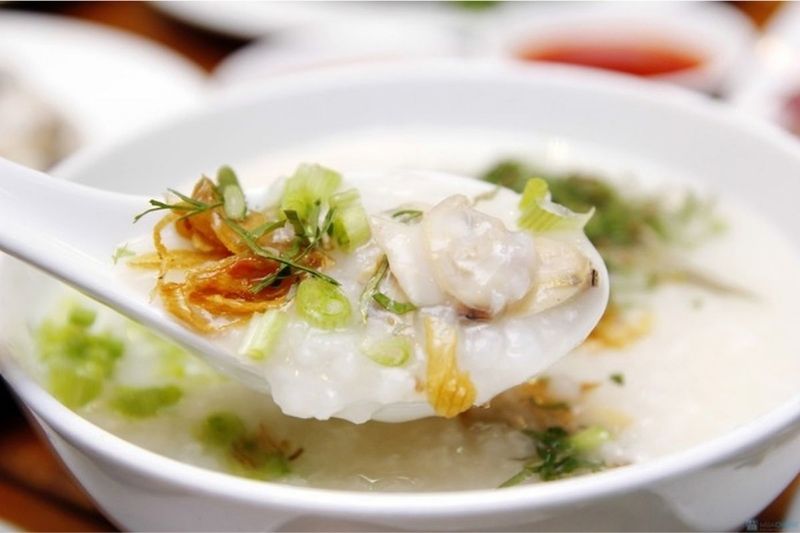
Breakfast stalls in Halong open soon after dawn, and many sell out before lunch.
Seafood in Halong restaurants is priced by live weight, per kilogram, and chosen from the tank. These steps help you avoid paying more than expected:
| Cha muc grade | Retail price |
|---|---|
| Hand-pounded, top grade | 500,000 to 650,000 VND per kg |
| Hand-pounded, grade 1 | 400,000 to 480,000 VND per kg |
| Blended with prawn | 380,000 to 420,000 VND per kg |
| Blended with mackerel | 280,000 to 320,000 VND per kg |
Indicative retail prices from Quang Ninh cha muc producers, July 2026. Restaurant portions cost more.
| Dried sa sung grade | Retail price |
|---|---|
| Top grade | 6,000,000 to 8,000,000 VND per kg |
| Grade 1 | 4,000,000 to 6,000,000 VND per kg |
| Grade 2 | 3,200,000 to 4,000,000 VND per kg |
| Grade for pho stock | 1,900,000 to 2,400,000 VND per kg |
Indicative retail prices from Quang Ninh sa sung sellers, July 2026. About 10 to 12 kilograms of fresh sa sung dry down to 1 kilogram, which explains the high price.
For a souvenir, 100 grams of dried sa sung is enough to flavor stock many times. Vacuum-sealed cha muc and sa sung both travel well.
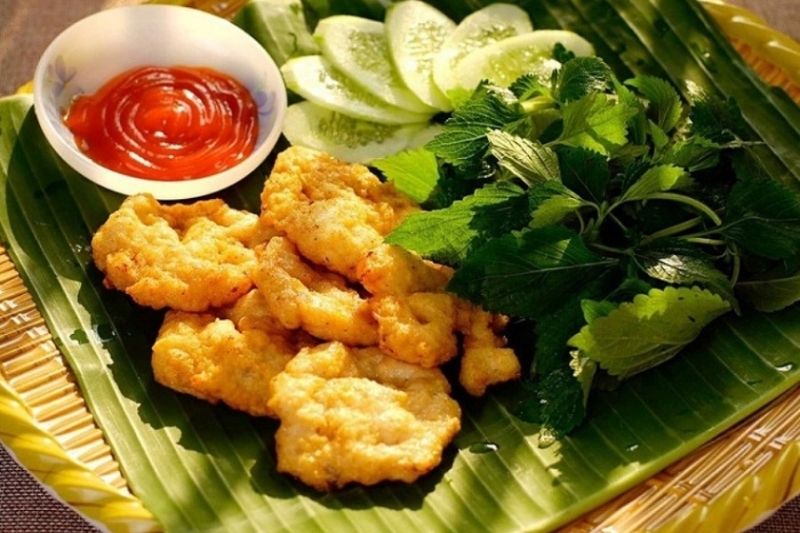
A seafood dinner for two at a sit-down restaurant costs roughly 800,000 to 1,000,000 VND. Crab or lobster from the tank can raise the bill well above this. The full Halong Bay cost, including transfers, tickets and cruise fares, is listed separately.
Fresh seafood is served in Halong all year. Supply is steadiest in the calmer months, which are also the best time to visit Halong Bay: March to May and September to November. In the summer storm season, rough seas can cancel boats and reduce what is in the tanks. In winter, cha muc and hot porridge are easier to enjoy than cold shellfish.
Halong Bay is famous for cha muc, a hand-pounded fried squid patty known across Vietnam. It is eaten with sticky rice or banh cuon. Other regional specialties are ngan clams, sa sung sea worms and sam, a horseshoe crab served as a set of dishes.
Yes, if it is sam and not so bien. Sam is a common restaurant dish in Quang Ninh. So bien is a smaller lookalike that contains tetrodotoxin, and cooking does not destroy it. Sam has a spined, triangular tail, while so bien has a round, smooth tail. Order sam only at established restaurants.
A seafood dinner for two usually costs about 800,000 to 1,000,000 VND. Prices vary because seafood is sold by weight, not by dish. A meal with sa sung or a large sam costs several times more. Confirm the price per kilogram before ordering.
Yes. Cruise menus include chicken, beef and vegetarian dishes on request, and restaurants in Bai Chay can prepare a meat-free meal. Tell the cruise when you book, since boats carry limited kitchen supplies and a request made on board is harder to meet.
Yes. Vacuum-sealed cha muc and dried sa sung are sold at local markets and travel well. Buy sa sung in small amounts, since a little goes a long way in soup. Check your airline's rules on food in cabin baggage before you fly.
Cha muc is the easiest dish to start with. It is served at most restaurants, costs less than the other specialties and needs no special preparation at the table. After cha muc, try ngan clams or be be mantis shrimp.
On a Halong Bay overnight cruise, lunch, dinner and breakfast are set menus. The practical plan is to keep one meal ashore for local dishes such as cha muc, ngan and shellfish from the tank.
Lunch is included on the Halong Bay Day Tour from Hanoi, sold by Beka Travel from $34.
For evening meals in the city, the main choices are listed under Halong Bay restaurants.
Travelers choosing between the two bays can compare food, crowds and routes in Halong Bay vs Lan Ha Bay.
Current departures and prices are listed with the Halong Bay boat tours.
Ha Long
There is no airport in Halong City. Travelers fly into Van Don, Cat Bi or Noi Bai and continue by road, about 35 minutes to 3 hours.
 Ha Long
Sapa to Halong Bay is about 475 km and 8 to 10 hours by road. Compare direct sleeper buses, trains via Hanoi and private cars, with times and fares.
 Ha Long
Ninh Binh to Halong Bay: distance, travel time and transport options by bus, train, private car and motorbike, with timing for cruise check in.
 Ha Long
Nine Halong Bay beaches compared: Ti Top, Bai Chay, Tuan Chau, Soi Sim and the outer islands, with where to swim, what it costs and when to go.
 Ha Long
Bai Tho Mountain in Ha Long: a 168 m peak with royal poems carved in 1468, closed to climbers since 2017, with a pagoda and temple at its base.
 Ha Long
Best time to visit Halong Bay: March to May and September to November. Weather by month, sea temperature, rainy days, storm season and busy periods.
 Ha Long
Dau Go Cave in Halong Bay: a three-chamber cave on Dau Go Island, entered on the route VHL1 ticket at 250,000 VND, with 90 steps and the wooden stakes legend.
 Ha Long
Halong Bay with kids: which ages suit a day tour or cruise, how child fares and the sightseeing ticket work, family cabins and safety checks.
 Ha Long
Halong Bay packing list: what to bring for a day trip or cruise, what to wear by season, luggage limits, plug type and the plastic ban.
 Ha Long
Discover how to practice responsible travel in Halong Bay, from the bay's single-use plastic ban to supporting local communities on a sustainable cruise.
