
Sung Sot Cave, also called Surprise Cave, is the largest developed cave in Halong Bay and the busiest stop on Sightseeing Route 2. A narrow entrance hidden under forest opens into two chambers, the second with a ceiling more than 30 meters high. This Sung Sot Cave Halong Bay guide covers the location, the history, the steps, the ticket price and how to plan the visit.
| Quick fact | Details |
|---|---|
| Location | Bo Hon Island, central Halong Bay |
| Distance | About 14 km from Bai Chay Tourist Wharf |
| Recorded by | French explorers in 1901 |
| Opened to visitors | 1993 |
| Chambers | Two, the second more than 30 meters high |
| Walking route | About 500 meters, paved and lit |
| Steps at the entrance | Around 50 up, then about 10 down |
| Sightseeing route | Route 2 |
| Route fee | 250,000 VND per person |
Overview of Sung Sot Cave
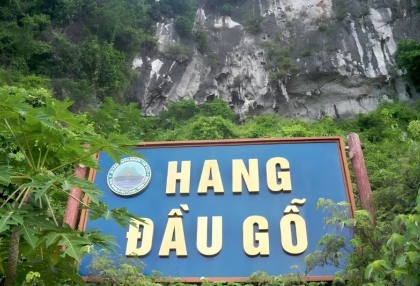
Halong Bay Sung Sot Cave is the most visited cave in the bay, inside the UNESCO-listed landscape and reached by a short uphill walk through forest. Vietnamese signage writes the name Hang Sung Sot, which is why Hang Sung Sot Cave Halong Bay turns up in some travel listings for exactly the same place.
Where is Sung Sot Cave?
The cave is on Bo Hon Island in the central part of the bay, about 14 km from Bai Chay Tourist Wharf. The Hang Sung Sot Cave location puts it beside Luon Cave, Trinh Nu Cave and Ti Top Island, which is why all four share one sightseeing route.
There is no road and no independent boat service, so Sung Sot Cave in Halong Bay is reached only as part of an official route. For most international visitors, a day cruise or an overnight cruise is the practical way in.
What Sung Sot means and the other names in use
Sung sot means surprise in Vietnamese, and the name describes the entrance: a narrow gap in the cliff that opens without warning into vast chambers. Travel listings therefore use Surprise Cave Halong Bay, Surprise Cave in Halong Bay and Sung Sot Surprise Cave for the same cave.
French explorers recorded it in 1901 and named it Grotte de la Surprise. It opened to visitors in 1993, and that gap of more than ninety years is most of the Sung Sot Cave history the guides tell on board.
Explore the wonders of Sung Sot Cave
The surprise layout
The approach is a climb through forest to an opening barely wide enough for a group to pass through in single file. Inside, the passage widens quickly, and a paved path of about 500 meters runs the length of the cave with lighting placed to pick out the larger formations.
Two giant chambers
The first chamber is the smaller of the two and works as an introduction, with a ceiling of stalactites hanging like chandeliers and formations shaped closely enough to animals that guides have names for them.
The second is far larger, with a ceiling above 30 meters, natural stone pillars and shallow pools. Guides call its upper section the Royal Garden, where daylight and vegetation show through an opening in the rock, and this is where most Sung Sot Cave photos are taken.
Folklore formations inside Sung Sot Cave
Several formations carry names from Vietnamese folklore. One resembles a horse and another a long sword, both linked to Saint Giong, the hero who is said to have driven invaders out and left his weapons behind to guard the coast.
Whether a shape reads as a horse depends on where you stand and which lamp is on it, which is part of the appeal. These stories give Sung Sot Cave Vietnam a cultural layer that a purely geological visit would miss.
The panoramic exit
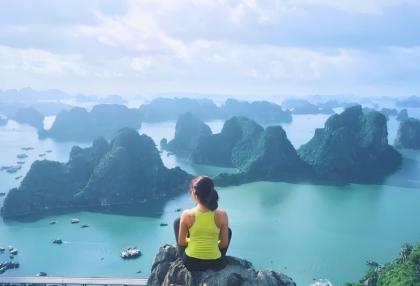
The route runs one way and finishes higher than it began, at an open terrace looking out over the karst islands and green water. For many visitors this view is the strongest part of the whole stop.
Because the exit does not retrace the entrance, expect a further set of stairs near the end rather than a flat walk back. See Halong Bay caves for how this one compares with the others on the bay.
Tickets, routes and the best way to visit
Sung Sot Cave tickets are not sold on their own. The cave sits on Sightseeing Route 2 together with Ti Top Island, Me Cung Cave, Bo Nau Cave, Luon Cave, Trong Cave, Trinh Nu Cave, Ho Dong Tien and Soi Sim Beach, and the route fee is 250,000 VND per person.
A Sung Sot Cave tour therefore means a Route 2 day cruise or overnight cruise, departing from Tuan Chau International Marina or another designated port. Day cruises pair the cave with kayaking and island stops, while overnight itineraries cover the same route at a slower pace, and the current departures are listed with the Halong Bay cruise schedule. The number of Sung Sot Cave steps depends on which part of the route is counted.
- Up to the entrance: around 50 steps up, followed by about 10 down.
- Inside the cave: more stairs through the chambers and a further set near the one-way exit.
- Total: no official figure exists for the complete walk, which is why published counts differ so widely. Plan for several flights of stairs rather than one fixed number.
Important notes for visitors
The stop takes about 90 minutes to 2 hours in total, counting the walk up, the cave itself and the descent to the boat, though timing shifts with crowd levels and the cruise schedule.
- Book the cruise, not the cave: access is through a Route 2 sightseeing cruise, so there is no ticket counter to buy at independently.
- Wear shoes with grip: the path climbs and descends and turns slippery in humid weather, which is most of the year.
- Expect company: this is the busiest cave in the bay, and the entrance and narrower sections back up during peak cruise hours.
- Consider mobility carefully: stairs, uneven ground and a one-way route make the cave difficult for anyone with reduced mobility.
- Bring water and sun cover: the approach is outdoors and exposed, while the cave itself is cool and humid.
- Keep the camera ready: the forested entrance, the lit formations and the final viewpoint are three quite different subjects in one stop.
The wider planning detail for Halong Bay is set out separately.
Frequently asked questions
Where is Sung Sot Cave?
On Bo Hon Island in the central part of Halong Bay, about 14 km from Bai Chay Tourist Wharf. The Sung Sot Cave location is reachable only by boat, as part of Sightseeing Route 2.
What is Sung Sot Cave also called?
Surprise Cave, which is a direct translation. Sung sot means surprise in Vietnamese, and Vietnamese signage writes the name Hang Sung Sot.
Where is Sung Sot Cave in Vietnam?
Sung Sot Cave in Vietnam is in Quang Ninh Province, in the northeast of the country, on an island in Halong Bay rather than on the mainland.
How many steps does Sung Sot Cave have?
There is no single official total. The first climb is around 50 steps, followed by about 10 down, then more stairs inside the cave and near the exit.
How much are Sung Sot Cave tickets?
250,000 VND per person for Sightseeing Route 2, which covers the cave and eight other attractions. Cruise fares, transport and optional activities are charged separately.
Is Sung Sot Cave worth visiting?
Yes, particularly on a first trip. Sung Sot Cave Halong Bay Vietnam has the largest chambers of any developed cave in the bay and finishes at one of the best viewpoints on the water.
What is the best way to visit Sung Sot Cave?
A Route 2 day cruise for a first visit, or an overnight cruise for a slower itinerary covering the same route. Current departures are listed with the Halong Bay day trip options.