Luon Cave Halong Bay: Best Kayaking Spot in the Bay
Luon Cave Halong Bay: Best Kayaking Spot in the Bay
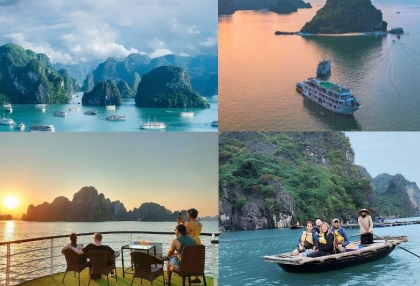
Luon Cave is a low limestone tunnel on Bo Hon Island that opens into a calm lagoon enclosed by karst cliffs. Unlike the large caves visitors walk through, Luon Cave Halong Bay can only be entered by kayak or traditional bamboo boat, because the arch is too low for a cruise ship to pass under. This guide covers where it is, how to get inside, which route includes it and what it costs.
Overview and features of Luon Cave
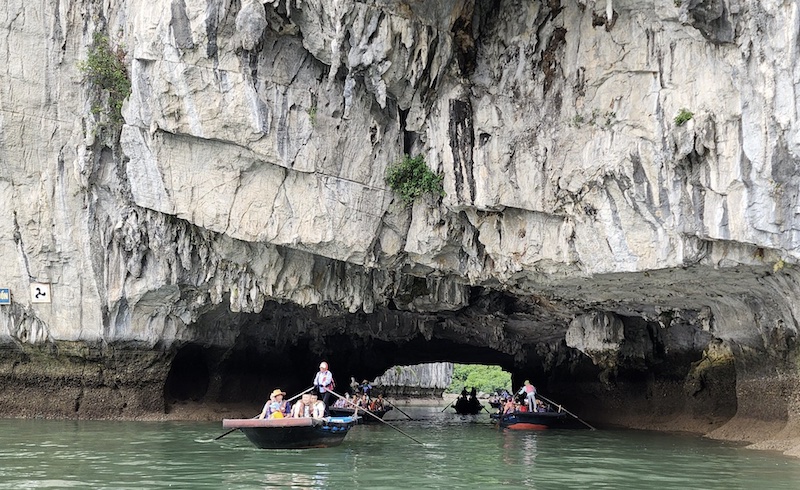
Luon Cave is a water tunnel on the northeastern side of Bo Hon Island. It connects the open bay with a quiet inner lagoon ringed by limestone cliffs, and the whole visit takes place on the water rather than on foot.
Quick fact
Details
Location
Northeast side of Bo Hon Island
Distance
About 13 km from Tuan Chau International Marina, about 11 km from Ha Long International Passenger Port
Cave type
Water tunnel leading to an enclosed lagoon
Tunnel size
About 100 meters long and 4 meters wide
Clearance
2.5 to 4 meters above the water, depending on the tide
How to enter
Kayak or bamboo rowboat only
Sightseeing route
Route 2
Route fee
250,000 VND per person
Location of Luon Cave
Luon Cave in Halong Bay is located on Bo Hon Island in the southern part of the bay, around 13 km from Tuan Chau International Marina and about 11 km from Ha Long International Passenger Port. It lies close to Sung Sot Cave, Trinh Nu Cave and Trong Cave, which is why the four are normally visited on the same itinerary.
The name comes from the Vietnamese word for passing through, which describes exactly what visitors do here. The tunnel is a natural passage cut by marine erosion over a long period, and fossil shells are still visible in the limestone cliffs around the entrance.
The features of Luon Cave in Halong Bay
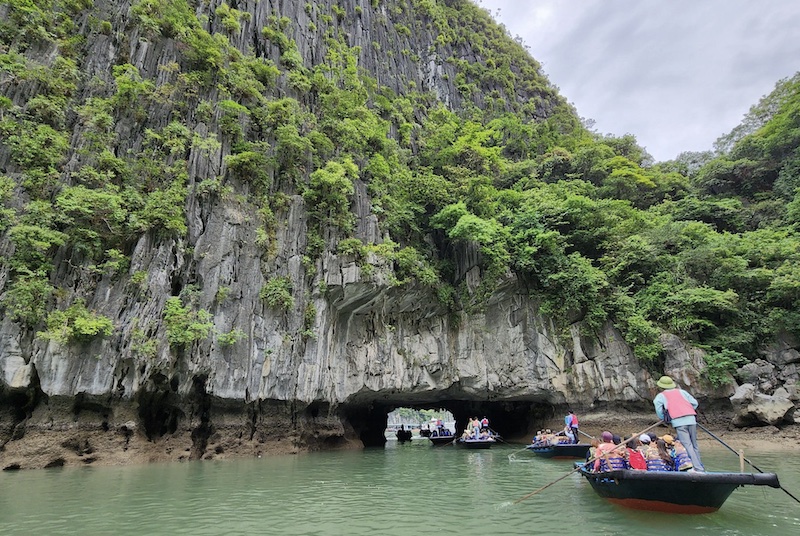
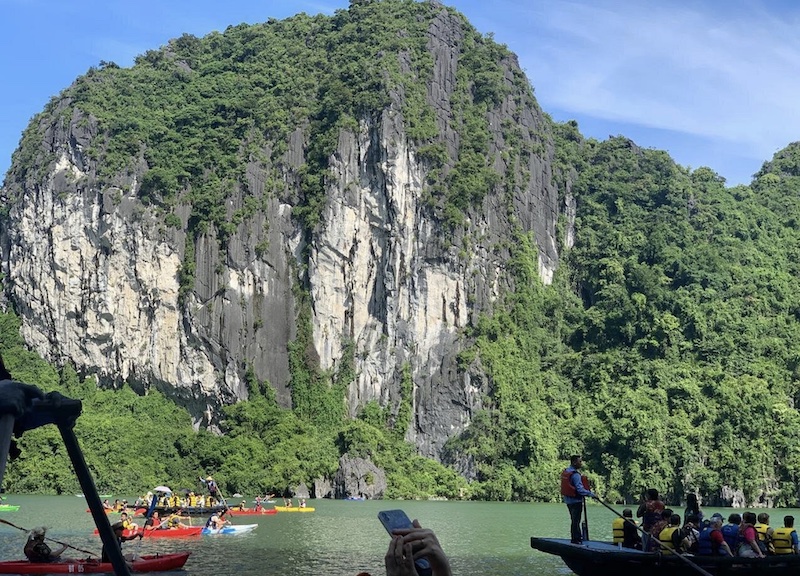
What sets Halong Bay Luon Cave apart is the transition from the open bay into a sheltered lagoon. The tunnel runs about 100 meters with a low arched ceiling above the water, and the scenery changes completely once a boat comes out the other side: still water, steep cliffs on every side and dense vegetation growing straight out of the rock.
The lagoon is also known for its wildlife. Groups of monkeys appear on the cliffs above the water, and orchids, ferns and other plants grow along the limestone walls. The enclosed setting makes this one of the quietest places in the bay, since engine noise does not carry past the arch.
How to explore Luon Cave
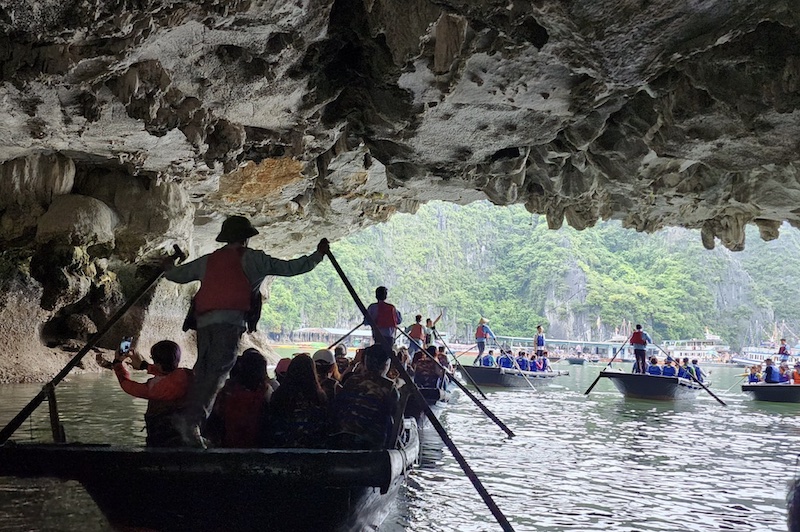
Luon Cave Halong Bay Vietnam is not a cave visitors walk into. Cruise boats drop anchor near Bo Hon Island, and everyone transfers to a smaller craft before going through the tunnel. There are two ways to make the crossing.
Kayaking through Luon Cave
Kayaking is the more popular option. A two-person kayak lets you set your own pace, come right up against the limestone walls and move freely around the lagoon once you are through, which suits active travelers and anyone taking photographs at water level.
The clearance under the arch drops to about 2.5 meters at high tide, so you may need to duck as the kayak slides through. Follow whatever instructions the guide gives at the entrance, because the passage is short but genuinely tight.
Riding a traditional bamboo boat
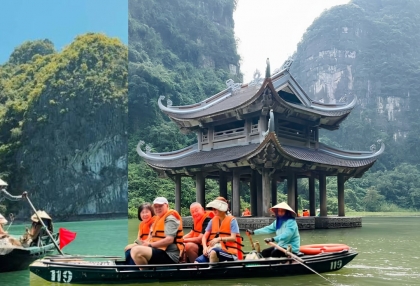
The alternative is a bamboo rowboat handled by a local operator, so nobody in the group has to paddle. It suits families, older travelers and photographers who would rather keep both hands free.
A rowboat is also steadier than a kayak, which makes it easier to watch the cliffs and the monkeys without worrying about balance. The route and the time inside the lagoon are the same either way.
Which route includes Luon Cave and what it costs
Luon Cave is part of Sightseeing Route 2, together with Soi Sim Beach, Ti Top Island, Sung Sot Cave, Me Cung Cave, Bo Nau Cave, Trong Cave, Trinh Nu Cave and Ho Dong Tien. The fee is 250,000 VND per person for the whole route rather than a separate ticket for the cave.
There is no independent boat service to the cave, so a Route 2 day cruise or an overnight itinerary is the only way in. Departures leave from Tuan Chau International Marina or Ha Long International Passenger Port, and kayak or rowboat hire may be charged separately, so check what the fare covers before booking Halong Bay boat tours.
Travel tips for your Luon Cave trip
The visit is short, usually under an hour, but it happens entirely on open water and then in a confined tunnel, so a little preparation makes a difference.
Check the sea conditions: calm weather makes both the kayak and the rowboat crossing more comfortable, and operators may skip the cave when the water is rough.
Keep the life jacket on: wear it for the whole time you are in a kayak or a small boat, not only at the transfer point.
Wear quick-drying clothes: paddling splashes water into the kayak, and the tunnel walls drip.
Bring sun protection: sunscreen, sunglasses and a hat for the open stretch between the cruise boat and the entrance.
Be ready to duck: the arch is lowest at high tide, so keep your head down while passing through.
Do not feed the monkeys: they are wild animals living on the cliffs. Watch them from the water and keep your distance.
Take everything back out: the lagoon has no current to clear it, so anything dropped in stays there.
Allow time for Sung Sot: it is close by on the same route, and most itineraries pair the two, so check the schedule if both matter to you.
Other Halong Bay kayaking spots and the wider planning detail for the bay are covered separately.
Frequently asked questions
Where is Luon Cave located?
On the northeastern side of Bo Hon Island in Halong Bay, about 13 km from Tuan Chau International Marina and about 11 km from Ha Long International Passenger Port.
Why is Luon Cave different from the other caves?
Most of the famous Halong Bay caves are walked through on foot. Luon Cave is a low water tunnel leading into an enclosed lagoon, so the only way in is by kayak or bamboo rowboat.
Can a cruise ship go through Luon Cave?
No. The clearance under the arch is only 2.5 to 4 meters depending on the tide, so cruise boats anchor near Bo Hon Island and passengers transfer to a smaller craft.
Is Luon Cave suitable for families?
Yes. Families who would rather not paddle can take a bamboo rowboat instead of a kayak. The rower handles the boat, so the crossing works for children and older travelers.
How much does it cost to visit Luon Cave?
250,000 VND per person for Sightseeing Route 2, which also covers Sung Sot, Me Cung, Bo Nau, Trong, Trinh Nu, Ho Dong Tien, Ti Top Island and Soi Sim Beach. Kayak or rowboat hire can be charged on top.
What is the best time to visit Luon Cave?
Spring and early summer generally bring warm weather and calmer water, though conditions change year to year. The seasons are compared in full under best time to visit Halong Bay.
Which cave should I combine with Luon Cave?
Sung Sot Cave, the largest developed cave in the bay and the closest major stop on the same route. Halong Bay day trip options running Route 2 are listed with their schedules.
There is no airport in Halong City. Travelers fly into Van Don, Cat Bi or Noi Bai International Airport and continue to the bay by road. Van Don is the closest at about 53 km, Cat Bi offers strong connections from Hai Phong, and Noi Bai has the widest range of international flights, with the road transfer taking 35 minutes to 3 hours depending on the airport.
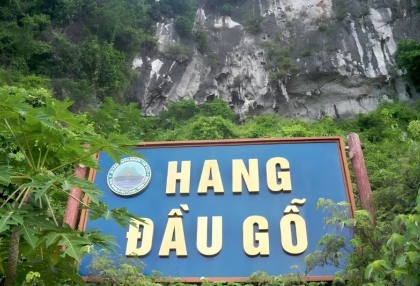
Dau Go Cave is one of Ha Long Bay's largest historic caves, tied to a 13th-century Tran Hung Dao legend. Find the Route 1 ticket price, accessibility notes, and what to expect inside.
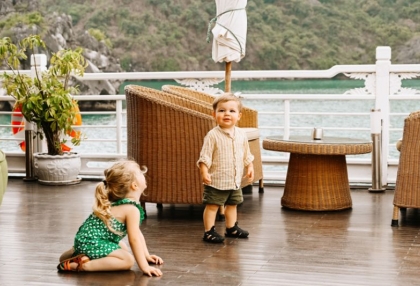
Planning to cruise Halong Bay with kids? Compare family cabins, child pricing by age, kid-friendly itineraries, and safety tips for a stress-free trip.
Discover how to practice responsible travel in Halong Bay, from the bay's single-use plastic ban to supporting local communities on a sustainable cruise.



 Ha Long