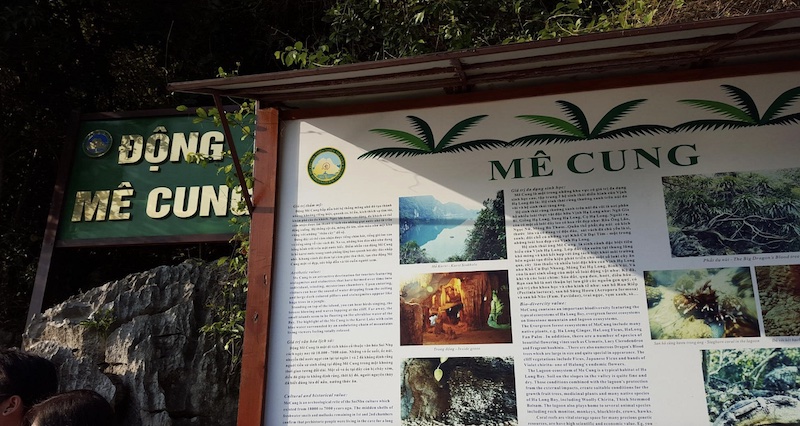
Quick summary: Me Cung Cave is a maze-like cave on the VHL2 ticket route, which costs 250,000 VND per person. It is the quietest stop on that route and holds archaeological interest as well as formations. Our Ha Long Bay Day Tour (Beka Travel, from $34) runs VHL2, so ask your operator to confirm Me Cung is on the day's itinerary.
Me Cung Cave sits on the same ticket route as Sung Sot, twenty minutes away by boat, and receives a small fraction of the visitors. Most day cruises on the VHL2 route skip it entirely in favour of a longer stop at the big cave and a swim at Ti Top.
That omission is why the cave stays quiet, and why it is the answer for anyone who wants to see limestone formations without standing in a queue to do it.
Me Cung means labyrinth in Vietnamese, and the layout earns the name. Rather than one large chamber, the cave runs as a series of narrow passages that turn back on themselves, opening occasionally into small vaulted spaces. It is a very different experience from the show caves, and a smaller one.
What is Me Cung Cave?
Me Cung Cave is a small labyrinthine cave on the VHL2 route in Halong Bay, made up of narrow winding passages rather than a single large chamber. It is known for its archaeological record as much as for its formations, and it attracts far fewer visitors than Sung Sot on the same ticket. A visit typically takes 30 to 40 minutes.
Of the 70-plus caves recorded across Halong Bay, only 19 are open to visitors (Source: Ha Long Bay - Yen Tu World Heritage Management Board). Me Cung is among the least visited of those, despite sitting on the busiest route in the bay.
The reason comes down to itinerary economics rather than the cave itself. Half-day cruises have time for one cave stop, and operators default to the one with the reputation.
Why is it called Maze Cave?
The name describes the layout accurately. Me Cung translates as labyrinth or maze, and the interior consists of connected passages that fold back on each other rather than opening into one chamber.
You lose your bearings quickly inside, which is part of the appeal. The route is marked and you are always with a guide, but the sense of not knowing which direction you are facing is genuine.
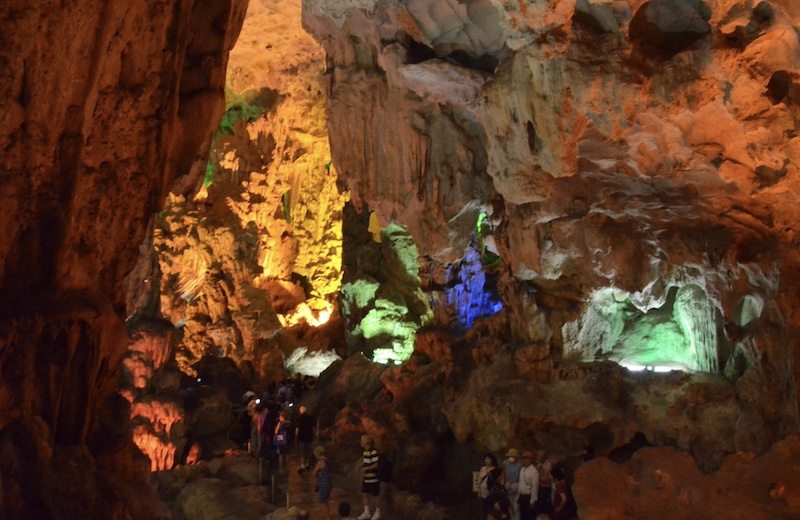
This is the opposite of what the show caves offer. Thien Cung Cave and Sung Sot Cave are designed around a single dramatic reveal. Me Cung works through accumulation, with small spaces opening one after another.
What is inside Me Cung Cave?
The cave holds three things worth your attention: the passage system itself, a small freshwater lake in the interior, and an archaeological record that sets it apart from every other cave on the tourist circuit. The full loop takes 30 to 40 minutes and involves more stooping and stepping than the show caves do.
The labyrinth passages
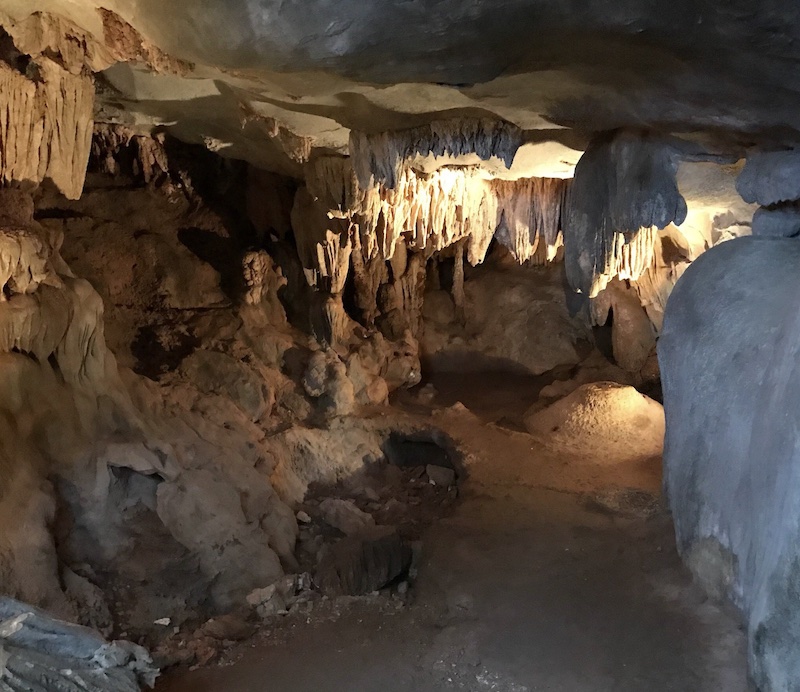
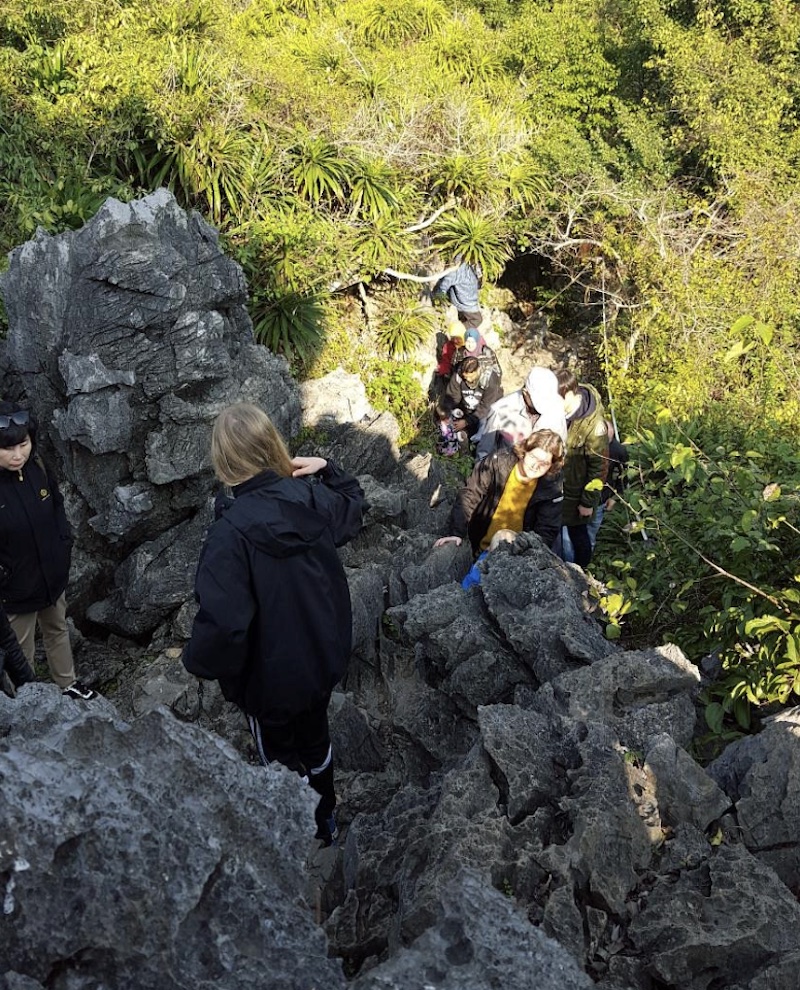
The passages are narrow, and in places you duck. Formations here are smaller and more delicate than the columns at Sung Sot, and the lighting is far less theatrical, which suits the space.
The floor is uneven with natural steps rather than the engineered walkways found in the larger caves. This is the least accessible of the VHL2 caves for anyone with mobility difficulties.
Me Cung Lake
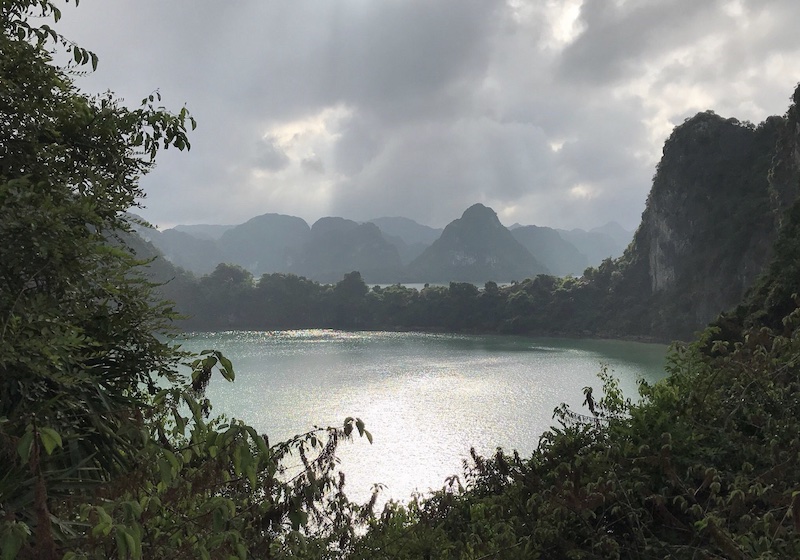
Deeper inside, the passages open onto a small body of fresh water enclosed by rock. It is still, shallow, and quiet enough that you hear water moving through the limestone around you.
Guides usually stop the group here. It is the one part of the cave where there is space to stand still, and it is the photograph most people take.
The archaeological record
Me Cung Cave is a recorded prehistoric habitation site, and remains found here place it among the archaeologically significant caves of the bay rather than merely the scenic ones. Shell deposits and traces of early human occupation have been documented in the cave floor.
This is genuinely unusual. The other caves on the circuit are geological attractions, whereas Me Cung carries a human record as well. It is also the part of the visit that most guides cover briefly, so ask if it interests you.
Where is Me Cung Cave and how do you get there?
Me Cung Cave is reached by boat on the VHL2 route, the same route that covers Sung Sot, Soi Sim and Ti Top Island. There is no independent access, no ferry, and no walk-up entrance, so getting there depends entirely on your cruise itinerary.
Two things to check before you book:
Confirm Me Cung is actually on the day's stops. This matters more here than for any other cave in the bay, because it is the stop most commonly dropped when schedules are tight. A boat can hold a VHL2 ticket and still not visit it.
Routes cannot be swapped. Boats licensed for VHL1 visit Thien Cung Cave and Dau Go Cave instead, and cannot detour here.
Most VHL2 boats leave from Tuan Chau Marina, 150 to 160 kilometres from Hanoi, or 2.5 to 3 hours by expressway. Shuttle buses and private cars are the only options now, since the Hanoi seaplane service stopped permanently on 1 April 2026.
How much does Me Cung Cave cost in 2026?
Entry to Me Cung Cave is covered by the government route ticket rather than charged separately. The VHL2 route costs 250,000 VND per person for a day visit, and that fee also covers Sung Sot, Soi Sim and Ti Top Island.
Overnight itineraries on the same route cost 550,000 VND for one night and 750,000 VND for two, with sightseeing access already included rather than added on top.
Reduced rates apply as follows:
Free for children under 1.2 metres tall, or under 7 years old.
20% off for children aged 7 to under 16, assessed on age rather than height.
50% off for travellers over 60, but for Vietnamese citizens only. A foreign passport pays the full rate at any age.
Fees updated July 2026. Source: Ha Long Bay - Yen Tu World Heritage Management Board.
Since Me Cung shares a ticket with Sung Sot, visiting it costs nothing extra. The only currency involved is itinerary time, which is exactly why operators trade it away. Our complete Halong Bay trip cost breakdown covers transfers, drinks and tips.
How does Me Cung compare to the other Halong Bay caves?
Me Cung trades scale for solitude. It is the smallest of the main-circuit caves and by a wide margin the quietest, which makes it the right choice for a second cave stop rather than a first.
Cave
Ticket route
Scale
Crowd level
Time inside
Choose it for
Me Cung Cave
VHL2
Small
Light
30-40 min
Quiet, maze layout, archaeology
Sung Sot Cave
VHL2
Largest
Heaviest
45-60 min
The biggest chamber in the bay
Luon Cave
VHL2
Small
Moderate
30-45 min
Kayaking, no walking involved
Thien Cung Cave
VHL1
Medium
Heavy
30-45 min
Dense formations, strong photographs
Dau Go Cave
VHL1
Large
Moderate
30-40 min
Less lighting, more geology
Thien Canh Son Cave
Bai Tu Long
Small
Lightest
30 min
Genuine solitude
The useful pairing is Me Cung with Sung Sot. Both sit on VHL2 and cost nothing extra to combine, which gives you the busiest cave and the quietest one on a single ticket. Our full Halong Bay caves guide compares all six side by side.
When should you visit Me Cung Cave?
Crowding is less of a factor here than anywhere else on the route, so timing matters mainly for the passages themselves. Early morning is still best, because the narrow sections feel considerably better with a small group ahead of you than with two tour parties overlapping.
The 10am to 2pm peak that dominates Sung Sot has a much smaller effect here, since most boats in that window are queuing at the big cave rather than coming to this one.
Two things worth doing:
Ask your operator to confirm the stop when you book, rather than assuming a VHL2 ticket guarantees it.
Request Me Cung specifically if you are booking a private or small-group charter. Operators will often accommodate it, since it costs them nothing on the ticket.
Season affects the boat journey rather than the cave. October to November and March to May give the calmest water.
What to know before you go
Me Cung is the most physical of the walking caves, and a few details make the visit easier.
Wear shoes with grip and a closed toe. The floor is natural rock with uneven steps, not a paved walkway.
Expect to stoop. Several passages are low, and this is not a cave for anyone uncomfortable in tight spaces.
Bring a small torch if you have one. The lighting is deliberately restrained compared with the show caves.
Skip the flash. The formations here are small and detailed, and flash flattens them completely.
Carry a refillable bottle. Single-use plastic is banned across the bay, and vessels have been suspended for allowing it aboard.
One more consideration. Anyone claustrophobic should think carefully about this cave, since the passages are genuinely narrow in sections and turning back mid-route is awkward with a group behind you.
Frequently asked questions
These are the questions we hear most about Me Cung Cave, and almost all of them come down to whether it is actually on the itinerary.
Is Me Cung Cave worth visiting?
Yes, particularly as a second cave stop alongside Sung Sot. It offers a completely different experience, with narrow winding passages instead of one large chamber, and it is the quietest cave on the main circuit. It also carries archaeological interest that the purely scenic caves do not.
Why do so few cruises stop at Me Cung Cave?
Because half-day itineraries have time for one cave, and operators default to Sung Sot, which has the reputation. Me Cung costs nothing extra on the same ticket, so the trade is one of schedule rather than money. Ask specifically and many operators will include it.
Is Me Cung Cave suitable for children or older travellers?
Children generally enjoy it, since the maze layout holds their attention better than a large chamber does. It is less suitable for older or less mobile travellers, because the floor is natural rock with uneven steps and several passages require stooping. Luon Cave is the easier alternative on the same ticket.
How long does a visit to Me Cung Cave take?
Around 30 to 40 minutes, including the approach from the boat and the loop through the passages. It runs shorter than Sung Sot despite the winding layout, because the total distance covered is smaller and groups are rarely held up by congestion inside.
What makes Me Cung Cave archaeologically significant?
Prehistoric human remains and shell deposits have been recorded in the cave floor, marking it as an early habitation site rather than only a scenic one. Most guides mention this briefly. If the archaeology is your reason for visiting, say so at the start and ask your guide to expand on it.
Can you visit Me Cung Cave and Sung Sot Cave together?
Yes, and it is the natural combination. Both sit on the VHL2 route and share the same 250,000 VND ticket, so adding Me Cung costs nothing beyond itinerary time. Confirm both stops are listed when you book, since Me Cung is the one usually dropped.
Ask for it by name
Me Cung Cave is the easiest quiet experience to arrange in Halong Bay, because it requires no extra ticket, no route change and no additional cost. It requires only that you ask.
Our Ha Long Bay Day Tour runs the VHL2 route from $34, covering Sung Sot Cave, Luon Cave and Ti Top Island. If Me Cung matters to you, raise it when you book so it can be built into the day.
There is no airport in Halong City. Travelers fly into Van Don, Cat Bi or Noi Bai International Airport and continue to the bay by road. Van Don is the closest at about 53 km, Cat Bi offers strong connections from Hai Phong, and Noi Bai has the widest range of international flights, with the road transfer taking 35 minutes to 3 hours depending on the airport.
Dau Go Cave is one of Ha Long Bay's largest historic caves, tied to a 13th-century Tran Hung Dao legend. Find the Route 1 ticket price, accessibility notes, and what to expect inside.
Planning to cruise Halong Bay with kids? Compare family cabins, child pricing by age, kid-friendly itineraries, and safety tips for a stress-free trip.
Discover how to practice responsible travel in Halong Bay, from the bay's single-use plastic ban to supporting local communities on a sustainable cruise.



 Ha Long