



 Ha Long
Best Time to Visit Halong Bay, Month Guide
Planning your Halong Bay trip? Compare spring, summer, autumn, and winter weather, crowd levels, and booking tips to find your ideal travel month.
Last updated: July 2026
Thien Cung Cave is the cave people photograph. It is not the largest in Halong Bay, and it is not the quietest, but it holds more stalactite formations per square metre than anything else on the tourist circuit, and it is lit hard enough that every one of them shows up on camera.
The name translates as Heavenly Palace, which tells you something about how Vietnamese visitors have always read the place. Where Sung Sot impresses through scale, Thien Cung works through density. Columns, curtains and stalagmites crowd the walls from floor to ceiling.
Whether you find that magnificent or overdone tends to depend on how you feel about coloured floodlights. It is worth knowing which camp you fall into before you book.
Quick summary: Thien Cung Cave sits on Dau Go Island, about 20 minutes by boat from Tuan Chau pier. You reach it on the VHL1 ticket route, which costs 250,000 VND per person and also covers Dau Go Cave. Note that our own Ha Long Bay Day Tour (Beka Travel, from $34) runs VHL2 instead, so it visits Sung Sot rather than Thien Cung. Aim to arrive before 10am or after 2pm.
Thien Cung Cave is one of the two show caves on Dau Go Island in Halong Bay, reached by boat from Tuan Chau pier. Its chambers are packed with dense stalactite and stalagmite formations, lit with coloured floodlights that make it the most photographed cave in the bay. A visit typically takes 30 to 45 minutes including the climb from the jetty.
Of the 70-plus caves recorded across Halong Bay, only 19 are open to visitors at all (Source: Ha Long Bay – Yen Tu World Heritage Management Board). Thien Cung is among the busiest of those, largely because it sits close to the main departure port and slots easily into a half-day itinerary.
The cave sits high in the island wall, so the approach involves a staircase before you reach the entrance. It is short, but it is steep and often slick with condensation.
The name comes from a Vietnamese legend about a dragon king and a wedding held inside the cave. In the story, the young dragon prince searches for his bride across the bay, and the celebration that follows lasts seven days and seven nights inside this chamber. Guides point out the formations said to be the wedding guests, the elephants, and the procession.
Take it as folklore rather than geology. The shapes people identify are limestone doing what limestone does over several million years, and different guides will point at different rocks for the same character.
The story is still worth listening to. Vietnamese visitors read this cave through the legend, and understanding it explains why the lighting is designed the way it is. The floodlights are not trying to be naturalistic. They are staging a scene.
The cave runs as a single main chamber with a raised walkway looping through it, broken into three sections that feel quite distinct. The entrance area is narrow and dim, the central chamber is where the density of formations peaks, and the upper gallery opens onto a view back across the water. The whole loop takes 30 to 45 minutes at tour pace.
The first section is tight and low, with the walkway hugging one wall. Formations here are smaller and the lighting is more restrained, which makes it a reasonable place to let your eyes adjust before the main chamber.
Most groups move through this section quickly. If you want photographs without people in them, this is not where to take them.
The main chamber is the reason Thien Cung Cave has the reputation it has. Stalactites descend the full height of the wall and meet stalagmites rising from the floor, forming columns that guides describe as the four pillars of heaven.
This is where the coloured lighting is heaviest. Greens, reds and blues wash across the formations from floor level. Photographers either love this or spend the visit adjusting white balance.
The ceiling here is genuinely high, and the acoustics change noticeably. You will hear water running behind the walls in the quieter moments, assuming there are any.
The walkway climbs towards the back of the cave and exits through a separate opening, which means you do not retrace your steps. The last stretch is more open, with fewer formations and better airflow.
The exit gives onto a view over the anchorage below, and this is where most people take the photograph they end up keeping.
Thien Cung Cave sits on Dau Go Island, roughly 20 minutes by boat from Tuan Chau Marina. You cannot reach it independently, because access is by licensed boat route only, and there is no walk-up entrance or public ferry to the island.
Thien Cung sits on VHL1, the northern show-cave route. That same ticket covers Dau Go Cave, Hon Cho Da, Ba Hang and Dinh Huong.
Here is the part that catches people out. Thien Cung and Sung Sot are on different routes. Sung Sot and Me Cung sit on VHL2, so no single day cruise reaches both Thien Cung and Sung Sot. If a booking agent tells you otherwise, ask which VHL number is printed on the ticket.
Most half-day cruises out of Tuan Chau run VHL1, which is why Thien Cung appears on so many short itineraries. Longer overnight cruises more often run VHL2 or the eastern routes.
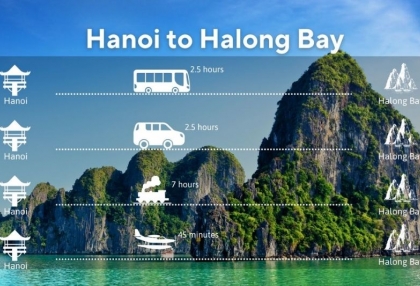
Tuan Chau Marina is 150 to 160 kilometres from Hanoi, or 2.5 to 3 hours on the expressway. Shuttle buses and private cars are the only options now, since the Hanoi seaplane service stopped permanently on 1 April 2026 and helicopter sightseeing ended in 2023.
Confirm the pier name in writing when you book. Tuan Chau and Got Port serve different bays and sit about 40 kilometres apart, and arriving at the wrong one means missing the sailing entirely.
Entry to Thien Cung Cave is bundled into the government route ticket rather than charged at the cave itself. The VHL1 route costs 250,000 VND per person for a day visit, and that single fee covers Thien Cung, Dau Go and the other stops on the route.
Overnight stays on the bay are priced differently again. VHL2 overnight fees run 550,000 VND for one night and 750,000 VND for two, while VHL3 and VHL4 overnight fees are 500,000 VND and 650,000 VND. Those figures already include sightseeing access.
Reduced rates apply as follows:
Fees updated July 2026. Source: Ha Long Bay – Yen Tu World Heritage Management Board.
A warning that applies across this whole cluster of caves. Several high-ranking English pages still quote fees that have not been current for over two years, including figures around 290,000 and 590,000 VND. If a quote you receive does not match the rates above, ask why before paying.
Your cruise fare is separate again, and our complete Halong Bay trip cost breakdown covers transfers, drinks and tips on top of the ticket.
Thien Cung wins on formation density and photographic reward, and loses on scale and solitude. The table below places it against the other five caves you might realistically reach.
| Cave | Ticket route | Scale | Crowd level | Time inside | Choose it for |
|---|---|---|---|---|---|
| Thien Cung Cave | VHL1 | Medium | Heavy | 30–45 min | Dense formations, strong photographs |
| Dau Go Cave | VHL1 | Large | Moderate | 30–40 min | Less lighting, more geology |
| Sung Sot Cave | VHL2 | Largest | Heaviest | 45–60 min | The biggest chamber in the bay |
| Me Cung Cave | VHL2 | Small | Light | 30–40 min | Escaping the tour groups |
| Luon Cave | VHL2 | Small | Moderate | 30–45 min | Kayaking, no walking involved |
| Thien Canh Son Cave | Bai Tu Long | Small | Lightest | 30 min | Genuine solitude |
The most useful column is the route. Thien Cung pairs naturally with Dau Go, since both sit on VHL1 and most half-day cruises visit them back to back. Seeing Sung Sot as well means a separate trip. Our full Halong Bay caves guide covers all six in one place.
The best times are before 10am or after 2pm. Between those hours the cave fills with day-trip groups arriving from Tuan Chau, and the walkway is narrow enough that a queue forms quickly at the four pillars.
Thien Cung suffers more from crowding than the larger caves do, precisely because it is compact. In Sung Sot the second chamber absorbs a hundred people. In Thien Cung the same hundred people are standing on a raised walkway, one behind another.
Three ways to get a better slot:
Season matters far less than time of day here, since caves are unaffected by weather. October to November and March to May are still the best months to be out on the water.
The visit is easy, but a few details make it more comfortable and considerably improve your photographs.
One practical point worth agreeing in advance: there is no phone signal inside. If you are travelling as a group, decide where to meet at the exit before you go in, since the cave has separate entrance and exit openings.
These are the questions we hear most often about Thien Cung Cave, particularly around which cruises actually reach it.
Yes, if you enjoy dense limestone formations and do not mind theatrical lighting. It is the most photogenic cave on the standard circuit and the easiest to slot into a half-day trip. If you prefer scale and open space to detail, Sung Sot on the VHL2 route will impress you more.
No, not on a single day cruise. Thien Cung sits on the VHL1 ticket route and Sung Sot on VHL2, and boats cannot cross between licensed routes. Seeing both requires two separate trips, or a longer multi-day itinerary that covers more than one route.
Between 30 and 45 minutes at tour pace, including the staircase from the jetty and the walk out through the upper gallery. During the 10am to 2pm peak it can run longer, because the walkway is narrow and you move at the pace of the group ahead of you.
The name comes from a legend about a dragon prince's wedding held inside the cave, celebrated over seven days and seven nights. Guides identify formations said to represent the wedding party and the procession. The English signage renders the Vietnamese name Thien Cung as Heavenly Palace.
Generally yes. The walkway inside is paved and railed throughout, which makes it easier underfoot than it looks. The obstacle is the staircase from the jetty, which is steep. Anyone unsteady on steps may prefer Luon Cave, entered by kayak, though that sits on a different ticket route.
No. Entry is included in the VHL1 route ticket, which your cruise operator normally bundles into the fare. Cheaper day tours booked on the street sometimes exclude it to lower the advertised price, so confirm the ticket is included before you pay rather than at the pier.
Thien Cung Cave rewards anyone who likes detail over scale, and it is the easiest of the show caves to reach on a short trip out of Hanoi.
If your itinerary is flexible, decide first which route you want. VHL1 gives you Thien Cung and Dau Go. VHL2 gives you Sung Sot, Me Cung and Luon, and that is the route our own Ha Long Bay Day Tour runs, from $34.
Travellers who care more about swimming and kayaking than about caves should read our Halong Bay vs Lan Ha Bay comparison before booking either. For everything else, start with the Halong Bay travel guide or browse bekatravel.com.
Ha Long
Planning your Halong Bay trip? Compare spring, summer, autumn, and winter weather, crowd levels, and booking tips to find your ideal travel month.
 Ha Long
Dau Go Cave is one of Ha Long Bay's largest historic caves, tied to a 13th-century Tran Hung Dao legend. Find the Route 1 ticket price, accessibility notes, and what to expect inside.
 Ha Long
Planning to cruise Halong Bay with kids? Compare family cabins, child pricing by age, kid-friendly itineraries, and safety tips for a stress-free trip.
 Ha Long
Wondering what to pack for Halong Bay? Check out our ultimate packing list, including travel essentials and seasonal tips for your cruise vacation.
 Ha Long
Discover how to practice responsible travel in Halong Bay, from the bay's single-use plastic ban to supporting local communities on a sustainable cruise.
 Ha Long
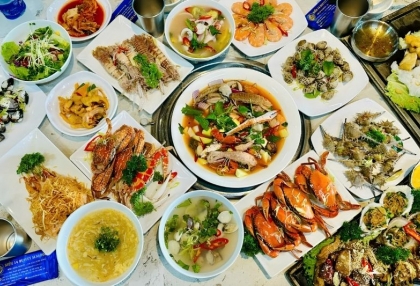
Exploring Halong Bay cuisine on your cruise? Discover must-try seafood like Cha Muc, Sa Sung, and Sam Bien, plus dining formats and dietary tips.
 Ha Long
Looking to stay active in Halong Bay? Explore our top 5 experiences including kayaking, cave trekking, cycling, and more, plus what changed under the 2026 safety rules.
 Ha Long
Complete 2026 guide to traveling from Hanoi to Halong Bay: bus, minivan, private car, and helicopter options, distance, price, and which port to use.
 Ha Long
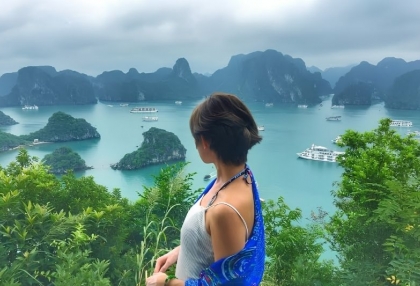
A practical guide to choosing a Halong Bay cruise: which bay to sail (Halong, Lan Ha, or Bai Tu Long), how many days, which comfort tier fits your budget, and when to go.
 Ha Long
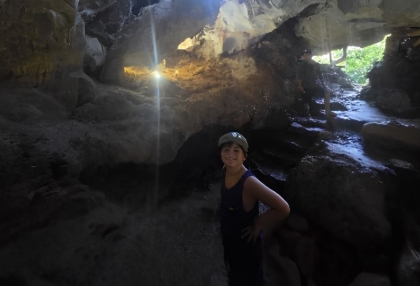
Thien Canh Son Cave (Hang Co) sits on Hon Co Island in quiet Bai Tu Long Bay, reached by a jungle climb of about 100 stone steps. Find directions, prices, and how it compares to Ha Long Bay's main caves.