



 Cat Ba - Lan Ha Bay
Monkey Island Cat Ba: What to Know Before You Go
Monkey Island Cat Ba in Lan Ha Bay: how to get there, what the monkeys are like, the viewpoint hike and which Beka tours stop there.
Hang Quan Y, widely known simply as the Cat Ba hospital cave, is one of Cat Ba Island's most unusual historic sites, a full field hospital built inside a natural limestone cave during the Vietnam War. This guide to the hospital cave in Cat Ba, Vietnam covers where it is, what it used to cost, and the story behind its old name, along with the latest on why it is closed. Since the cave is closed, many visitors spend that time on a Lan Ha Bay day tour instead.
Update: Military Hospital Cave is now permanently closed to visitors. This closure is not related to the flooding currently affecting other Cat Ba attractions such as Trung Trang Cave. There is no announcement about a reopening at this time. Last checked August 31, 2026.
Last updated: 4 September 2026
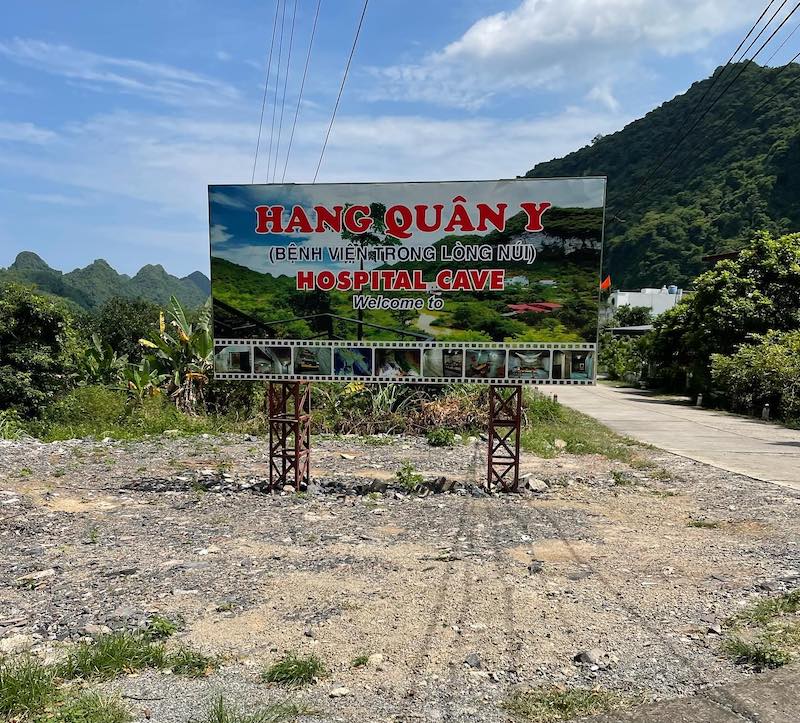
The Military Hospital Cave on Cat Ba Island is situated right next to the cross-island road, halfway up a mountainside in Hai Son Village (formerly known as Khe Sau), Tran Chau Commune, Cat Hai District. According to official tourism information from Cat Hai District, the site is located approximately 7 km from the center of Cat Ba Town and near the eastern edge of Cat Ba National Park.
Before it closed, entry cost 80,000 VND for adults and 40,000 VND for children under 1.2 meters tall, and the site was open daily from 8:00 AM to 5:00 PM, cash only.
These numbers are no longer relevant for planning a visit, since the ticket booth and entrance are closed. They are kept here only for reference, since travelers researching Cat Ba's attractions still search for them.
Hang Quan Y is just one of many Cat Ba Island caves, and because it is no longer open, most travellers now build their Cat Ba itinerary around Cat Ba National Park, a Cat Ba boat tour, and the island's other historic sites instead.
If Cat Ba's wartime history is what drew you here, ask a local guide which nearby caves and lookout points are open before building a half day around this part of the island.
Long before it became a hospital, this cave was known as Hung Son, named after a young man from Lang So village, now Nghia Lo commune on Cat Hai island. According to local legend, Hung Son raised a small navy and fought off invaders from the north during the reign of the sixth Hung King, one of Vietnam's earliest ruling dynasties.
After he died in battle, his body is said to have drifted back to his home island, where local people built a shrine in his honor and named him the guardian spirit of the village. The road linking Cat Ba town to Gia Luan ferry still carries his name today, and so did this cave, until the war gave it its current one.
Between 1963 and 1965, American bombing of North Vietnam intensified, and Cat Ba's soldiers and residents needed a safe place to treat the wounded. They built a field hospital inside the natural cavity of this limestone cave, and from that point on it became known as Hang Quan Y, meaning Military Hospital Cave.
The staircase leading up to the entrance was built from wood on purpose, rather than stone or concrete. A wooden staircase could be taken apart and pulled up quickly if enemy troops landed nearby, which kept the hospital's location hidden. It has been rebuilt several times over the years, always in wood, to preserve that piece of history.
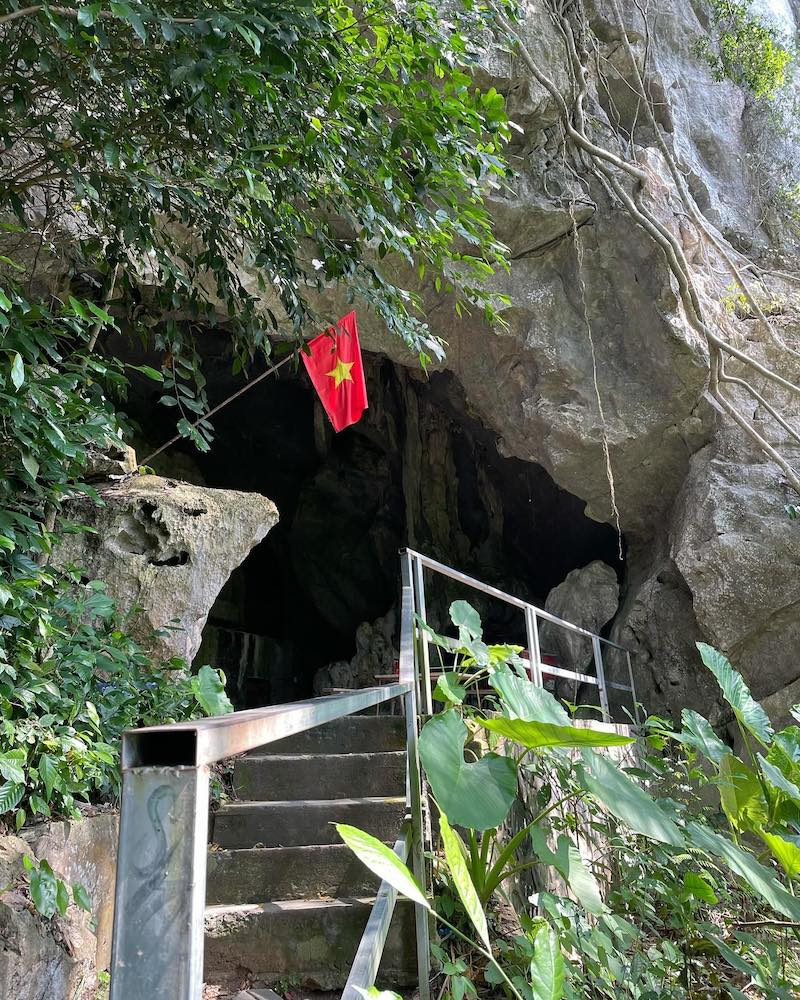
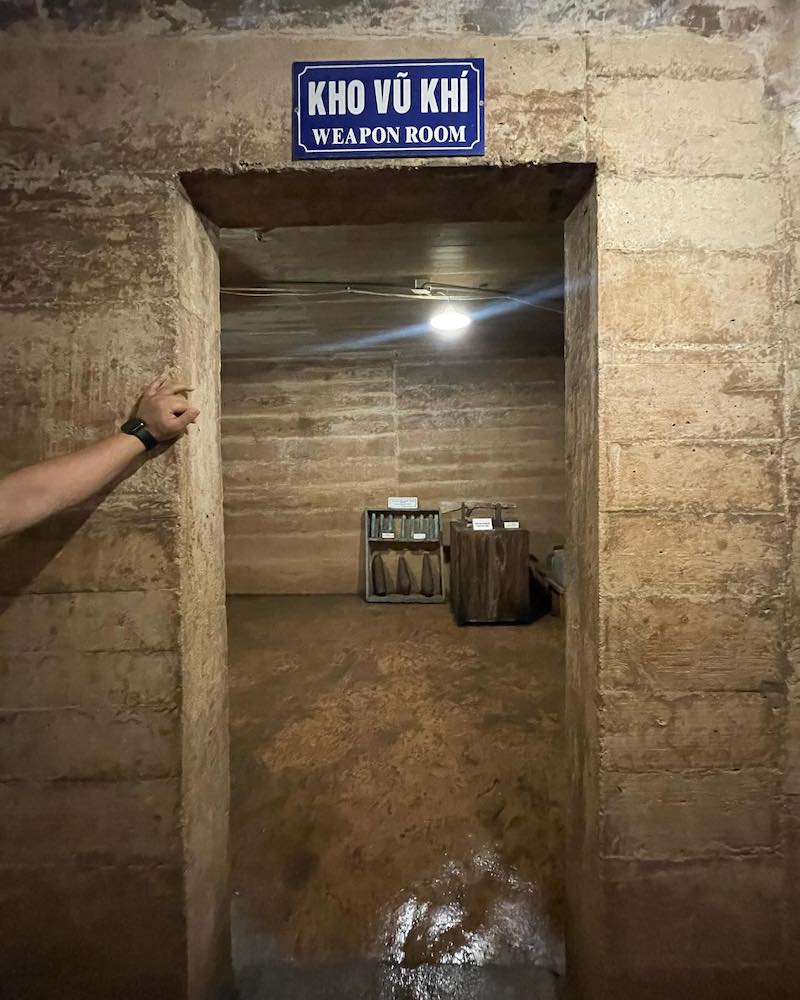
Past the wooden staircase, the first thing you would have reached is a heavy iron door with a curved, dome like shape. That curve was a deliberate design choice, since it deflects shrapnel and blast fragments sideways instead of letting them strike the door head on.
Behind the main door are four smaller iron bolts and one main lock securing the entrance to the hospital. From there, a corridor about 200 meters long runs through the mountain, connecting a west facing front door to an east facing back door on the other side.
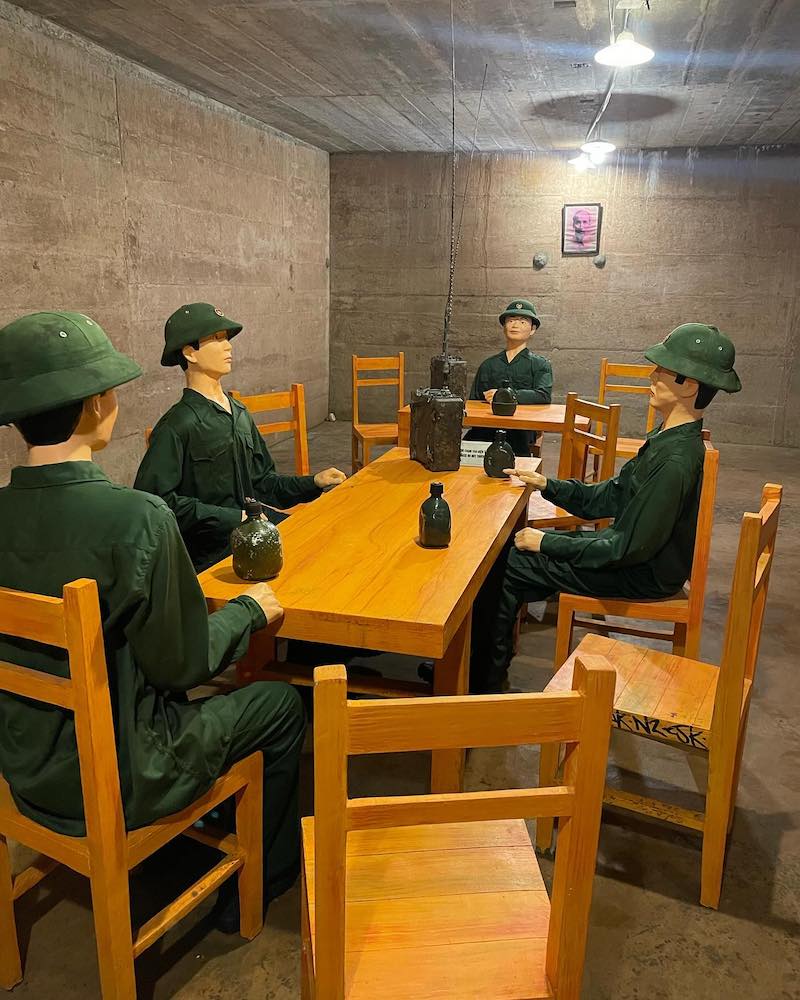
The main working floor was built from reinforced concrete and held 14 functional rooms, including a rest room for surgeons, a patient ward, an emergency operating room, a rehabilitation room, a meeting hall, a medicine dispensary and storage room, a kitchen, a reception room, a bathroom, a toilet, a water tank, and staff rest quarters.
In total, the underground hospital covered around 2,000 square meters across its three levels, built to treat and shelter hundreds of patients and staff at a time, lit throughout by its own electrical system.
The upper two levels were left as natural cave space rather than built up with concrete. The second floor served as a small cinema and a fitness and health check area for staff and recovering soldiers, while the third floor held a reception hall, a guard post, and rooms for officers.
Hang Quan Y remains one of the clearest reminders of what Cat Ba's residents built to survive the war, even though you can no longer walk through it yourself. For more of the island's beaches and historic sites, see the Cat Ba beaches and Cannon Fort next.
No. As of August 2026, Hang Quan Y is permanently closed, with no announced reopening date.
It is located beside the cross island road in Hai Son hamlet, Tran Chau commune, about 7 km from Cat Ba town center.
Entry used to cost 80,000 VND for adults and 40,000 VND for children under 1.2 meters, with the site open daily from 8:00 AM to 5:00 PM.
It was named after a local hero from the sixth Hung King era, said to have defended the island by sea. The cave kept that name until it became a field hospital in the 1960s.
Between 1963 and 1965, it served as an underground field hospital, treating wounded soldiers and residents while sheltering them from American bombing.
The hillside and exterior can still be seen from the road, but the entrance itself is closed off and there is no public access inside.
Most travellers now spend that time at Cat Ba National Park or on a Lan Ha Bay boat trip instead, both of which remain open.
Cat Ba - Lan Ha Bay
Monkey Island Cat Ba in Lan Ha Bay: how to get there, what the monkeys are like, the viewpoint hike and which Beka tours stop there.
 Cat Ba - Lan Ha Bay
Around 90 Cat Ba langurs remain in the wild, all on one island. What they are, why sightings are rare, and how to visit responsibly.
 Cat Ba - Lan Ha Bay
The Cat Hai to Phu Long cable car crosses 3,955 meters of open water in 10 to 15 minutes, from about 08:30 to 15:45. Route, ticket prices and tips.
 Cat Ba - Lan Ha Bay
Beyond trekking and kayaking, Cat Ba Market is a must-visit destination to experience the authentic local lifestyle. It is the culinary heart of the island, where you can find the freshest seafood and traditional products of the Hai Phong port region.
 Cat Ba - Lan Ha Bay
How to get to Cat Ba Island from Hanoi, Hai Phong, Ha Long, Ninh Binh, Sapa and Ha Giang, comparing buses, ferries, the cable car and 2026 prices.
 Cat Ba - Lan Ha Bay
Complete 2026 guide to the Tuan Chau to Gia Luan ferry. Find updated schedules, ticket prices, transport from Gia Luan to Cat Ba Town, and expert travel tips.
 Cat Ba - Lan Ha Bay
Cannon Fort on Cat Ba Island is currently closed to visitors, with no official ticket sold. History, location, and what to see instead in 2026.
 Cat Ba - Lan Ha Bay
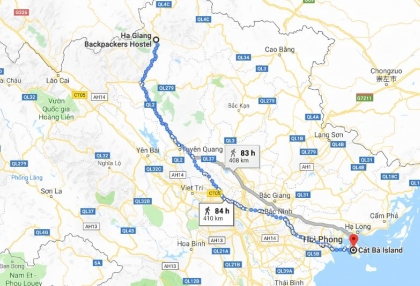
There is no direct bus from Ha Giang to Cat Ba Island. See the Palace Cabin bus via Hanoi, journey time, prices and pickup points for 2026.
 Cat Ba - Lan Ha Bay
There is no direct bus from Sapa to Cat Ba Island. Compare the overnight sleeper and daytime bus routes via Hanoi, with 2026 prices and timing.
 Cat Ba - Lan Ha Bay
There is no direct bus from Noi Bai Airport to Cat Ba Island. Compare the private car and Hanoi bus-transfer routes, prices and 2026 timing.
