




 Cat Ba - Lan Ha Bay
Monkey Island Cat Ba: What to Know Before You Go
A practical guide to Monkey Island in Lan Ha Bay: how to get there, what the monkeys are like, the viewpoint hike, and which Beka tours stop there.
Lan Ha Bay Vietnam and Cat Ba Island are located next to each other in the Gulf of Tonkin, off the coast of Hai Phong, and together form one of the most complete coastal destinations in northern Vietnam: limestone islands, quiet beaches, forested hills and a working island town within a single trip. This Cat Ba travel guide brings Lan Ha Bay and Cat Ba Island together in one place, covering location and geography, the best time to visit, how to get there, top things to do, where to stay, an itinerary suggestion, food, cost and travel tips for 2026.
For most first-time visitors planning Cat Ba Island travel, 2 days 1 night is a practical starting point, pairing a short Lan Ha Bay cruise with time in Cat Ba Town, while 3 days 2 nights leaves room for the national park and the caves. Travelers planning to travel to Cat Ba Island can arrive by road, ferry, high-speed boat or cable car from Hanoi, Hai Phong and Ha Long, and Lan Ha Bay itself is explored almost entirely by boat.
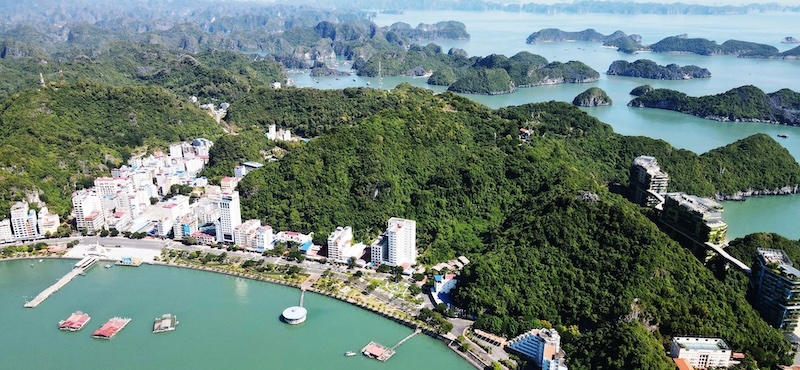
Cat Ba Island Vietnam is the largest island in the Cat Ba Archipelago, off the coast of Hai Phong, an area some travelers search for as Cat Ba Island Hai Phong Vietnam. Along with the surrounding islands and Lan Ha Bay, it belongs to the Ha Long Bay-Cat Ba Archipelago, a UNESCO World Heritage property covering 65,650 hectares and 1,133 islands and islets across Hai Phong and Quang Ninh Province, with the Cat Ba Archipelago added through a boundary extension approved in 2023. This shared Lan Ha Bay UNESCO recognition covers the bay's waters as well as the island's forests and limestone hills.
Lan Ha Bay runs along the eastern and southern side of Cat Ba Island in what is sometimes called Cat Ba Bay Vietnam, linking Cat Ba with Ha Long Bay. It covers more than 7,000 hectares and holds around 400 islands and 139 small sandy beaches, based on figures from Vietnam's tourism authority. Cat Ba functions as the land base, with hotels, restaurants and transport concentrated in Cat Ba Town, while Lan Ha Bay is the surrounding marine landscape reached by boat from the town's piers. Travelers checking a Cat Ba Island map, a Cat Ba Island location or a Lan Ha Bay map before booking will find this bay-and-island layout the easiest way to picture the destination.
On a map, the area divides into three zones: Cat Ba Town, the main tourism center with hotels, restaurants and transport connections; the interior, home to Cat Ba National Park, Trung Trang Cave and rural communities; and the waters to the east and south, covering Lan Ha Bay, Cai Beo, Monkey Island and dozens of smaller beaches. The park, established in 1986 and covering more than 17,000 hectares of land and sea, protects a concentration of limestone forest, mangroves, wetlands and marine habitat that make the archipelago one of the more biodiverse coastal areas in northern Vietnam. The Cat Ba meaning is traditionally linked to "Cac Ba", the women who stayed behind to farm and prepare supplies while men went to fight, a cultural legend rather than a proven origin, and Cat Ba Island history runs deeper still, with 77 recorded archaeological sites across the archipelago, including the Cai Beo settlement.
The best time to visit Cat Ba Island depends partly on the month. February and March tend to be cooler and foggier, with misty mornings that can limit visibility out on the bay. April and May are also a good stretch, with warmer weather and clearer skies before the summer crowds arrive, while June and July mark the peak domestic travel season, when hotels and boats around Cat Ba Town fill up with local visitors.
August through October carries the highest chance of tropical storms and typhoons, the period most likely to disrupt boat trips and cruises, while October through December is generally considered the best stretch, combining calmer seas, clearer skies and fewer crowds than summer.
No single month can guarantee a clear forecast, so checking conditions close to departure remains the safer approach, especially before an overnight cruise. Weather affects Cat Ba more than a typical inland destination, since storms can suspend ferries, cable car service and any Cat Ba cruise even when the island itself stays dry, and local authorities can halt marine activities on short notice during a severe weather warning.
Cat Ba rewards travelers who mix the coast, the bay and the forest rather than treating it as a single beach stop. Travelers searching for Cat Ba Island attractions, Cat Ba Island things to do, Cat Ba attractions or activities in Cat Ba will find the main options grouped below, alongside things to do in Lan Ha Bay for those planning a day out on the water. The same sections cover Cat Ba Vietnam things to do and things to do in Cat Ba Island Vietnam for travelers comparing the island against other stops, plus Cat Ba Island activities on land and Cat Ba Island nightlife after dark.
The newest option is the public beach along Xanh Island on Cai Gia Bay, adding close to one kilometer of shoreline and a park area to the choices around town.
Closer to the center, the three Cat Co beaches remain the most established choice among Cat Ba beaches. Cat Co 1 is located closest to Cat Ba Town, making it the easiest option for a quick swim without arranging transport, while Cat Co 2 lies between rocky hills a short walk further along, offering a quieter stretch of sand connected to Cat Co 1 by the coastal path. Cat Co 3 lies at the far end of the same walkway and is generally regarded as the best spot on the island for watching the sunset, with clear views out over the bay.
Tung Thu Beach is wider than the three Cat Co beaches, though its water is less clear and it stands farther from hotels and restaurants. Its waves also run smaller and calmer than at the Cat Co beaches, which some travelers find more comfortable for swimming.
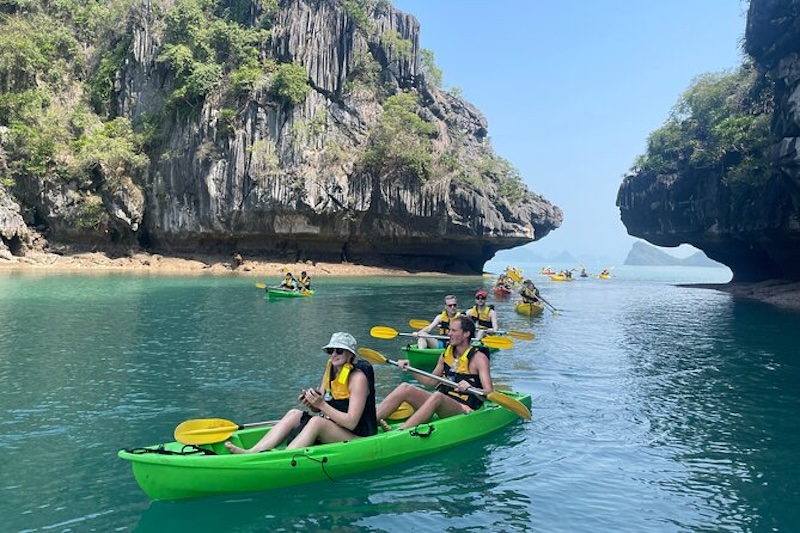
A boat trip into Lan Ha Bay is the main reason most travelers come to Cat Ba, since its islands, lagoons and beaches are reached only by water, whether through a single day tour, an excursion Lan Ha Bay operators run daily from Cai Beo Pier, or an overnight cruise. Current departures and prices are listed under Lan Ha Bay tours. Popular activities include:
Monkey Island Lan Ha Bay, also known as Cat Dua Island, is one of the best-known stops on a Lan Ha Bay boat trip, usually reached from Cai Beo Pier. It is known for its beach, limestone scenery, a viewpoint reached by a short climb, and a resident population of monkeys that gives the island its name.
Visitors are asked to keep a respectful distance and never feed the monkeys, since the island is best enjoyed for its beach and scenery rather than treated as a wildlife show.
Xanh Island is the newest phase of tourism development on Cat Ba, a roughly 50-hectare project on Cai Gia Bay facing Lan Ha Bay, combining a public beach, Central Park, a boat harbor and commercial space, with the VUI-Fest night market added since 2025. Because construction continues in phases, the mix of open attractions can change from one visit to the next.
Cat Ba National Park protects more than 17,000 hectares of limestone forest, wetland and marine habitat, and its trekking routes are one of the main reasons to spend time on the island rather than only on the water. The route to Ngu Lam Peak is the most popular national park trek, climbing through forest to a viewpoint over the surrounding limestone hills, while longer trails connect the park with the Ao Ech area in Lan Ha Bay, also known as Frog Pond Lan Ha Bay, and on to Viet Hai Village for a full day out.
A shorter walk around Ho Hoi Lake suits visitors with less time or lower fitness. The park is also the last home of the Cat Ba langur, a critically endangered primate found nowhere else, and its remaining population is extremely small, so staying on marked paths and keeping a distance from wildlife matters. Cat Ba camping inside the park is possible for more adventurous visitors, but only in permitted areas and with proper waste management, since informal camping in protected zones can damage fragile ecosystems.
Cat Ba's limestone hills hold several caves worth visiting, plus a wartime fort built into the hillside above town.
Evenings on Cat Ba are centered on Cat Ba Town, with waterfront cafes, rooftop bars, seafood restaurants, karaoke and a night market that gets busier after dark, and this cluster around the town pier is generally considered the best nightlife in Cat Ba. Xanh Island has added a summer program of its own, including Symphony of The Green Island, a jet ski and fireworks performance staged on the water during peak season; since show nights and the season they run in can change from year to year, confirming the current schedule before planning an evening around it is worthwhile. For a quieter night, sunset drinks, a seafood dinner or a Cat Ba cooking class fit better than the busier venues.
Reaching Cat Ba now involves a mix of road, ferry, high-speed boat and cable car options, and the right route depends on the starting point. Travelers searching getting to Cat Ba Island, how to get to Cat Ba, how do you get to Cat Ba Island, how to go to Cat Ba Island, how to reach Cat Ba Island or Cat Ba Island how to get there will find the same routes covered below, along with general Cat Ba transport once on the island.
Common related questions cover which bus to Cat Ba to book, whether a direct Cat Ba Island bus exists, and where the Cat Ba bus station or bus station Cat Ba pickup point can be found: for most routes this means Binh Port in Hai Phong or a hotel pickup point in Hanoi, both covered below.
| Route | Method | Approximate time |
|---|---|---|
| Hanoi to Hai Phong to Cat Ba | Bus or car to Hai Phong, then high-speed boat from Ben Binh Pier | About 3 to 3.5 hours |
| Hanoi by road and ferry | Tan Vu-Lach Huyen bridge to Cat Hai, then the Dong Bai car ferry to Phu Long | About 4 hours |
| Hanoi by road and cable car | Tan Vu-Lach Huyen bridge to Cat Hai, then the Cat Hai-Phu Long cable car | About 4 hours |
| Ha Long via Tuan Chau | Tuan Chau to Gia Luan ferry, then road transfer | About 1 hour by ferry |
| Direct tourist bus or limousine from Hanoi | Combined road and boat ticket | About 3 to 4.5 hours |
| Direct bus from Ninh Binh, Nam Dinh or Thai Binh | Road transfer combined with the Cat Ba crossing | About 4.5 hours |

The 156 km journey typically involves three stages: road travel, the sea crossing via Dong Bai ferry, cable car or speedboat, and road travel to the town center. From the capital, the route follows Expressway 5B over the Tan Vu-Lach Huyen cross-sea bridge to Cat Hai Island.

From the city center, three highly convenient options exist for the Hai Phong to Cat Ba route.

The simplest method is booking a bus via Son Tung Express. Travelers can take the Tuan Chau to Cat Ba ferry to Gia Luan for just 75,000 VND per passenger, a useful alternative to bypass traffic jams during peak season. Upon docking, transfer continues by bus or private car to the center.
Direct buses from Ninh Binh, including Discovery, Daiichi, The Long and Ninh Binh Travel, take about 4.5 hours and cost from 280,000 VND per way. They pick up at Tam Coc, Trang An or Mua Cave and pass through Nam Dinh and Thai Binh. From Nam Dinh, O Ho Bus is a local option at 150,000 to 250,000 VND, though it takes longer due to passenger pickups along the way.
Travelers from Hung Yen or Hai Duong can catch a bus to Niem Nghia station, Hai Phong, for 70,000 to 80,000 VND, about 2 hours, then transfer 4 to 5 km to Binh Port. From Bac Ninh, Bac Giang or Vinh Phuc, the route runs via Aeon Mall Long Bien in Hanoi to catch a Cat Ba-bound bus.
Pro tip: to optimize transit logistics, prioritize an all-inclusive combo bus and confirm the current schedule with a hotel or tour operator before departure. For more on comparing these routes, see how to travel from Hanoi to Cat Ba.
Cat Ba does not have its own commercial airport, so a Cat Ba airport search usually leads to Cat Bi International Airport in Hai Phong, the closest airport to Cat Ba Island at around 20 km away. From the terminal, a taxi to Ben Binh Pier takes about 20 minutes, and the high-speed ferry onward to Cat Ba Town takes roughly 45 minutes, for a total transfer of about 2 hours door to pier. Ferries from Ben Binh run roughly every 1.5 to 2 hours between 6 in the morning and 5 in the afternoon, so late flights are better matched with the car ferry route through Got terminal, which runs later in the day.

Cat Ba Town has the largest choice of accommodation and works as the most convenient base, close to restaurants, the tourist pier, transport connections and the Cat Co beaches. Budget guesthouses cluster around the town center and Cat Ba Market, while mid-range and beachfront hotels line the road toward Cat Co.
Quieter rural areas such as Gia Luan and Viet Hai offer homestay-style accommodation for a slower pace and closer contact with local communities, and the growing Xanh Island area adds a fourth option with new hotel space facing the bay.
For travelers who want to sleep on the water, an overnight cruise on Lan Ha Bay combines accommodation, meals and activities such as kayaking and swimming into one booking, often the most efficient way to fit a full bay experience into a short trip.
Deciding how many days in Cat Ba to spend depends on whether the bay or the island matters more to the trip.
| Length of stay | Best for | What is realistic |
|---|---|---|
| 1 day | Travelers on a tight schedule | Cat Ba Town, one beach and a short Lan Ha Bay trip |
| 2 days 1 night | Most travelers and families | Lan Ha Bay, beaches and Cat Ba National Park or Monkey Island |
| 3 days or more | In-depth exploration | Lan Ha Bay, national park trekking, Viet Hai Village and caves |
A one-day visit works for travelers just passing through, but 2 days 1 night gives a better balance between the bay and the town, and 3 days or more leaves room for a national park trek, Viet Hai Village and the caves. Beka Travel's Cat Ba island tours set out full day, 2 days 1 night and 3 days 2 nights options in more detail and can slot directly into the plan above for the bay portion of the trip.
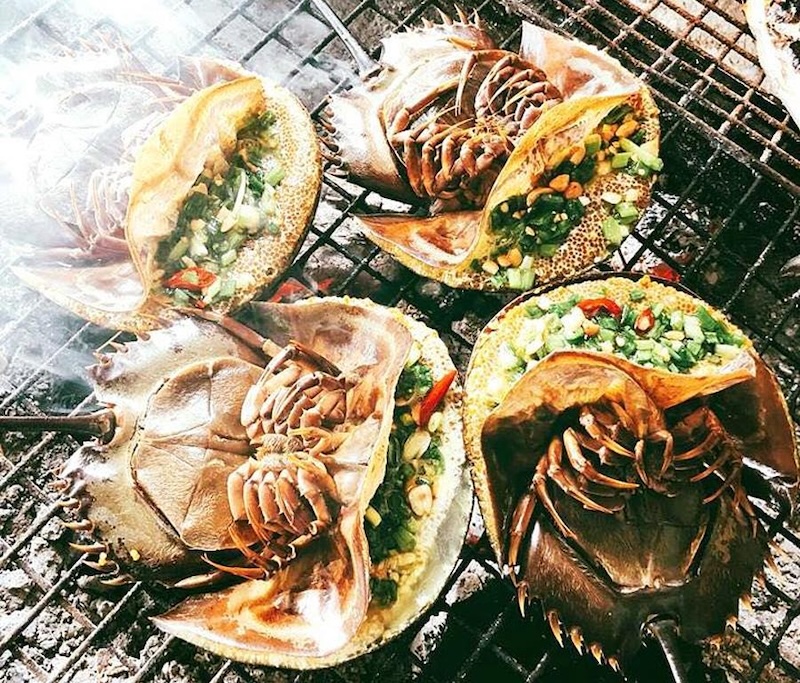
Cat Ba's culinary identity is anchored in the Gulf of Tonkin's exceptionally fresh seafood, with Cat Ba fishing traditions still shaping what appears on the table each day.
Restaurant recommendations include Vien Duong, Bien Dong and Quan Cat Ba for a general dinner out, Marigold, Lepont Cat Co 3 and M'Gallery for higher-end dining, and Phuong Truong for mountain-style cuisine.
The cost of a Cat Ba trip depends on transportation, accommodation and whether the plan includes a Lan Ha Bay overnight cruise. Shared buses and ferries cost less than private cars, and budget hotels and local restaurants keep costs down, while resorts and cruise cabins raise the total.
Entrance fees are small next to accommodation and cruise costs. As of 2026, combined admission to Cat Ba National Park and Trung Trang Cave is 160,000 VND per person, the Cat Ba cable car from Cat Hai to Phu Long costs 70,000 VND one way, and the Lan Ha Bay sightseeing fee is about 120,000 VND for a day trip under the fee schedule effective January 1, 2026.
For a more predictable budget, comparing the total cost of transportation, accommodation, meals, fees and cruise activities gives a clearer picture than comparing hotel or tour prices alone.
A standard 2 days 1 night trip to Cat Ba Island costs between $40 and $120 per person, depending on travel style, not including round trip transportation from Hanoi, which runs $20 to $34 per person on a combined bus and speedboat or cable car ticket.
| Category | Budget estimate per day |
|---|---|
| Accommodation (hostel to mid-range hotel) | $5 to $60 |
| Food and drinks | $5 to $15 |
| Local transport (motorbike rental) | about $5 |
| Tours and activities (varies by day) | $0 to $50 |
The higher end of the activities range applies on a day that includes a Lan Ha Bay boat cruise, while a day limited to national park entry and a motorbike rental falls closer to the lower end.
Start by deciding whether more time on the water or more time on land matters most. A Lan Ha Bay-focused plan suits travelers who prioritize kayaking, beaches and cruising, while a land-focused plan suits those who prefer hiking, caves and villages, and combining both over 2 to 3 days usually works best for a first visit.
Pack lightweight clothing, swimwear, comfortable walking shoes, sunscreen and a reusable water bottle, plus sturdy shoes for hiking and a dry bag for kayaking or boat trips. A light jacket is worth bringing outside the hot season, and a compact rain jacket beats an umbrella during the wetter months.
Cat Ba Town is easy to explore on foot. For longer distances, renting a motorbike gives the most flexibility for beaches, caves, the national park and rural areas, while taxis suit shorter trips. Lan Ha Bay, on the other hand, is reached only by boat.
Check weather and marine conditions before every boat trip, since conditions farther offshore can differ from a calm view of Cat Ba Town. Wear suitable shoes when hiking, as limestone trails turn slippery after rain, confirm prices before booking, and carry motion sickness medication for an overnight cruise or high-speed boat.
Vietnamese dong is the main currency. Cards work at many hotels and larger restaurants, but small restaurants and rural businesses mostly need cash, so carrying backup cash matters during busy holidays even with ATMs in Cat Ba Town. A Vietnamese SIM card or eSIM also helps with maps and bookings.
Yes to both. Is Cat Ba Island worth visiting and is Lan Ha Bay worth visiting come down to much the same answer, since the pair combines beaches, kayaking, hiking, caves and fresh seafood, with Cat Ba as the land base and Lan Ha Bay as the marine landscape.
Yes, provided the activities match the group's fitness levels. Families can focus on Cat Co and Tung Thu beaches, easy boat trips and a calm Lan Ha Bay cruise, while older travelers can choose the national park's lower-intensity routes and leave the longer treks, caves and rock climbing to younger or fitter members of the group.
Independent travel is best for visitors who value flexibility and are comfortable arranging transportation, hotels and activities themselves, while a tour is more convenient for shorter trips because transport, entrance fees, meals and Lan Ha Bay activities are arranged in one booking, which can be especially useful for a first-time visit when marine transportation and weather-related changes are easier to manage through a local operator.
It depends on the number of travelers and what is included. Solo travelers may save money by choosing budget accommodation and arranging activities individually, while for couples, families and small groups, a package can offer better value once transportation, meals, cruise services and entrance fees are bundled together, so comparing the complete trip cost rather than only the advertised room or tour price gives a clearer picture.
Yes, but it is a long day, since a direct trip from Hanoi can take around 3.5 to 4.5 hours each way depending on the transfer, leaving limited time for sightseeing once travelers arrive. A Lan Ha Bay day tour works best when the goal is one main experience, such as a short Lan Ha Bay excursion or a beach visit, while staying at least one night gives a considerably better experience.
No. They are different bays, although they belong to the same wider limestone seascape and are now included within the same Ha Long Bay-Cat Ba Archipelago UNESCO World Heritage property. Lan Ha Bay is associated more closely with Cat Ba Island and Hai Phong, while Ha Long Bay is traditionally associated with Quang Ninh Province, and many cruises connect the two areas, which is why travelers sometimes experience both during a single trip. The related question of is Cat Ba Island in Halong Bay has a similar answer: administratively no, since Cat Ba is located within Hai Phong, but the island now shares its UNESCO listing with Ha Long Bay.
For travelers asking where is Lan Ha Bay in Vietnam, the bay lies along the eastern and southern side of Cat Ba Island in northern Vietnam's Gulf of Tonkin, forming a marine link between Cat Ba and Ha Long Bay, and covers more than 7,000 hectares with around 400 islands and 139 small sandy beaches.
Lan Ha Bay combines limestone islands, calm water, small sandy beaches and hidden lagoons in a landscape closely connected with Cat Ba Island, with fewer crowds than the busiest parts of Ha Long Bay, and its smaller beaches and dense network of islands make it particularly suited to kayaking, swimming and small-boat exploration.
For Lan Ha Bay how to get there questions, the most convenient option is usually a direct bus or limousine from Hanoi to Cat Ba, then a boat or cruise into the bay from one of the town's piers, and travelers can also arrive through Hai Phong by high-speed boat or combine Cat Ba with a wider Ha Long Bay itinerary.
Yes. Swimming is one of the most popular activities in Lan Ha Bay, particularly around its sheltered beaches and calmer waters, though safe swimming areas depend on the weather, tide and route, so following the boat crew's instructions always matters.
For the best balance of outdoor activities and weather, many travelers prefer April, May, October and November, while summer can be warm and good for swimming but brings a higher chance of storms and typhoons that affect marine activities, so checking the latest forecast and cruise operating status before departure is worthwhile.
Current tours, cruises and availability for Lan Ha Bay and Cat Ba Island are listed at bekatravel.com.
Cat Ba - Lan Ha Bay
A practical guide to Monkey Island in Lan Ha Bay: how to get there, what the monkeys are like, the viewpoint hike, and which Beka tours stop there.
 Cat Ba - Lan Ha Bay
Around 90 Cat Ba langurs are left in the wild, all on one island. What they are, why you probably won't see one, and how to visit responsibly.
 Cat Ba - Lan Ha Bay
The Cat Hai-Phu Long cable car crosses 3,955 metres of open water in 10-15 minutes, running 09:00-16:00 daily except Tuesdays. Route, hours, ticket prices and how it compares to the ferry.
 Cat Ba - Lan Ha Bay
Beyond trekking and kayaking, Cat Ba Market is a must-visit destination to experience the authentic local lifestyle. It is the culinary heart of the island, where you can find the freshest seafood and traditional products of the Hai Phong port region.
 Cat Ba - Lan Ha Bay
Complete 2026 guide to reaching Cat Ba Island: compare buses, ferries, cable cars and transfers from Hanoi, Hai Phong, Ha Long and Ninh Binh.
 Cat Ba - Lan Ha Bay
Complete 2026 guide to the Tuan Chau to Gia Luan ferry. Find updated schedules, ticket prices, transport from Gia Luan to Cat Ba Town, and expert travel tips.
 Cat Ba - Lan Ha Bay
Discover Hang Quan Y (Military Hospital Cave) on Cat Ba Island. Learn about its wartime history, the 3-level concrete bunker, entrance fees, and how to get there.
 Cat Ba - Lan Ha Bay
Cannon Fort on Cat Ba Island is currently closed to visitors, with no official ticket sold. History, location, and what to see instead in 2026.
 Cat Ba - Lan Ha Bay
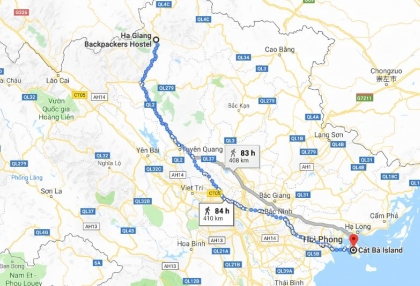
There is no direct bus from Ha Giang to Cat Ba Island. See the Palace Cabin bus via Hanoi, journey time, prices and pickup points for 2026.
 Cat Ba - Lan Ha Bay
There is no direct bus from Sapa to Cat Ba Island. Compare the overnight sleeper and daytime bus routes via Hanoi, with 2026 prices and timing.
