




 Cat Ba - Lan Ha Bay
Monkey Island Cat Ba: What to Know Before You Go
A practical guide to Monkey Island in Lan Ha Bay: how to get there, what the monkeys are like, the viewpoint hike, and which Beka tours stop there.
Traveling from Hanoi to Cat Ba Island is one of the most common journeys in northern Vietnam, and it is also one of the most frequently misjudged, because the road section is only part of the trip. Cat Ba is an island, so every route ends with a sea crossing or a cable car, and the timing of that final connection matters far more than the speed of the drive.
This Hanoi to Cat Ba guide covers the route options, the difference between driving time and real door-to-door time, the three transport choices that suit almost every traveler, the direct route from Noi Bai Airport, and the return journey.
Quick answer: the Hanoi to Cat Ba Island distance is around 150 to 160 km and the journey takes 3.5 to 4.5 hours door to door. A combined tourist bus with a speedboat or ferry costs approximately 300,000 to 350,000 VND per person, a limousine bus costs around 400,000 to 450,000 VND, and a private car costs 2,500,000 to 3,500,000 VND per vehicle depending on whether it is a 4-seater or a 7-seater.

Getting to Cat Ba Island from Hanoi is straightforward in practice, because most travelers complete the whole trip on a single booked transfer rather than assembling it themselves. The real difference between the routes is not the road but the crossing, and searches written as Cat Ba from Hanoi, Hanoi Cat Ba Island or Cat Ba a Hanoi all describe this same journey.
The standard route runs Hanoi to Hai Phong to Cat Hai, crossing the Tan Vu to Lach Huyen bridge, the longest sea-crossing bridge in Vietnam at 5.44 km. From Cat Hai there are then three ways onto the island: the Got to Cai Vieng ferry, a speedboat, or the Cat Hai to Phu Long cable car, and the option your operator uses is worth confirming before you book.

A second route runs through Ha Long, from Hanoi to Tuan Chau and across on the Tuan Chau to Gia Luan ferry. This is particularly suitable for travelers combining Halong Bay with Cat Ba in one trip, although the ferry lands at the northern tip of the island and a road transfer of 45 to 60 minutes still follows before you reach Cat Ba Town.
| Route | Typical travel time | Best for |
|---|---|---|
| Hanoi, Hai Phong, Cat Hai, then boat to Cat Ba | 3.5 to 4.5 hours | Most travelers |
| Hanoi, Cat Hai, then cable car to Phu Long | Around 3.5 to 4.5 hours | A more scenic crossing |
| Hanoi, Ha Long, Tuan Chau, then ferry to Gia Luan | Around 4 to 5 hours or more | Combining Halong Bay and Cat Ba |
| Hanoi, Hai Phong, Ben Binh, then boat to Cat Ba Town | Around 4 hours | Travelers using Hai Phong city center |
For most international visitors the first route is the simplest, because the bus, the crossing and the island transfer are booked together as one ticket. Travelers starting from the mainland city rather than from Hanoi will find the full detail in our Hai Phong to Cat Ba guide.
The Hanoi to Cat Ba Island distance is generally around 150 to 160 km by the usual road and sea route. Published figures differ slightly between sources, and the reason is simply that the total changes with your starting point in Hanoi, the terminal your operator uses and where you are staying on the island. A wider margin is worth allowing in peak season, at weekends and on public holidays.
| Route | Approximate distance |
|---|---|
| Hanoi to Hai Phong to Cat Hai to Cat Ba | 150 to 160 km |
| Hanoi to Ha Long to Tuan Chau to Gia Luan to Cat Ba | Around 160 km or more |
| Hanoi to Cat Hai by road, before the island crossing | Around 125 to 135 km |
Two figures need to be kept apart, and confusing them is the most common planning mistake on this route. Pure driving time from central Hanoi to the ferry area is roughly 2 to 2.5 hours, whereas the realistic Hanoi to Cat Ba Island travel time is 3.5 to 4.5 hours door to door once check-in, the wait for the boat and the crossing are counted. The final leg follows Route 356, resurfaced in 2020 to a width of 9.5 meters.
Three options cover almost every traveler making this trip: a direct tourist bus, a VIP limousine and a private car. Travelers searching how to get from Hanoi to Cat Ba, how to go to Cat Ba Island from Hanoi or simply getting to Cat Ba Island from Hanoi are generally choosing between these three, and the right answer depends on group size and on how fixed your schedule is.
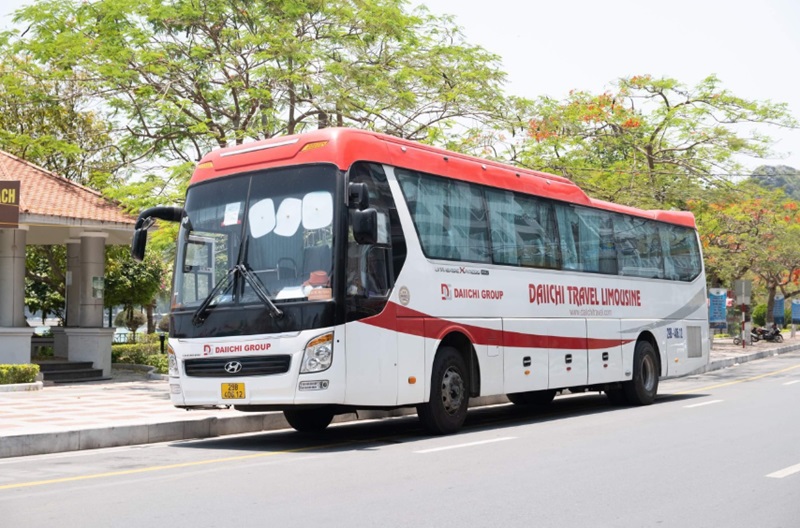
A bus Hanoi to Cat Ba is the easiest choice for most independent travelers, because the operator arranges every leg rather than leaving you to connect them. The Hanoi to Cat Ba Town itinerary runs along the expressway to Cat Hai, crosses by speedboat or ferry, and finishes with a road transfer into town, normally with a drop-off close to the main hotel area.
A ticket costs around 300,000 to 350,000 VND per person in 2026 for a standard bus with a speedboat, and the price changes a little between companies and with the time of year. The main advantage is simplicity, since a bus Hanoi Cat Ba ticket covers the whole journey instead of three separate tickets, and this is particularly suitable for solo travelers, couples and anyone visiting the island for the first time.
A Cat Ba limousine bus is the more comfortable alternative to a standard coach, and it has become the default choice for travelers who would rather pay a little more than spend four hours in a full-size vehicle. Limousine vans carry fewer passengers, with wider reclining seats and a quieter cabin, and many services collect passengers from the Old Quarter and drop them at hotels in Cat Ba Town.
A seat costs around 400,000 to 450,000 VND per person in 2026, and the price depends on whether the ticket includes a speedboat or the cable car and on the time of year. The gap against a standard bus ticket is small, so when comfort matters more than saving a little money, this is usually the best choice on the route.
A private car is the most flexible option, and it is normally the sensible one for families, small groups and anyone tied to a cruise departure or a hotel check-in time. A car costs around 2,500,000 to 3,500,000 VND for the whole vehicle rather than per person, with the difference depending mainly on whether you book a 4-seater or a 7-seater, which makes it good value once four people travel together.
One point is worth stating plainly, because it surprises travelers every season. A private car does not mean being driven continuously to your hotel door, since Cat Ba is an island and the final connection still requires a sea or cable car crossing, with the vehicle either boarding the ferry or waiting on the mainland while you cross by speedboat.
Travelers landing at Noi Bai International Airport can travel directly to the island without going into central Hanoi first, which avoids a detour of well over an hour in city traffic. The practical options are a private transfer or a pre-arranged tourist bus, both running from the airport onto the expressway, then to Cat Hai and across to the island by boat or cable car.
Because Noi Bai sits north of the city, allow around 4 to 5 hours for the complete Hanoi airport to Cat Ba Island journey rather than assuming it matches the city departure time. On an evening arrival the last crossing is the deciding factor, so check it before booking, since a direct Hanoi airport to Cat Ba transfer only works while the boats are still running and an overnight in Hai Phong is the usual fallback.
The return journey runs in reverse, from Cat Ba Town to Cai Vieng or Cat Hai, then Hai Phong, then Hanoi. A combined Cat Ba Island to Hanoi bus is again the simplest option, and because any Cat Ba Hanoi bus service uses the same crossings, the Cat Ba to Hanoi distance stays at around 150 to 160 km and the return timing mirrors the outbound trip closely.
Allow 3.5 to 4.5 hours for a Cat Ba to Hanoi transfer, and a considerably wider buffer when a flight is involved. It is safer to treat the Cat Ba Island to Hanoi airport run as a 5-hour journey, because the crossing cannot be rushed and the Cat Ba to Hanoi travel time varies mainly with which boat you catch, although Cat Ba to Hanoi transport is otherwise identical to the way you came.

Yes. A speedboat or the Cat Hai to Phu Long cable car both avoid the car ferry entirely, and either one is normally faster than waiting in the vehicle queue at Got.
The cable car runs 3,955 meters across the water between Dong Bai and Phu Long, which cuts the crossing from about 20 minutes by ferry to roughly 9 minutes. It lands at Phu Long on the western side of the island rather than in Cat Ba Town, so a road transfer of around 30 minutes still follows.
Not usually for a foot passenger with flexible timing, because tickets are sold at the terminal on the day and sailings are frequent enough that a missed departure is rarely serious.
Advance planning matters considerably more at weekends, on public holidays and during the summer peak, and anyone bringing a private car should allow extra time for the vehicle queue. On a combined tourist bus the operator handles the crossing, so there is nothing separate for you to arrange.
It depends on the operator, and this is worth confirming rather than assuming, because it is the most common reason a quoted fare turns out to be incomplete.
Many combined services include the road transfer plus a speedboat, ferry or cable car connection in a single price, although not all of them do. Before booking, check whether the fare covers the mainland bus, the sea crossing, the transfer from the island terminal into Cat Ba Town and hotel pickup, since a low advertised price sometimes covers only the road section.
There is no single latest departure, because times vary by operator and by season, although afternoon departures around 14:00 to 15:30 are common in the summer months.
The more important limit is the operating time of the ferry, speedboat or cable car, since it is the last crossing rather than the last bus that decides whether a late start reaches the island the same day. Booking an earlier connection than the final one is generally the safer plan.
Yes, provided the cruise departs in the afternoon. A morning transfer normally reaches Cat Ba around midday or early afternoon, which works comfortably for an afternoon check-in but leaves no margin for a morning one.
Allow at least 1 to 2 hours of buffer between your estimated arrival and check-in, and confirm the pickup point, because Cat Ba Town and Ben Beo Pier are not the same location. When the cruise checks in early, arriving the previous day is the safer plan, and current departures are listed on the Lan Ha Bay hub page.
For most travelers the combined tourist bus gives the best balance of price, time and convenience, and it remains the standard way to travel from Hanoi to Cat Ba. Choose a VIP limousine when comfort matters more than the fare, a private car for a family or a group of four or more, and the cable car crossing when you would rather have the view over the Phu Long mangroves than the fastest possible connection.
Whichever option you book, plan the trip as a door-to-door transfer rather than a road journey, because the crossing and the final island leg are the parts that go wrong when a schedule is tight. Our Cat Ba Island travel guide covers what to do once you arrive, and current transfers and tours are listed at bekatravel.com.
Cat Ba - Lan Ha Bay
A practical guide to Monkey Island in Lan Ha Bay: how to get there, what the monkeys are like, the viewpoint hike, and which Beka tours stop there.
 Cat Ba - Lan Ha Bay
Around 90 Cat Ba langurs are left in the wild, all on one island. What they are, why you probably won't see one, and how to visit responsibly.
 Cat Ba - Lan Ha Bay
The Cat Hai-Phu Long cable car crosses 3,955 metres of open water in 10-15 minutes, running 09:00-16:00 daily except Tuesdays. Route, hours, ticket prices and how it compares to the ferry.
 Cat Ba - Lan Ha Bay
Beyond trekking and kayaking, Cat Ba Market is a must-visit destination to experience the authentic local lifestyle. It is the culinary heart of the island, where you can find the freshest seafood and traditional products of the Hai Phong port region.
 Cat Ba - Lan Ha Bay
Complete 2026 guide to reaching Cat Ba Island: compare buses, ferries, cable cars and transfers from Hanoi, Hai Phong, Ha Long and Ninh Binh.
 Cat Ba - Lan Ha Bay
Complete 2026 guide to the Tuan Chau to Gia Luan ferry. Find updated schedules, ticket prices, transport from Gia Luan to Cat Ba Town, and expert travel tips.
 Cat Ba - Lan Ha Bay
Discover Hang Quan Y (Military Hospital Cave) on Cat Ba Island. Learn about its wartime history, the 3-level concrete bunker, entrance fees, and how to get there.
 Cat Ba - Lan Ha Bay
Cannon Fort on Cat Ba Island is currently closed to visitors, with no official ticket sold. History, location, and what to see instead in 2026.
 Cat Ba - Lan Ha Bay
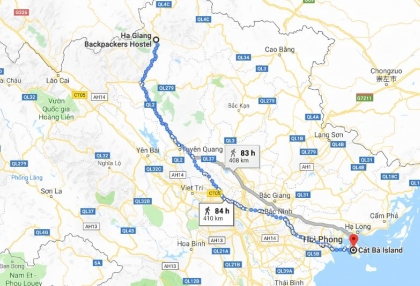
There is no direct bus from Ha Giang to Cat Ba Island. See the Palace Cabin bus via Hanoi, journey time, prices and pickup points for 2026.
 Cat Ba - Lan Ha Bay
There is no direct bus from Sapa to Cat Ba Island. Compare the overnight sleeper and daytime bus routes via Hanoi, with 2026 prices and timing.
