



 Cat Ba - Lan Ha Bay
Monkey Island Cat Ba: What to Know Before You Go
Monkey Island Cat Ba in Lan Ha Bay: how to get there, what the monkeys are like, the viewpoint hike and which Beka tours stop there.
Viet Hai Village is one of the most distinctive places to visit on Cat Ba Island. Hidden inside Cat Ba National Park and surrounded by limestone mountains, tropical forest and the waters of Lan Ha Bay, the village feels remarkably different from the busy tourist center of Cat Ba Town. There are no large hotels, busy streets or dense commercial areas here. Instead, visitors find a small community, forest paths, rice fields, local homes and a slower way of life.
Often described as a remote fishing village or an ancient village, Viet Hai has gradually become one of the most rewarding community-based tourism experiences in the Cat Ba Archipelago. The village is roughly 18 km from Cat Ba Town and can be reached by boat through Lan Ha Bay or by trekking through Cat Ba National Park. This Viet Hai Village guide covers where it is, how to get there, what to do and where to stay.
Unlike the beaches and the Lan Ha Bay cruise trips that dominate most Cat Ba tourism, Viet Hai offers a chance to see the island from the inside. A visit can include cycling through forest, meeting local residents, exploring the village caves, trekking to Navy Peak and relaxing beside the village stream. Anyone looking for a quieter side of Viet Hai Village Cat Ba will find this is one of the places worth adding to a longer island trip.

Viet Hai Village is located inside Cat Ba National Park in Hai Phong, northern Vietnam. The village is located in a sheltered valley surrounded by limestone mountains and dense forest, with Lan Ha Bay on the wider marine side of the settlement.
The village is roughly 18 km from Cat Ba Town, although the actual journey depends on whether visitors arrive by boat or trek through the national park. Viet Hai commune covers 6,817 hectares in total, but the community itself is small: around 90 households and approximately 290 residents. The main settlement covers the Tai Lai valley, about 1.3 km long and 300 meters wide on average, with a village road of around 1.6 km.
This secluded location explains much of Viet Hai's character. For many years the settlement had limited connections with the outside world, and it remains far quieter than the tourist center today. Residents now run much of the tourism themselves, hosting visitors at home, cooking meals, guiding walks and introducing travelers to everyday farm work. A Viet Hai Village map is easiest to understand as a connection between three environments: Cat Ba National Park, the village valley and Lan Ha Bay.
The history of Viet Hai is closely connected to the isolated geography of Cat Ba Island. The mountains and forests that make the village hard to reach also made it useful as a hiding place, and the area appears repeatedly in local records of resistance.
In the middle of the eighteenth century, the rugged terrain around Cat Ba and Viet Hai served as a logistics base for the uprising led by Nguyen Huu Cau. Between 1885 and 1889, the revolt led by Doc Tit and Tien Duc against French colonial forces used the difficult terrain of Trung Trang, Mai Go, Tra Bau and Viet Hai. After a major battle in 1889, Tien Duc withdrew into the Viet Hai area before leaving Cat Ba altogether.
The modern village grew more slowly. Around the 1930s, two Chinese settlers arrived from Hoanh Bo in Quang Ninh with ten tenant farmers and cleared forest into farmland at Tai Lai, Ninh Tiep and Ang Vong. In November 1949, Viet Hung commune was established from the hamlets of Tra Bau and Tai Lai, and in 1959 the government reorganized it into Viet Hai commune. Families continued to arrive through the 1950s and 1960s, including about 20 households who moved out to the island in November 1963 to build a new economy.
The community traditionally depended on a mixture of farming, animal husbandry and resources from the forest and sea. Tourism matters more to the local economy now, but the village keeps its older character, including thatched mud-wall houses of a type once common across the northern delta, longan groves, jackfruit orchards and jackfruit trees several hundred years old. Viet Hai ancient village is interesting partly because tourism here was built around the community rather than replacing it with a resort complex.
The best time to visit Viet Hai Village Vietnam depends on whether you prefer trekking, cycling, cooler weather or a greener landscape. See best time to visit Cat Ba Island for the monthly figures behind the seasons described below.
From February to March, the weather is relatively cool and mist often settles around the surrounding mountains. This is a good period for walking, photography and exploring the village at a relaxed pace. From April to May, temperatures become warmer while conditions remain generally suitable for outdoor activities, the forests stay green, and hiking is still more comfortable than during the peak summer heat.
June to August is warmer and wetter. The advantage is that the surrounding landscape is lush and the streams around Viet Hai are more active, and the fish foot-massage stream has stronger flow and more fish during the rainy months of July, August and September. September to November suits travelers who want cooler weather and fewer peak-season visitors, although this period still carries a higher risk of tropical storms affecting boat transport.
December and January are cooler and generally suitable for trekking and village exploration. Visitors mainly interested in beaches or swimming may prefer the warmer months, while anyone focused on hiking and local experiences can enjoy Viet Hai during the cooler season.
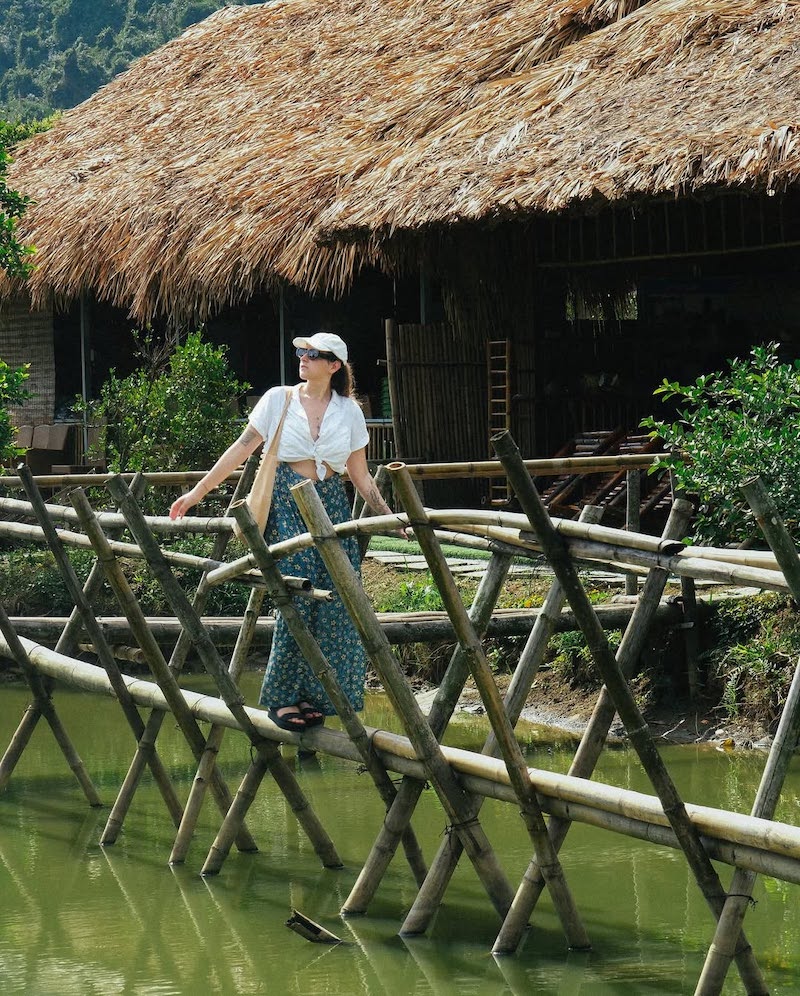
There are several ways to reach Viet Hai, and the journey itself is part of the experience. The two main access routes are by boat through Lan Ha Bay or by trekking through Cat Ba National Park. Visitors can also combine organized transport with cycling or an electric car for the final section between Viet Hai Pier and the village center.
Anyone who wants the easiest Cat Ba to Viet Hai Village connection should go by boat. Local ferries and hired tourist boats leave from Ben Beo Pier in Cat Ba Town and cross Lan Ha Bay to Viet Hai Pier in about 45 minutes, depending on the service and sea conditions.
From the pier, visitors continue roughly 4 km to the village center by bicycle, electric car, motorbike taxi or on foot. The route climbs three short slopes, passing under forest canopy and through a cool arched cave before the village appears in the middle of the mountains.
This route is particularly attractive because getting to the village becomes part of a Lan Ha Bay experience. Instead of spending the entire journey inland, visitors travel between limestone islands and sheltered water before arriving. It is also the most suitable option for families, older travelers and anyone who does not want to spend several hours trekking.
Active travelers can reach Viet Hai on foot, which is the more adventurous way to arrive. The route crosses Cat Ba National Park and takes visitors deep into the island's primary forest, following a narrow trail over steep rocky slopes, past caves and through deep ravines before the village comes into view.
Depending on the starting point and route, the trek runs roughly 8 to 12 km and takes around 4 to 6 hours. The trail includes forest paths, limestone terrain and the area around Ao Ech Lake.
This is the most immersive option when the journey itself is the attraction. It is physically demanding, however, particularly after rain when the trail becomes slippery. Closed-toe hiking shoes, water, sun protection and insect repellent are recommended, and you should allow enough time to finish the trail safely before dark.
Private canoe or small-boat transfers can provide a faster and more flexible way of reaching the village when arranged locally or through a tour operator.
This option suits private groups or travelers who want to combine Viet Hai with other locations around Lan Ha Bay. The exact journey time and price depend on the departure pier, boat type, sea conditions and whether the transfer includes sightseeing stops. For most independent travelers, however, a shared boat or an organized excursion is simpler than arranging a private canoe purely for transportation.
A Viet Hai Village tour is one of the easiest ways to combine the village with Lan Ha Bay. Several cruise itineraries include Viet Hai as an excursion stop, and our own Lan Ha Bay overnight cruise itineraries build it into the longer programs alongside kayaking and beach time.
Visitors typically arrive by boat, cycle or take an electric car from the pier, spend several hours exploring the community and then rejoin the cruise or continue to another Lan Ha Bay attraction.
This is an efficient option for anyone who wants to experience Viet Hai without arranging separate transport, meals and activities. A cruise stop is usually shorter than an independent overnight stay, so travelers who want deeper contact with the community may prefer to spend more time in the village.
The appeal of Viet Hai is not based on a wide selection of conventional attractions. Its experiences revolve around the surrounding landscape and the daily life of the community.

Viet Hai Village cycling is one of the most popular activities and one of the easiest ways to explore the settlement. From Viet Hai Pier, the route toward the village center passes through a green corridor of acacia canopy, rice fields and older forest over roughly 4 to 5 km.
Cycling is relatively easy compared with trekking and allows visitors to stop for photographs, watch local farming and enjoy the quiet scenery. Electric cars are also available for anyone who prefers not to cycle, which makes the experience accessible for families and visitors with limited mobility.
The most rewarding part is often not a particular viewpoint but simply moving slowly through the landscape and noticing how different Viet Hai feels from Cat Ba Town.
Navy Peak, known locally as Dinh Hai Quan, is one of the more significant viewpoints and historical sites around Viet Hai. The peak stands 259 meters above sea level, and in 1965 the Vietnamese Navy built a radar station on the summit with help from Viet Hai residents, monitoring the sea and airspace at the northeastern gateway between Hai Phong and Quang Ninh. After repeated bombing raids, the station was moved in 1968 to a new site near Tung Gau bay. A telecommunications relay station is located on the peak today.
The climb suits travelers who enjoy hiking and want more than a village walk. From higher ground, the surrounding landscape shows the relationship between the village, the forest and the sea.
Because this is a natural mountain environment, visitors should use an experienced local guide where the route is unclear and avoid unfamiliar trails in poor weather.
Tien Duc Cave is one of the lesser-known attractions in the Viet Hai area. The cave lies just outside the village and sheltered local residents during the war, and traces of that period remain inside, including areas once used for cooking and sleeping.
The name connects the site to the wider history of the valley, where the uprising leader Tien Duc withdrew after the fighting of 1889. Viet Hai also keeps other historic sites, among them the Old House and Bat Cave, which local records list alongside Navy Hill as the village's main heritage points.
The cave gives a different perspective on Viet Hai, because it links the limestone landscape with the history of the people who lived here. Anyone interested in the deeper story behind the village will find it more meaningful than a purely scenic stop.
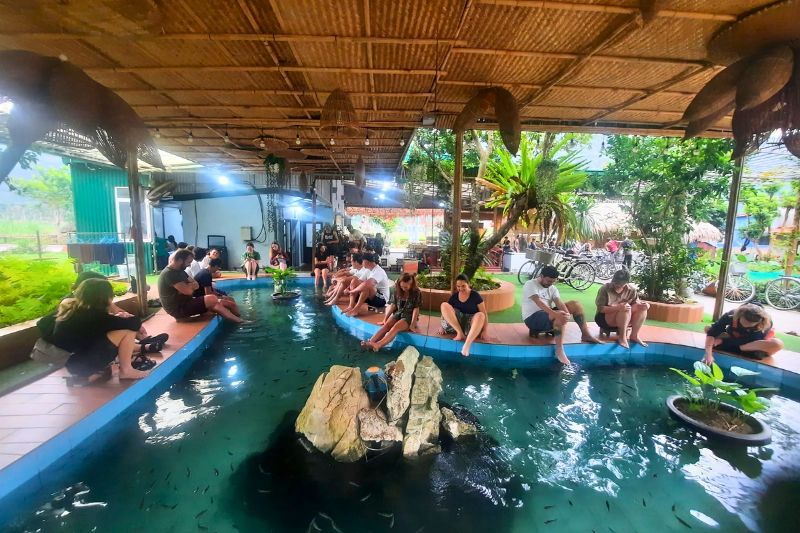
The fish foot massage is one of Viet Hai's most unusual and memorable experiences. A clear stream flows down from the primary forest toward the village, northeast of the settlement on the road into Cat Ba National Park. Visitors sit along the water and let small fish nibble gently around their feet after a long walk or ride.
The number of fish increases during the wetter months of July, August and September, when stronger flow brings more of them into the shallows.
The experience is simple, inexpensive and closely connected to the natural environment rather than being a conventional spa treatment.

This is arguably the most important reason to visit. Viet Hai has developed community tourism in a way that lets visitors meet residents, see local farms, look at traditional homes and understand how people live in a secluded island environment. Residents organize the services themselves, hosting travelers at home, providing meals and inviting them to join everyday agricultural work.
The village's isolation has helped preserve a slower rhythm of life. Viet Hai has held the district Cultural Village title for twelve consecutive years, and the atmosphere remains far quieter than Cat Ba Town even though tourism is now part of the economy.
Visitors should treat the community respectfully. Ask before entering private homes or photographing people, especially during meals or family activities.
Accommodation in Viet Hai remains limited compared with Cat Ba Town. A small number of family-run homestays provide basic rooms, several of them built as environmentally friendly models alongside displays that recreate the village's older houses and farming tools. Most visitors still come for the day, and relatively few stay the night.
Staying overnight is particularly worthwhile for travelers who want a deeper connection with the community rather than simply checking Viet Hai off a sightseeing list. Because rooms are limited, availability should be confirmed before traveling.
There are no international hotel chains or nightlife venues in the village. Come expecting a simple rural stay rather than resort-style comfort.
Food in Viet Hai is simple, local and closely connected with what families grow, raise or gather nearby. Homestays and family-run eateries serve meals that are uncomplicated and affordable, and cruise excursions often arrange lunch in the village or at a local family home.
Village dishes worth trying include wild forest fern stir-fried with garlic, freshwater fish, frog cooked with bamboo shoots, raw fish salad and grouper. Viet Hai is also known for Mun Oc taro, one of the Cat Ba products certified under the biosphere reserve label, alongside Cat Ba forest honey and Gia Luan oranges from neighboring communes.
Viet Hai is best approached as a place to eat local food rather than search for sophisticated dining. For anyone staying overnight, sharing a meal with a host family is often the most memorable part of the visit.
Viet Hai Village is located inside Cat Ba National Park on Cat Ba Island, Hai Phong, Vietnam. The village is located in a secluded valley surrounded by limestone mountains and forest, with Lan Ha Bay on the seaward side, roughly 18 km from Cat Ba Town.
That isolated setting is the defining characteristic of Viet Hai Village on Cat Ba Island. Visitors reach it by boat through Lan Ha Bay or by trekking through the national park.
Viet Hai Village is roughly 18 km from Cat Ba Town, although the travel distance and time vary by route.
By boat, the crossing from Ben Beo Pier to Viet Hai Pier takes about 45 minutes, followed by roughly 4 km by bicycle, electric car or motorbike taxi to the village center. The trekking route is longer on foot and takes around 4 to 6 hours depending on the trail, starting point and hiking pace.
The easiest option is usually a boat from Ben Beo Pier in Cat Ba Town, followed by cycling or an electric car from Viet Hai Pier.
More adventurous travelers can trek through Cat Ba National Park. Private boats and organized Lan Ha Bay tours are additional options for visitors who want more flexibility, and a Viet Hai floating village stop is sometimes combined with Cai Beo on the same bay excursion.
Yes, especially when arriving by boat. The boat route avoids the physically demanding jungle trek, while cycling and electric cars make the final section relatively easy.
Families with young children should generally avoid the longer forest trek because of the distance, terrain and duration.
Yes. A small number of homestays operate in the village, although availability is limited. Staying overnight allows travelers to experience Viet Hai after cruise groups and day visitors have left.
For anyone who values community tourism, an overnight homestay provides a more meaningful experience than a short excursion.
Viet Hai Village offers a side of Cat Ba Island that is difficult to experience from a cruise deck or a hotel in Cat Ba Town. The journey through Lan Ha Bay or Cat Ba National Park is already part of the attraction, and once you arrive the pace slows: cycling beneath the trees, walking between rice fields, meeting residents, visiting a wartime cave or sitting beside the fish-filled stream.
The village also represents an important example of community-based tourism in Cat Ba. Local people have gradually built tourism services while keeping the character of the settlement and treating the surrounding environment as an asset rather than replacing it with large-scale development.
A half-day excursion is enough for a first visit. Travelers with more time should consider an overnight homestay, a longer trek, or a combination of Viet Hai with a Lan Ha Bay cruise. Read about Lan Ha Bay Vietnam to see how the village fits into a wider itinerary.
If your ideal Viet Hai Village tour includes quiet landscapes, local interaction and a more authentic side of Viet Hai Village Cat Ba Island, this secluded community is one of the strongest additions to a Cat Ba itinerary. Current tours and cruises that include the village are listed under Cat Ba island tours.
Cat Ba - Lan Ha Bay
Monkey Island Cat Ba in Lan Ha Bay: how to get there, what the monkeys are like, the viewpoint hike and which Beka tours stop there.
 Cat Ba - Lan Ha Bay
Around 90 Cat Ba langurs remain in the wild, all on one island. What they are, why sightings are rare, and how to visit responsibly.
 Cat Ba - Lan Ha Bay
The Cat Hai to Phu Long cable car crosses 3,955 meters of open water in 10 to 15 minutes, from about 08:30 to 15:45. Route, ticket prices and tips.
 Cat Ba - Lan Ha Bay
Beyond trekking and kayaking, Cat Ba Market is a must-visit destination to experience the authentic local lifestyle. It is the culinary heart of the island, where you can find the freshest seafood and traditional products of the Hai Phong port region.
 Cat Ba - Lan Ha Bay
How to get to Cat Ba Island from Hanoi, Hai Phong, Ha Long, Ninh Binh, Sapa and Ha Giang, comparing buses, ferries, the cable car and 2026 prices.
 Cat Ba - Lan Ha Bay
Complete 2026 guide to the Tuan Chau to Gia Luan ferry. Find updated schedules, ticket prices, transport from Gia Luan to Cat Ba Town, and expert travel tips.
 Cat Ba - Lan Ha Bay
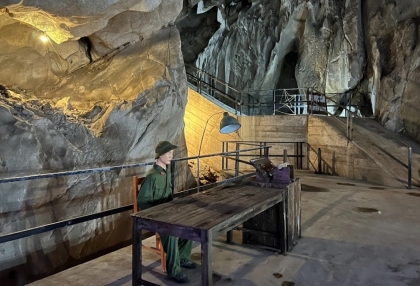
Discover Hang Quan Y (Military Hospital Cave) on Cat Ba Island. Learn about its wartime history, the 3-level concrete bunker, entrance fees, and how to get there.
 Cat Ba - Lan Ha Bay
Cannon Fort on Cat Ba Island is currently closed to visitors, with no official ticket sold. History, location, and what to see instead in 2026.
 Cat Ba - Lan Ha Bay
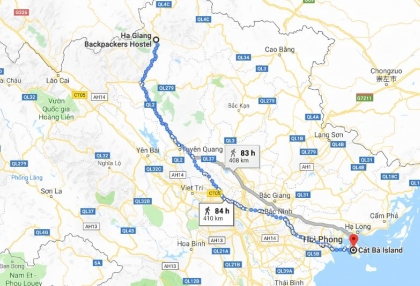
There is no direct bus from Ha Giang to Cat Ba Island. See the Palace Cabin bus via Hanoi, journey time, prices and pickup points for 2026.
 Cat Ba - Lan Ha Bay
There is no direct bus from Sapa to Cat Ba Island. Compare the overnight sleeper and daytime bus routes via Hanoi, with 2026 prices and timing.
