




 Cat Ba
What Happens if a Typhoon Cancels Your Lan Ha Bay Trip
Typhoon season runs June to October in northern Vietnam. Here is who decides, what you get back, and how to plan a bay trip around it.
Last updated: 27 August 2026
Quick Summary: Cat Ba Island has five main cave and nature sites worth your time: Trung Trang Cave (flattest, entry bundled into the national park ticket), Hospital Cave (a wartime underground hospital, around 80,000 VND), Cannon Fort (the best sunset viewpoint, informal cash entry since the official ticket stopped being sold years ago), Cat Ba National Park itself (160,000 VND main route, 120,000 VND for the Kim Giao and Ngu Lam route), and the remote Thien Long Cave reached by mangrove boat. If you only have half a day, pair Trung Trang Cave with a short park trail.
Cat Ba offers much more than a typical beach holiday. The island holds an unusually intact ecosystem where you can walk through limestone forest in the morning and explore a hidden wartime hospital by afternoon. This guide covers the five best cave and nature sites on the island, with real entrance fees and opening hours, plus which one to pick if you are short on time. If you are just starting to plan your trip, our Cat Ba Island travel guide is a good first stop.
Most of the island's landmass sits inside the national park boundary, one of the few places left in northern Vietnam where primary forest still grows directly on limestone karst. Underneath those old trees runs a network of caves carved out over millions of years by water erosion.
Unlike a standard beach day, a day here means moving between very different environments: underground one hour, on a hilltop viewpoint the next, back in town for seafood by evening. That mix of history and nature is easy to miss if a trip only revolves around the bay.
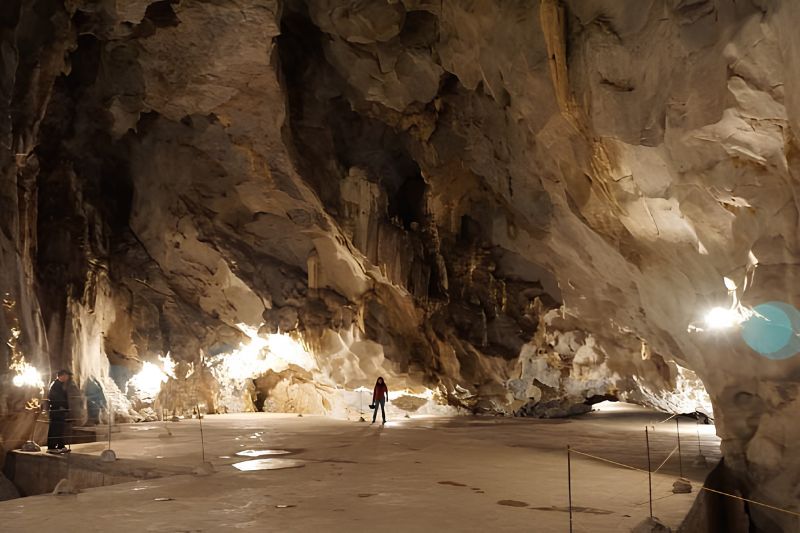
Sitting directly on the main cross-island road about 15 km northwest of town, Trung Trang Cave is the most accessible of the five sites since it needs no hike to reach the entrance. The walk-through passage runs over 300 metres, and going end to end takes about 30 to 45 minutes.
Inside, the cavern is dense with stalactites and stalagmites, some shaped like crowns, others draped like folds of silk. It is a striking sight for very little physical effort.
Trung Trang does not sell its own separate ticket. Entry is bundled into the Cat Ba National Park ticket, which runs 80,000 to 160,000 VND depending on which route you walk, and the same ticket also covers the nearby Ngu Lam Peak trail. Because the ground is flat and easy, this is the pick for families with young kids or older relatives.
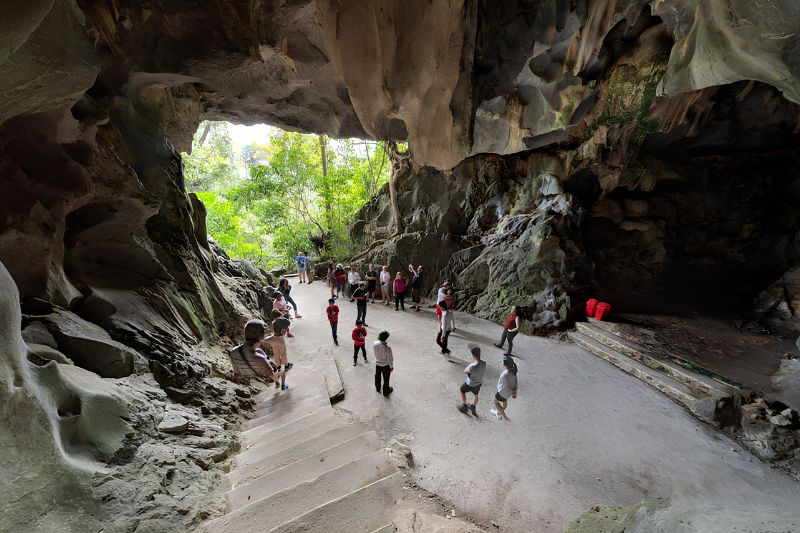
Tucked inside a mountain in Tran Chau commune about 13 km from town, Hospital Cave is a historical monument as much as a natural one. During the war against the United States, the military hollowed out this cavern into a bomb-proof field hospital.
The facility normally held around 200 people, with room to shelter far more during emergencies. It was built across three levels, and today visitors can walk through the first two, past old patient rooms, operating spaces, and what remains of the ventilation system.
Reaching the entrance takes a short climb of about 100 steps from the road. Entry runs around 80,000 VND for adults and 40,000 VND for children, though published figures vary since the site sits outside Hai Phong's official park fee schedule. Gates are open daily from 08:00 to 17:00. See our full Hospital Cave guide above for the complete walkthrough.
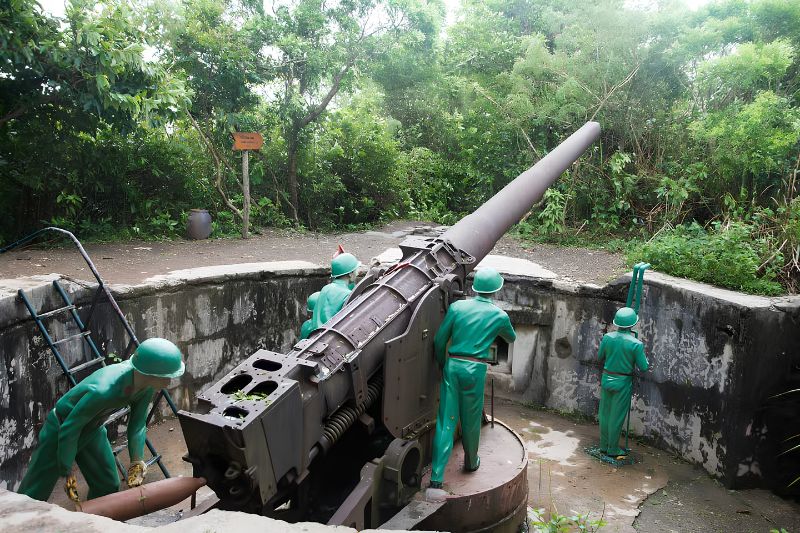
Perched at 177 metres above the town, Cannon Fort offers the best vantage point on Cat Ba. Locals still often call it by its old wartime name, "Point 177." Its trenches and tunnels once held anti-aircraft guns defending the coastal airspace.
The site's ticketing is worth knowing before you go. A formal 80,000 VND ticket was sold when the site opened to the public in 2010, but that official ticket has not been sold for years. Today, entry is collected informally in cash, with reported amounts ranging from 40,000 to 100,000 VND, no printed ticket and no receipt. See our full Cannon Fort guide for how that actually plays out on the ground.
The best light for photos falls between 16:30 and 17:00 as the sun drops. Renting a motorbike or taking an electric shuttle up saves your legs for the view.
Trung Trang Cave, Hospital Cave and Cannon Fort all sit within or right beside Cat Ba National Park, a protected area of over 17,000 hectares combining mountainous forest with marine habitat.
The park is the last refuge of the critically endangered Cat Ba langur, with the population passing 90 individuals during 2024 after decades of decline, a genuine conservation success story.
Beyond the caves, the park has hiking trails for different fitness levels, from an easy walk under old Kim Giao trees to the tougher climb up Ngu Lam Peak, or a full-day crossing to Viet Hai village for experienced trekkers. Park gates open at 07:00, earlier than the three sites above.
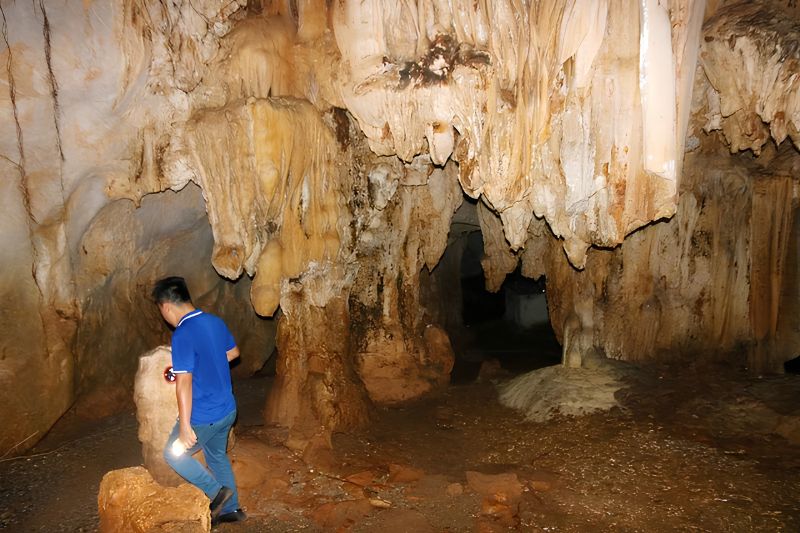
Tucked in Phu Long commune on the island's northwest tip, Thien Long Cave is the most remote of the five, roughly 25 km and 30 to 45 minutes from town by road. Far fewer tourists make it out here than to the sites closer to town.
Getting to the cave itself takes a local boatman rowing you through a mangrove forest, followed by a short walk of ten minutes or more along a dirt path. Inside are three chambers of ancient stalactites, some naturally shaped like animals or religious figures, plus signs of past human use including an old grave near the entrance.
Entry runs around $3.50 per adult and $1.75 per child, paid locally rather than through an official park-style ticket.
For a short half-day trip, Trung Trang Cave is the easiest and most relaxed choice, needing no real hiking and pairing well with a short national park trail since the two entrances sit close together.
If human history interests you more than geology, Hospital Cave is the better pick, telling a genuinely moving story of wartime survival. If you only have one afternoon and want a single great photo, the sunset from Cannon Fort is hard to beat.
Leave Thien Long Cave off a packed single-day itinerary. The drive, the boat transfer and the walk together take a big chunk of a day, and it does not combine well with the other four sites.
Cave floors stay damp and can be slippery year-round, so wear proper closed shoes rather than sandals, especially on the mossy concrete stairs down into Hospital Cave.
Both the national park trails and the Cannon Fort climb are fully exposed with no shade at midday. In the hot summer months, plan these for early morning or late afternoon rather than the middle of the day.
None of the five sites can safely store bulky luggage, so leave large bags at your hotel and bring only a small daypack with water, tickets, and a torch. At Thien Long Cave, wear the life vest provided on the boat and keep electronics away from the water.
Two nearby sites, such as Trung Trang Cave plus a short national park trail, fit comfortably into a half-day. Adding a third close to town, like Hospital Cave or Cannon Fort, needs a full day with an early start. Thien Long Cave is best planned as its own separate day given how far northwest it sits.
No. Tickets for the national park and the sites near town are bought at the gate on arrival, no advance booking needed. Most of these sites run 08:00 to 17:00, while the national park gates open slightly earlier at 07:00. Cannon Fort is the exception, with no formal ticket at all these days.
Trung Trang Cave is flat and well lit, making it the gentlest option for young kids and seniors. Hospital Cave is manageable but involves a set of steep concrete steps. Cannon Fort, the longer park trails, and Thien Long Cave suit travellers with a reasonable baseline of fitness.
Yes, you can ride to Trung Trang Cave, Hospital Cave and Cannon Fort independently on a rented motorbike. A guide is worth hiring for the Viet Hai village crossing. Thien Long Cave cannot be done fully by motorbike, since the last stretch needs a local boatman through the mangroves.
The dry season from September to April gives the safest walking conditions, with less slippery trail mud. Summer visits still work, but avoid a midday hike up to Cannon Fort when the heat is at its worst.
Many travellers spend the morning in the forests and caves, then save the afternoon for the water. The two halves of the island complement each other well, so the trip never feels repetitive. Beka Travel runs its own fleet of wooden boats on Lan Ha Bay, and because we operate our own vessels, we can line up your cruise pickup with your cave and park plans on the same day rather than leaving you waiting around for transfers.
Cat Ba
Typhoon season runs June to October in northern Vietnam. Here is who decides, what you get back, and how to plan a bay trip around it.
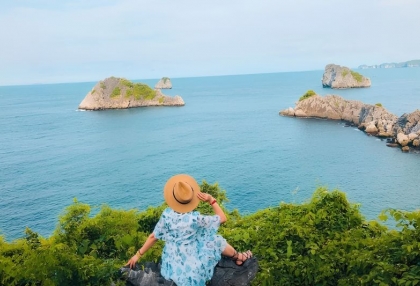 Cat Ba
A practical guide to Monkey Island in Lan Ha Bay: how to get there, what the monkeys are like, the viewpoint hike, and which Beka tours stop there.
 Cat Ba
Around 90 Cat Ba langurs are left in the wild, all on one island. What they are, why you probably won't see one, and how to visit responsibly.
 Cat Ba
The Cat Hai–Phu Long cable car crosses 3,955 metres of open water in 10–15 minutes, running 09:00–16:00 daily except Tuesdays. Route, hours, ticket prices and how it compares to the ferry.
 Cat Ba
Beyond trekking and kayaking, Cat Ba Market is a must-visit destination to experience the authentic local lifestyle. It is the culinary heart of the island, where you can find the freshest seafood and traditional products of the Hai Phong port region.
 Cat Ba
Complete 2026 guide to reaching Cat Ba Island: compare buses, ferries, cable cars and transfers from Hanoi, Hai Phong, Ha Long and Ninh Binh.
 Cat Ba
Complete 2026 guide to the Tuan Chau to Gia Luan ferry. Find updated schedules, ticket prices, transport from Gia Luan to Cat Ba Town, and expert travel tips.
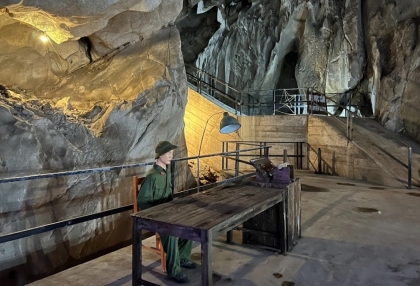 Cat Ba
Discover Hang Quan Y (Military Hospital Cave) on Cat Ba Island. Learn about its wartime history, the 3-level concrete bunker, entrance fees, and how to get there.
 Cat Ba
Cannon Fort on Cat Ba Island is currently closed to visitors, with no official ticket sold. History, location, and what to see instead in 2026.
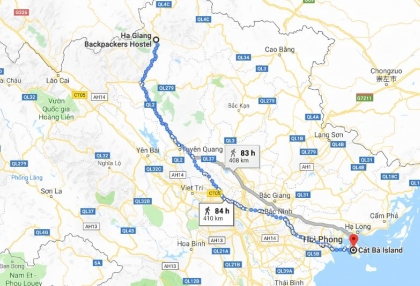 Cat Ba
There is no direct bus from Ha Giang to Cat Ba Island. See the Palace Cabin bus via Hanoi, journey time, prices and pickup points for 2026.