




 Cat Ba
Caves and Nature in Cat Ba Island — The Complete 2026 Guide
Trung Trang Cave, Hospital Cave, Cannon Fort, Thien Long Cave and Cat Ba National Park — entrance fees, opening hours, and which one to pick if you are short on time.
Last updated: July 22, 2026
Quick Summary: Lan Ha Bay is one of Southeast Asia's top spots for rock climbing and deep water soloing, where you climb sea cliffs and drop straight into the water below. Routes suit both first-timers and experienced climbers, run by licensed local operators.
The sheer limestone cliffs rising straight out of the water make Lan Ha Bay one of the best spots in Southeast Asia for rock climbing and deep water soloing, climbing without ropes over deep water, so a fall just means a splash. If you're looking for adventure sports Vietnam options beyond a standard boat cruise, this is where to find them.
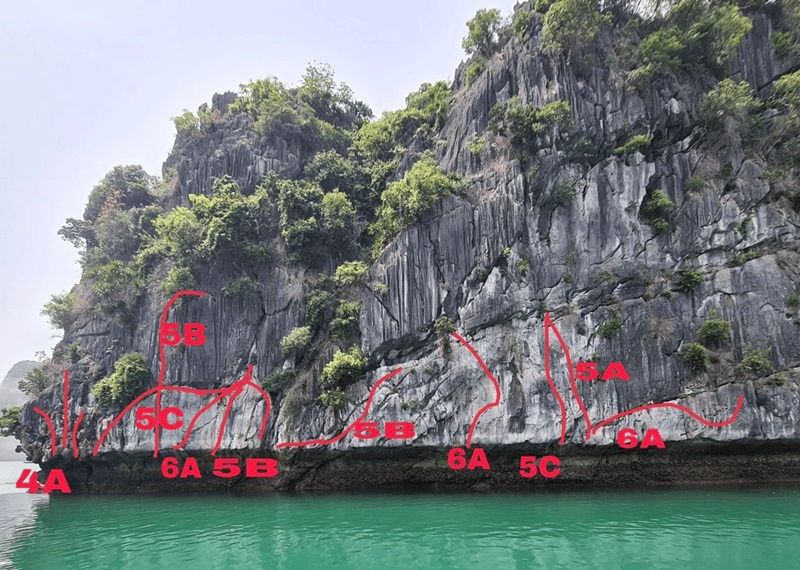
Deep water soloing, often shortened to DWS, means climbing a sea cliff without a harness, rope, or protection gear. When your grip gives out, you drop into the warm water below, which is what makes it accessible to climbers who've never roped up before, alongside more experienced climbers looking for a different kind of challenge.
Lan Ha Bay's karst walls rise almost vertically from calm, deep water, which is exactly the geology DWS needs. Combined with the bay's light boat traffic compared to Halong Bay, it's become one of the region's most established deep water soloing destinations.
Half-day deep water soloing trips with a licensed guide typically run from about $50 to $80 per person, covering a boat transfer, climbing gear, a guide, and snacks, based on current rates from established operators in the area. Some operators also offer full private tours in the $180 per person range for smaller groups wanting a more personal pace
For sport climbing with ropes and bolted routes rather than DWS, Butterfly Valley is the main destination, a secluded inland crag near a small farming village with routes ranging from beginner-friendly to technically demanding.
| Option | Typical price | What it includes | Suits |
|---|---|---|---|
| Half-day deep water soloing, group | $50–80 per person | Boat transfer, climbing gear, guide, snacks | First-timers and most travellers |
| Private full-day tour | Around $180 per person | Same, at a smaller group size and your own pace | Small groups wanting more attention on the rock |
| Sport climbing at Butterfly Valley | Varies by operator | Ropes and bolted routes, inland crag | Climbers who want rope work rather than DWS |
Prices checked July 2026 and quoted as a range, since operators set their own rates and adjust them by season. Confirm the current price when you book.
Worth being straight about: Beka Travel does not run climbing trips. Use the checklist below to choose an operator, and know that we have no commercial interest in which one you pick. What Beka does run is the boat side of Lan Ha Bay, which is why the pairing below is worth knowing.
Always book through a licensed climbing operator rather than an informal guide. Several established outfits work the bay, some of them running for over a decade, and the way to tell them apart is what they show you before you pay. A licensed operator will provide proper gear, safety briefings, and guides trained specifically for DWS conditions, tides, and submerged rock hazards, none of which should be skipped for the sake of a cheaper price.
Five things to check before you pay:
If an operator cannot answer four of these five on the phone, book someone else.
Before booking, confirm what's included, gear, transport, snacks, and group size, since private and small-group tours cost more but generally mean more individual attention on the rock.
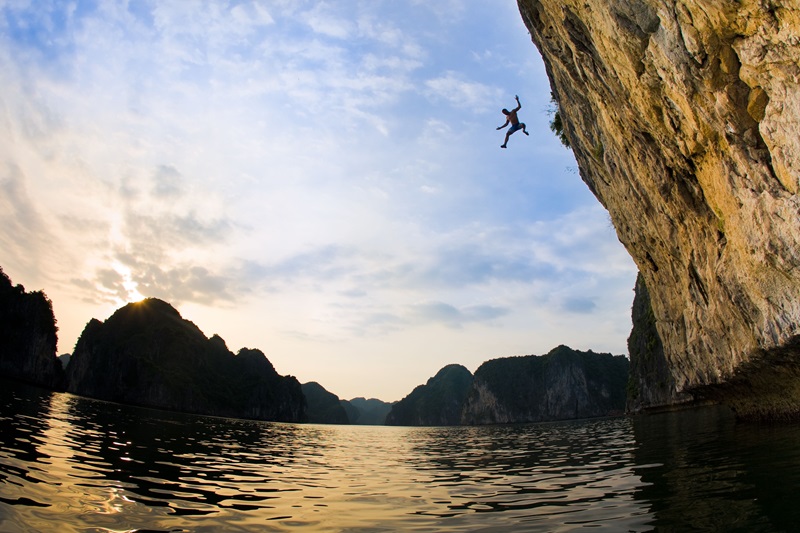
Beyond the well-known DWS walls, several quieter coves inside Lan Ha Bay double as launch points for both climbing and swimming, including the lagoons near Ba Trai Dao and Van Boi Beach. These spots stay far less crowded than the main tourist routes, which is part of why climbers keep coming back.
If you want a land-based adventure to pair with a day on the cliffs, Cat Ba National Park offers jungle trekking that makes for a good rest day between climbing sessions.
The dry season from roughly October through April brings calmer seas and better visibility for spotting submerged rocks near the base of the cliffs, both important for DWS safety. Summer months from May to September are warmer for swimming, but storm season in the Gulf of Tonkin runs June through September and brings a higher chance of sudden storms, so always check conditions with your operator before heading out.
Whatever season you climb in, water temperature stays comfortable enough for multiple falls per session, which is half the fun of DWS in the first place.
Tide matters more here than season does. The Gulf of Tonkin runs a diurnal tide, one high and one low each day, with a range of three to four metres. That means the water under a given route can be waist-deep at one hour and well over your head six hours later, which is why the same cliff can be a good line in the morning and a closed one by afternoon.
This is also the single clearest test of an operator. One who plans around the tide table will tell you your climbing window before you board. One who does not will tell you the weather looks fine.
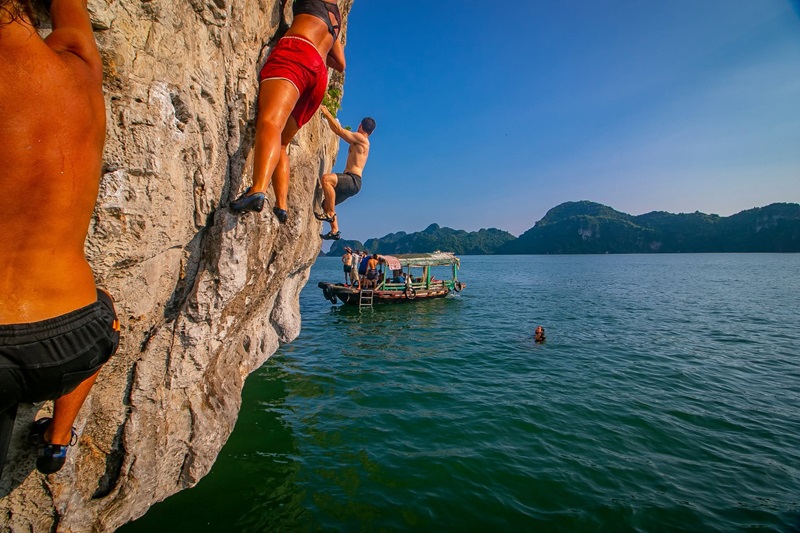
Most half-day trips depart Cat Ba town by boat mid-morning, giving your guide time to scout conditions at two or three cliff faces before settling on the best spot for the day's group skill level. Expect a mix of easier warm-up climbs and progressively harder routes as the session goes on, with plenty of time in the water between attempts to recover and watch other climbers.
Lunch is typically taken on the boat between climbing spots, and most operators wrap up by mid-afternoon, leaving time to shower off and relax before dinner back in town.
Deep water soloing works well for a wide range of fitness levels precisely because falling is part of the activity rather than a failure state, so nervous first-timers and confident climbers can genuinely share the same session. That said, a reasonable comfort level in open water matters more than climbing experience, since you'll be swimming between attempts and treading water while queuing for a route.
Non-climbers in a group don't have to sit it out entirely either, most tours welcome partners or friends along for the boat ride, swimming, and snorkeling around the cliffs while others climb.
Most climbers base themselves in Cat Ba town and combine a day of DWS with a separate Lan Ha Bay boat cruise for kayaking and sightseeing on the calmer days. Our Lan Ha Bay day tour is a good complement to a climbing day, covering the kayaking, swimming, and floating village side of the bay.
| Deep water soloing day | Beka Travel Lan Ha Bay Day Tour | Beka Travel Lan Ha Bay 2D1N Cruise | |
|---|---|---|---|
| Who runs it | An independent licensed climbing operator | Beka Travel | Beka Travel |
| Time on the water | Half day or full day | 6 to 8 hours | About 24 hours |
| Main activity | Climbing sea cliffs, swimming between routes | Kayaking, swimming, floating fish farms | Kayaking, swimming, sunset and sunrise on the bay |
| Physical demand | High, and requires comfort in open water | Low to moderate | Low to moderate |
| Weather sensitivity | High, needs calm sea and a workable tide | Moderate | Moderate |
| Works as a rest day | No | Yes | Yes |
| Best paired with | A cruise day before or after | A climbing day either side | The rest day climbers usually want |
We do not run climbing trips, but we do run the bay. Beka Travel holds 4.9 out of 5 from 1,140 reviews on TripAdvisor and won a Travelers' Choice award in 2026.
For the full breakdown of the bay's cruises, beaches, and kayaking spots, see our Lan Ha Bay travel guide, or explore the wider island at our Cat Ba Island Travel Guide. Start planning your trip at Beka Travel.
When booked through a licensed operator with proper safety briefings, DWS carries a similar risk profile to other supervised water sports. The main hazards, submerged rocks and tide conditions, are exactly why an experienced local guide matters more here than in most climbing disciplines.
Quick-dry athletic clothing or swimwear works best, paired with climbing shoes if you have them, though some operators provide rental shoes. Avoid loose jewelry or anything you wouldn't want to lose in the water, and bring a spare set of dry clothes for the boat ride back, along with a towel your operator may not automatically supply. Sunscreen applied before you leave the harbor is worth doing too, since reapplying mid-session between climbs is easy to forget once you're focused on the rock.
No. Deep water soloing suits first-timers better than roped climbing does, because there is no gear to learn and no belay technique to master. What it does need is comfort in deep open water, since every route ends with a drop into it. If you would not swim out of your depth without a life jacket, start somewhere else.
Yes, and the dry season from October through April is the better half of the year for it. Seas are calmer and the water is clearer, which matters for spotting submerged rock at the base of a cliff. The trade-off is water temperature, which sits around 20 degrees from December to February.
Trips stop when the bay management board issues a stop order, not when an operator decides the weather looks bad. That order applies to every boat on the water that day. Ask your operator before you pay what they do when it happens, because refund and reschedule policies vary widely between them.
Cat Ba climbing splits into two styles: deep water solo Cat Ba over the sea and bolted rock climbing Cat Ba at Butterfly Valley. Beginners usually start with climbing in Cat Ba on a guided half-day before trying the harder lines.
Cat Ba
Trung Trang Cave, Hospital Cave, Cannon Fort, Thien Long Cave and Cat Ba National Park — entrance fees, opening hours, and which one to pick if you are short on time.
 Cat Ba
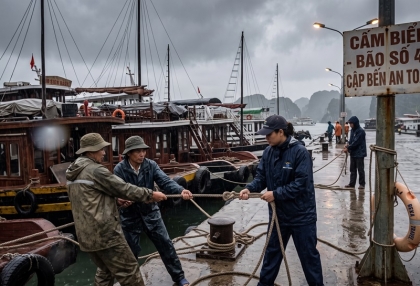
Typhoon season runs June to October in northern Vietnam. Here is who decides, what you get back, and how to plan a bay trip around it.
 Cat Ba
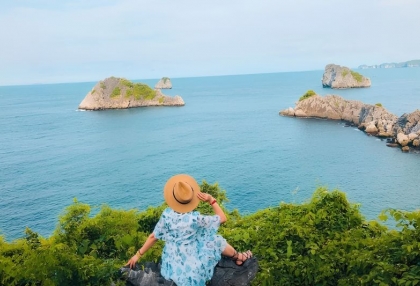
A practical guide to Monkey Island in Lan Ha Bay: how to get there, what the monkeys are like, the viewpoint hike, and which Beka tours stop there.
 Cat Ba
Around 90 Cat Ba langurs are left in the wild, all on one island. What they are, why you probably won't see one, and how to visit responsibly.
 Cat Ba
The Cat Hai–Phu Long cable car crosses 3,955 metres of open water in 10–15 minutes, running 09:00–16:00 daily except Tuesdays. Route, hours, ticket prices and how it compares to the ferry.
 Cat Ba
Beyond trekking and kayaking, Cat Ba Market is a must-visit destination to experience the authentic local lifestyle. It is the culinary heart of the island, where you can find the freshest seafood and traditional products of the Hai Phong port region.
 Cat Ba
Complete 2026 guide to reaching Cat Ba Island: compare buses, ferries, cable cars and transfers from Hanoi, Hai Phong, Ha Long and Ninh Binh.
 Cat Ba
Complete 2026 guide to the Tuan Chau to Gia Luan ferry. Find updated schedules, ticket prices, transport from Gia Luan to Cat Ba Town, and expert travel tips.
 Cat Ba
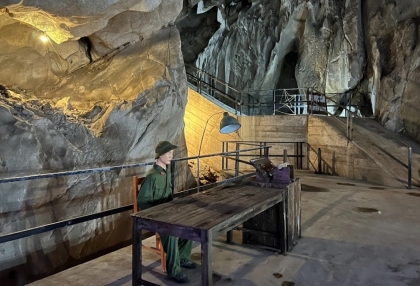
Discover Hang Quan Y (Military Hospital Cave) on Cat Ba Island. Learn about its wartime history, the 3-level concrete bunker, entrance fees, and how to get there.
 Cat Ba
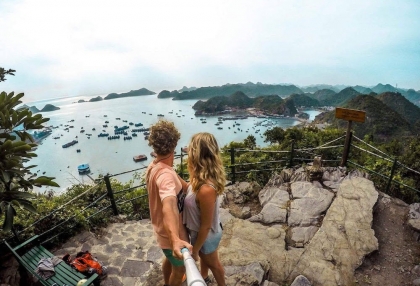
Cannon Fort on Cat Ba Island is currently closed to visitors, with no official ticket sold. History, location, and what to see instead in 2026.