




 Cat Ba
Caves and Nature in Cat Ba Island — The Complete 2026 Guide
Trung Trang Cave, Hospital Cave, Cannon Fort, Thien Long Cave and Cat Ba National Park — entrance fees, opening hours, and which one to pick if you are short on time.
Cat Ba Island Travel Guide 2026: Itineraries, Costs, DIY Tips, and Top Attractions
Often described as the uncut gem of the Gulf of Tonkin, Cat Ba Island offers the perfect definition of a multi-experiential holiday. If you are planning to explore this remarkable island, Beka Travel’s comprehensive 2026 guide will help you master your itinerary, optimize your budget, and ensure you miss none of the spectacular scenery.
Located about 30 km southeast of Haiphong city center, Cat Ba is the largest island in the Cat Hai archipelago. Encompassing over 360 islands scattered across Lan Ha Bay, it has earned the title "the green pearl of the Gulf of Tonkin." Its appeal lies in the perfect blend of vast ocean, majestic limestone karst peaks, and the lush primary forests of Cat Ba National Park - a UNESCO recognized World Biosphere Reserve.
The island caters to a wide spectrum of travelers: couples seeking romantic seclusion, families needing a weekend retreat, or adventurous youth eager for trekking and kayaking. In recent years, synchronized infrastructure upgrades - including the new cable car, additional ferries, and enhanced roads - have transformed the island into a highly attractive destination for both domestic and international visitors.

The island is beautiful year-round, but each season wears a distinct character. Your ideal time to visit depends entirely on your travel style:
Suggested timing based on your needs:
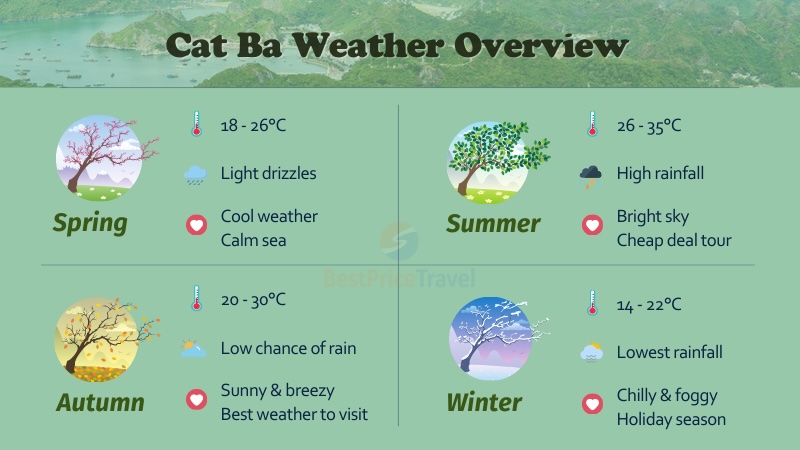
Understanding the specific local weather patterns is crucial for seamlessly planning your island getaway. In the Gulf of Tonkin, the unpredictable storm window strictly runs from June through September. You must ignore generalized travel blogs that quote a September to November typhoon peak for Vietnam. While the northern region typically only experiences one or two landfalling storms in an average year, each severe weather event will completely shut down ferry routes and suspend all bay cruises for one to three days.
If severe weather does hit during your visit, there is one critical logistical point you must understand about maritime closures. Individual cruise operators do not make the cancellation call. The local bay management board issues a strict, non-negotiable stop order that applies instantly to every single vessel on the water. This means absolutely nobody is out secretly sailing while your captain sits safely in port explaining the situation. You should always view these mandatory port closures as an absolute safety guarantee rather than an inconvenience.
See more: best time to visit Cat Ba Island guide.
Reaching the island now offers numerous flexible options. Depending on your starting point, you can choose the most optimal route.
The 156 km journey typically involves three stages: road travel, the sea crossing via Dong Bai ferry (or cable car/speedboat), and road travel to the town center. From the capital, you take Expressway 5B over the Tan Vu – Lach Huyen cross-sea bridge to Cat Hai Island.
From the city center, three highly convenient options exist (full details in our how to get to Cat Ba Island guide):
The simplest method is booking a bus via Son Tung Express. If driving, you can take the Tuan Chau – Gia Luan ferry for just 75,000 VND per passenger. This is an excellent alternative to bypass traffic jams during peak season. Upon docking, you transfer via bus or private car to the center.
Direct buses from Ninh Binh (e.g., Discovery, Daiichi, The Long, Ninh Binh Travel) take about 4.5 hours and cost from 280,000 VND per way. They pick up at Tam Coc, Trang An, or Mua Cave and pass through Nam Dinh and Thai Binh. From Nam Dinh, O Ho Bus is a local option (150,000 – 250,000 VND), though it takes longer due to passenger pickups along the way.
Travelers from Hung Yen or Hai Duong can catch a bus to Niem Nghia station (Haiphong) for 70,000 – 80,000 VND (2 hours), then transfer 4-5 km to Binh Port. From Bac Ninh, Bac Giang, or Vinh Phuc, you should head to Aeon Mall Long Bien in Hanoi to catch a Cat Ba-bound bus.
Pro Tip: To optimize your transit logistics, prioritize an all-inclusive combo bus. Contact Beka Travel at 0826360000 for swift booking support.
How many days should you budget? To cover the island's most famous sites, a 2 days 1 night or 3 days 2 nights stay is ideal:
Regardless of your itinerary, we strongly encourage finalizing plans early, booking accommodations in advance (especially in summer), and monitoring the weather forecast.
Accommodation quality drastically impacts your travel experience. Depending on your budget, consider these options:

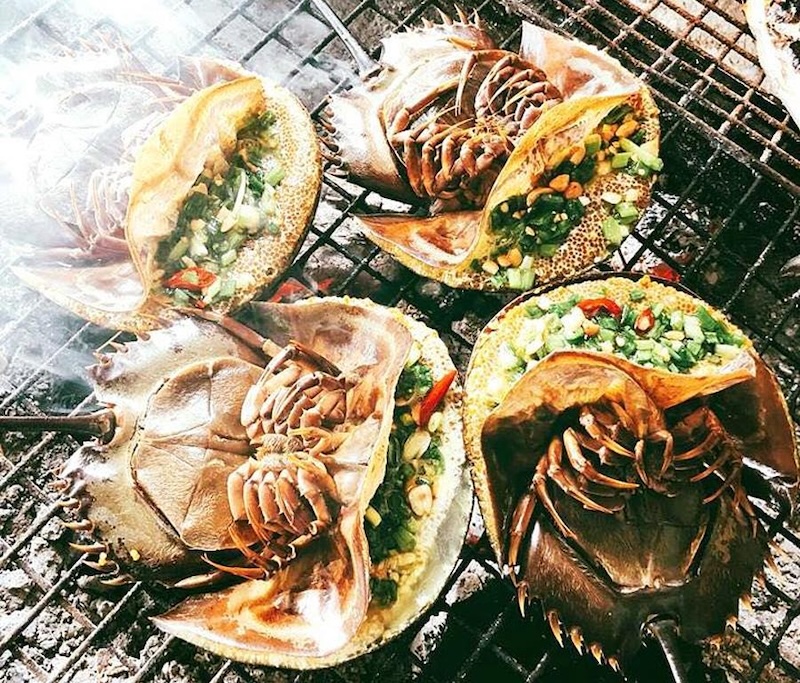
Cat Ba’s culinary identity is anchored in the Gulf of Tonkin’s exceptionally fresh seafood (see our full Cat Ba food guide):
Restaurant Recommendations: For a complete experience, visit Vien Duong, Bien Dong, or Quan Cat Ba, Little Leaf, Quiri Pub, Like Coffee, Secret Garden, Yummy…. For higher-end dining, try Marigold, Lepont Cat Co 3, or M'Gallery. If you crave mountain-style cuisine, Phuong Truong and Linh Trang are excellent choices.
The Cat Co 1, 2, and 3 beaches boast fine white sand and emerald water. While not massive, they provide full amenities like banana boat rides, kayaking, and beachfront dining. The newest standout is Sun Beach (Cat Ba Beach), located right at the central entrance gate. This expansive, newly opened artificial beach offers all the conveniences of the Cat Co cluster.
Often considered the heart of the archipelago, Lan Ha Bay mesmerizes visitors with over 400 limestone islets rising from crystal-clear water. Unlike the bustling Halong Bay, it retains a profound sense of pristine tranquility. Taking a bay cruise, kayaking, or diving from the boat into the cool water are unmissable experiences.

Also known as Cat Dua Island, this ecologically rich spot scores highly for its resident troops of friendly, wild macaques. The island features two natural beaches at the mountain's base, though most tourists stick to Beach 1 for swimming or hike to the summit for panoramic bay views.
Representing modernity and luxury, Xanh Island is a perfect stopover packed with green amenities. Its most explosive highlight is the Cat Ba Jetski show—a gripping extreme water sports performance that you cannot take your eyes off. During summer weekends or holidays, they frequently host free fireworks displays. (Schedules vary, so check a week in advance).
Cat Ba Biosphere Reserve is an archipelago located in northern Viet Nam adjacent to the Ha Long Bay World Heritage site - by UNESCO. This biodiversity reserve is the island's pride, sheltering numerous rare species. Hiking enthusiasts will love the stunning primary forest trails, whether trekking to Ngu Lam Peak or taking the longer 12 km route to Viet Hai Village. Reaching the summit and taking in the sweeping green canopy is the ultimate reward.

Curated Experiences from Beka Travel: To ensure you miss none of the island's highlights, consider our highly optimized itineraries, including the Full Day Lan Ha Bay Cruise or the Half-Day Sunset Cruise.
Both share the same limestone karst geology but possess different "personalities." Cat Ba is rugged and green, leaning toward eco-tourism, jungle trekking, and active sailing. Halong Bay is busier and more modern, featuring massive entertainment complexes and larger mega-cruises. Choose based on your preferred travel style.
Absolutely. The island's air is incredibly fresh, and all major services are situated close together, making it perfect for children to play and the elderly to rest. Cruising the bay is also highly safe for kids.
Yes! The island's infrastructure is vastly improved, making independent travel remarkably easy. However, if traveling during holidays or summer, you must book your transport and hotels well in advance to avoid selling out.
For small groups, an all-inclusive package (covering transport, tickets, food, and a guide) is often cheaper and significantly more relaxing. However, for larger groups or big families, planning an independent itinerary offers more flexibility to match everyone's specific tastes.
Cat Ba is more than just an island; it is an energy-recharging station where you can exhaust yourself exploring nature and completely unwind as the ocean lulls you. Whether you book a guided tour or backpack independently, this bay will leave an indelible mark on you. We hope this 2026 Cat Ba Travel Guide clears up any logistical hurdles. Save this guide, share it with your travel partners, and pack your bags to witness the "green pearl" of the Gulf of Tonkin!
Cat Ba
Trung Trang Cave, Hospital Cave, Cannon Fort, Thien Long Cave and Cat Ba National Park — entrance fees, opening hours, and which one to pick if you are short on time.
 Cat Ba
Typhoon season runs June to October in northern Vietnam. Here is who decides, what you get back, and how to plan a bay trip around it.
 Cat Ba
A practical guide to Monkey Island in Lan Ha Bay: how to get there, what the monkeys are like, the viewpoint hike, and which Beka tours stop there.
 Cat Ba
Around 90 Cat Ba langurs are left in the wild, all on one island. What they are, why you probably won't see one, and how to visit responsibly.
 Cat Ba
The Cat Hai–Phu Long cable car crosses 3,955 metres of open water in 10–15 minutes, running 09:00–16:00 daily except Tuesdays. Route, hours, ticket prices and how it compares to the ferry.
 Cat Ba
Beyond trekking and kayaking, Cat Ba Market is a must-visit destination to experience the authentic local lifestyle. It is the culinary heart of the island, where you can find the freshest seafood and traditional products of the Hai Phong port region.
 Cat Ba
Complete 2026 guide to reaching Cat Ba Island: compare buses, ferries, cable cars and transfers from Hanoi, Hai Phong, Ha Long and Ninh Binh.
 Cat Ba
Complete 2026 guide to the Tuan Chau to Gia Luan ferry. Find updated schedules, ticket prices, transport from Gia Luan to Cat Ba Town, and expert travel tips.
 Cat Ba
Discover Hang Quan Y (Military Hospital Cave) on Cat Ba Island. Learn about its wartime history, the 3-level concrete bunker, entrance fees, and how to get there.
 Cat Ba
Cannon Fort on Cat Ba Island is currently closed to visitors, with no official ticket sold. History, location, and what to see instead in 2026.