



 Cat Ba - Lan Ha Bay
Monkey Island Cat Ba: What to Know Before You Go
A practical guide to Monkey Island in Lan Ha Bay: how to get there, what the monkeys are like, the viewpoint hike, and which Beka tours stop there.
Last updated: July 22, 2026
Lan Ha Bay is one of the better places to kayak in northern Vietnam because the water sits sheltered between limestone islands, so it stays calm most of the year. Kayaking here is almost always part of a boat tour rather than something you rent by the hour, and the paddle takes you into lagoons, caves and beaches the boats themselves cannot reach.
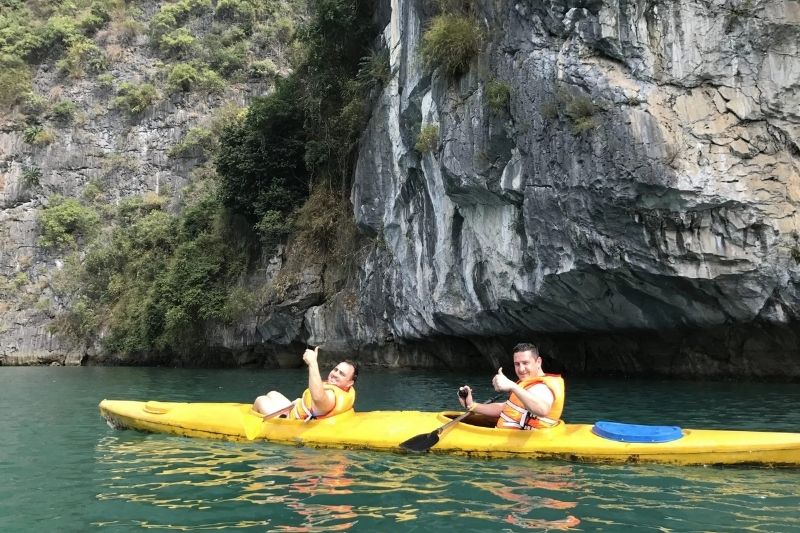
The bay is enclosed by hundreds of karst islands, which break up the wind and swell before it reaches you. That makes the water noticeably calmer than open coastline, and it is the main reason complete beginners can paddle here comfortably.
The second reason is access. A kayak draws almost no water and fits through gaps a cruise boat cannot, so the interesting parts of the bay — enclosed lagoons, low cave passages, small beaches with no landing — are effectively kayak-only.
| Spot | What makes it worth paddling | Suits |
|---|---|---|
| Ba Trai Dao Beach | Three small limestone islets enclose a calm, wind-sheltered stretch of water, clear enough to see coral below when the tide is right | First-timers, swimmers |
| Van Boi Beach | Sits at the base of a limestone rock formation and works as a launch point for paddling across turquoise water into nearby coves | Anyone wanting a quieter stop |
| Hang Sang Toi (Light and Dark Cave) | The bigger and better looking of the two caves — you paddle under the arch and it opens into an enclosed lagoon on the inside | The cave most people remember |
| Hang Tai Keo | A second kayak-through cave passage, usually paddled on the same trip as Hang Sang Toi | Adding a second cave to the same paddle |
| Ba Ham Lake, at Dau Be | An enclosed saltwater lagoon you reach by paddling through a short rock tunnel — not reachable any other way | The most remote paddle of the group |
Ba Trai Dao sits at 20.7905° N, 107.1003° E if you want to place it on a map before you go. Ba Ham Lake is the one worth planning around, since it only features on longer itineraries.
Both Hang Sang Toi and Hang Tai Keo have low entrances. When the tide comes up the water covers the opening, and there is simply no way inside until it drops again — this is the most common reason a cave stop gets swapped for something else on the day.
It is worth understanding before you book, because no operator can promise the caves regardless of price. Guides time the paddle around the tide, so a cave stop is realistic rather than guaranteed. Both caves sit on the Lan Ha Bay full-day tour and the 2D1N Adventure itinerary.
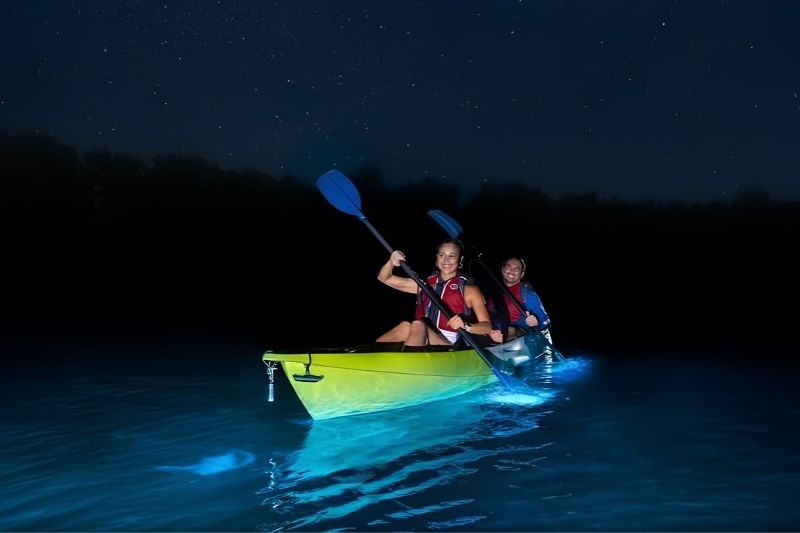
Yes, and it is the single most distinctive paddle in the bay. On a night trip the plankton light up around the blade of your paddle each time it breaks the surface.
Beka Insight: across 120 recent night departures, guests clearly saw the bioluminescence on 94 of them — about 78%. Sightings are least likely around the 15th and 16th of the lunar month, when the moon is at its brightest, and on rainy nights.
That number matters more than a promise would. Anyone guaranteeing you will see it is overselling — the honest version is that it is likely but weather and moonlight decide. If seeing it is your main reason for the trip, avoid booking around the full moon. There is more detail in the bioluminescent plankton guide.
No. The sheltered water and short distances mean most guests paddle without any prior experience, usually in a two-person kayak so a stronger paddler can share the work. Guides stay on the water with the group.
What matters more than technique is being comfortable in open water, since you will be getting in and out of the kayak from a boat or a beach, often with a swim in between.
The warm months from around May to September are best for combining paddling with swimming, since the water is warm enough to spend time in. Cooler, drier months bring clearer visibility and calmer conditions but chillier water.
Whatever the season, conditions on the day drive the route. Guides pick the stop based on wind and tide, which is why itineraries list alternatives rather than fixed points.
Kayaking is included in every Beka trip rather than sold separately, so the question is really which itinerary reaches the spots you want.
Worth knowing: Beka does not rent kayaks on their own or run a standalone kayak tour. The paddle is part of the boat trip, which is also how you reach the launch points in the first place.
Yes. The water is sheltered by surrounding islands so it stays calm, distances are short, and guides accompany the group. Most guests paddle a two-person kayak with no prior experience.
No. Hang Sang Toi and Hang Tai Keo both have low entrances, and a rising tide covers the opening so there is no way through until the water drops. Guides plan the paddle around the tide.
Hang Sang Toi. It is wider and more striking than Hang Tai Keo, and paddling under the arch opens into an enclosed lagoon on the inside.
Not guaranteed. Guests clearly saw it on 94 of the last 120 night departures, roughly 78%. It is least likely around the 15th and 16th of the lunar month, when moonlight is brightest, and on rainy nights.
Only by kayak, through a short rock tunnel at Dau Be. It appears on the 3D2N cruise itinerary as one of two Day 1 options, alternating with Ba Trai Dao Beach depending on conditions.
Ready to get on the water? Compare the full Lan Ha Bay tour lineup to find the itinerary that reaches the spots you want to paddle.
Kayaking Cat Ba means paddling the hidden lagoons of Lan Ha Bay. A guided Cat Ba kayaking tour reaches caves you cannot on foot, while night kayaking Cat Ba adds the glowing plankton after dark; simple kayak rental Cat Ba is available near the main beaches.
Cat Ba - Lan Ha Bay
A practical guide to Monkey Island in Lan Ha Bay: how to get there, what the monkeys are like, the viewpoint hike, and which Beka tours stop there.
 Cat Ba - Lan Ha Bay
Around 90 Cat Ba langurs are left in the wild, all on one island. What they are, why you probably won't see one, and how to visit responsibly.
 Cat Ba - Lan Ha Bay
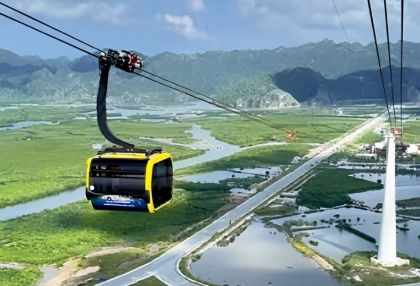
The Cat Hai-Phu Long cable car crosses 3,955 metres of open water in 10-15 minutes, running 09:00-16:00 daily except Tuesdays. Route, hours, ticket prices and how it compares to the ferry.
 Cat Ba - Lan Ha Bay
Beyond trekking and kayaking, Cat Ba Market is a must-visit destination to experience the authentic local lifestyle. It is the culinary heart of the island, where you can find the freshest seafood and traditional products of the Hai Phong port region.
 Cat Ba - Lan Ha Bay
Complete 2026 guide to the Tuan Chau to Gia Luan ferry. Find updated schedules, ticket prices, transport from Gia Luan to Cat Ba Town, and expert travel tips.
 Cat Ba - Lan Ha Bay
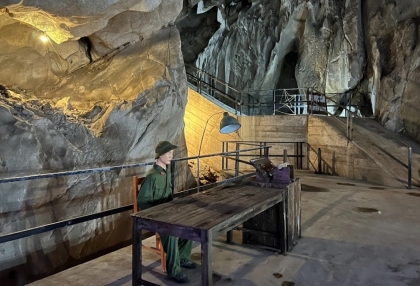
Discover Hang Quan Y (Military Hospital Cave) on Cat Ba Island. Learn about its wartime history, the 3-level concrete bunker, entrance fees, and how to get there.
 Cat Ba - Lan Ha Bay
Cannon Fort on Cat Ba Island is currently closed to visitors, with no official ticket sold. History, location, and what to see instead in 2026.
 Cat Ba - Lan Ha Bay
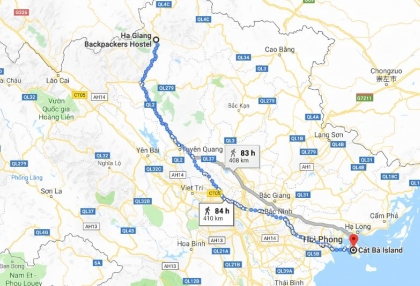
There is no direct bus from Ha Giang to Cat Ba Island. See the Palace Cabin bus via Hanoi, journey time, prices and pickup points for 2026.
 Cat Ba - Lan Ha Bay
There is no direct bus from Sapa to Cat Ba Island. Compare the overnight sleeper and daytime bus routes via Hanoi, with 2026 prices and timing.
 Cat Ba - Lan Ha Bay
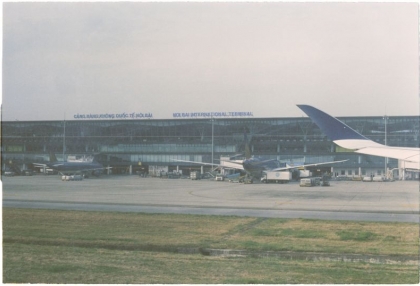
There is no direct bus from Noi Bai Airport to Cat Ba Island. Compare the private car and Hanoi bus-transfer routes, prices and 2026 timing.
