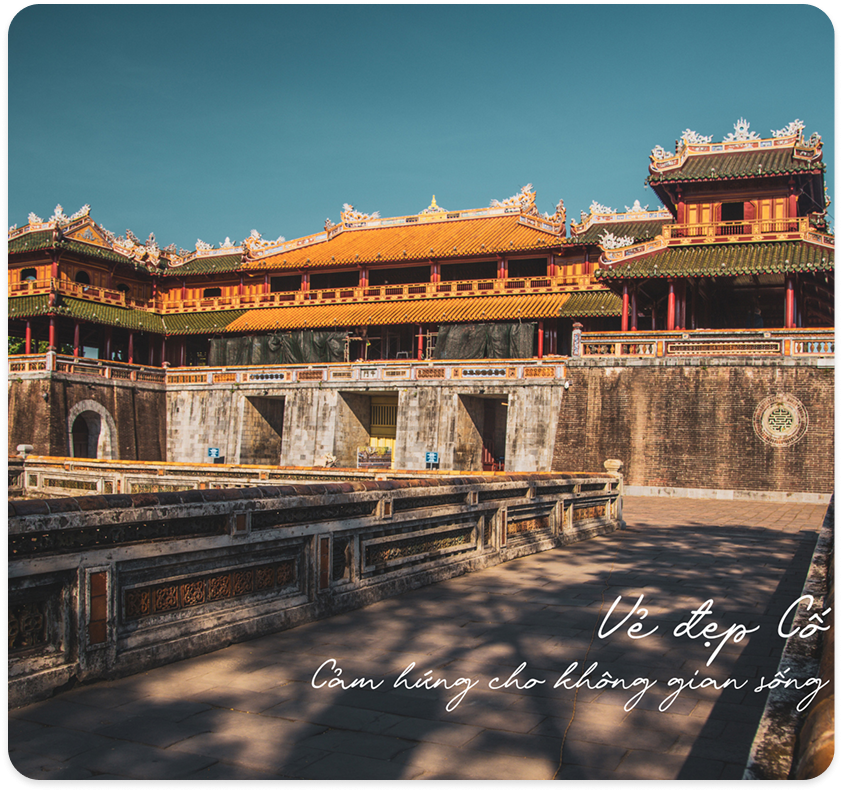

Quick Summary: Bioluminescent plankton in Cat Ba glows blue when a paddle or a fish moves through the water. The dark lagoons of Lan Ha Bay are among the best places in northern Vietnam to see it. Sightings depend on dark, moonless nights rather than one season, and Beka includes a night kayak in one of its Lan Ha Bay tours.
Bioluminescent plankton is a natural light that appears in seawater when the water is disturbed by a paddle stroke or a passing fish. Around Cat Ba Island, night kayak trips reach sheltered lagoons in Lan Ha Bay, where an electric-blue trail follows each paddle stroke across the dark water.
What makes bioluminescent plankton glow?
The glow comes from microscopic plankton, most often the species Noctiluca scintillans, which gives off light when the water around it moves. In calm and dark conditions, a paddle stroke or a hand trailing in the water leaves lines of blue-green sparks that fade within a few seconds.
The glow does not appear on every night, because plankton numbers change with water temperature, currents and wind. A bright night and a dark night can happen in the same week at the same lagoon.
Beka Insight: Beka does not publish a success rate for plankton sightings, since blooms are patchy and short-lived. The team controls where and when guests paddle, choosing dark lagoons away from town lights and nights planned around the lunar calendar.
When is the best time to see bioluminescent plankton in Cat Ba?
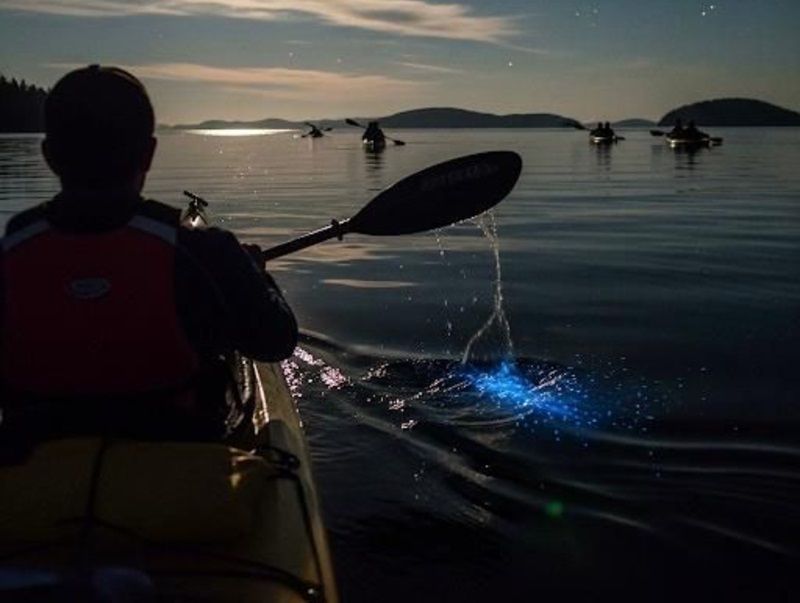
Bioluminescent plankton in Cat Ba can be seen in every season, and the night kayak in Lan Ha Bay runs throughout the year. Summer brings warm water and long evenings on the boat, while spring and autumn bring cooler air and quieter lagoons for the paddle.
Moon phase matters more than the month, because bright moonlight washes out the glow almost completely. New moon nights and the dark nights on either side of it give the strongest contrast. Travelers who want the best chance can check the lunar calendar before choosing a date.
What does the research record?
Vietnam's Research Institute for Marine Fisheries recorded a bloom of Noctiluca scintillans in the waters off Cat Ba and Do Son from late March into April 2012. The bloom lasted more than a month, although it was clearly visible for only two or three days at a time.
A 2018 survey of the waters around Cat Ba Island found the same species at four sampling sites during the dry season. The sea around Cat Ba is about 20 to 22°C in March and April, which shows that the glow is not limited to the summer months.
Sources include the bloom record and survey from the Research Institute for Marine Fisheries, strain temperature ranges from Harrison and colleagues in 2011, and sea temperatures from NOAA satellite records.
Why is Lan Ha Bay darker than Halong Bay at night?
Lan Ha Bay has fewer overnight boats than Halong Bay, which means less light on the water and less boat traffic after dark. Hundreds of cruise ships anchor in Halong Bay each night, and their deck lights make the faint glow of plankton much harder to see.
Darkness after sunset is one of the clearest differences between Halong Bay vs Lan Ha Bay for this activity. The sheltered lagoons of Lan Ha Bay also keep the water still when the open sea is choppy, so the glowing trails stay visible instead of breaking into ripples.
What does a night kayak tour in Lan Ha Bay involve?
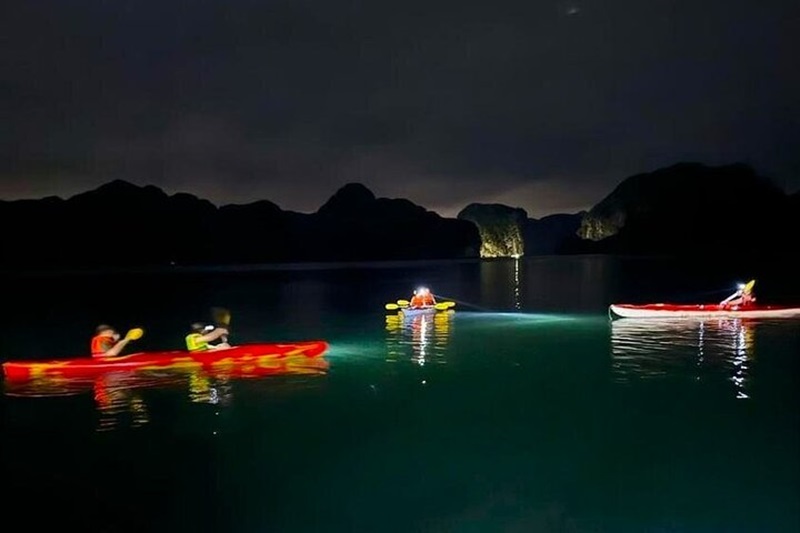
A night kayak tour in Lan Ha Bay usually follows a full day on the water, with kayaking, swimming and a visit to a floating fish farm before sunset. After dinner on the boat, guides lead small groups of kayaks into a sheltered lagoon away from boat and shore lights.
Once the lights are switched off, guests can trail a hand in the water or watch each paddle stroke light up the plankton below the surface. Departure times move slightly with sunset and the tide, since the guides choose the lagoon with the calmest water on that evening.
How can you get the best view of the glow?
- Wear dark, quick-dry clothing and bring a dry bag for your phone, because the viewing time works best with all lights on board switched off, including headlamps and phone flashlights.
- Give your eyes around 15 minutes to adjust to the darkness after the boat lights go off, since a phone screen or flashlight resets your night vision.
- Pair the night paddle with daytime swimming at one of the quieter Cat Ba beaches to see a different side of Lan Ha Bay during the same trip.
Is a sighting guaranteed?
A sighting is never guaranteed, because the glow depends on whether plankton is concentrated in that lagoon on that night. Currents and weather move the plankton within hours, and moon phase, cloud cover and rain all change what visitors see from the kayak.
| Condition | Helps | Hurts |
|---|---|---|
| Moon phase | New moon, or the nights on either side of it | Full moon, around the 15th of the lunar month |
| Cloud and rain | Clear, dry night | Rain, or heavy cloud with town light reflecting off it |
| Sea state | Still water inside a sheltered lagoon | Choppy water and wind breaking up the trails |
| Light around the kayak | All boat lights, headlamps and phone screens off | Any screen or flashlight within a few meters |
| Location | Dark lagoons away from Cat Ba town and the Halong Bay cruise fleet | Near the harbor, or anywhere with shore lighting |
| Eyes | 15 minutes without artificial light before looking | Checking a phone right before the paddle |
Is night kayaking safe for beginners and children?
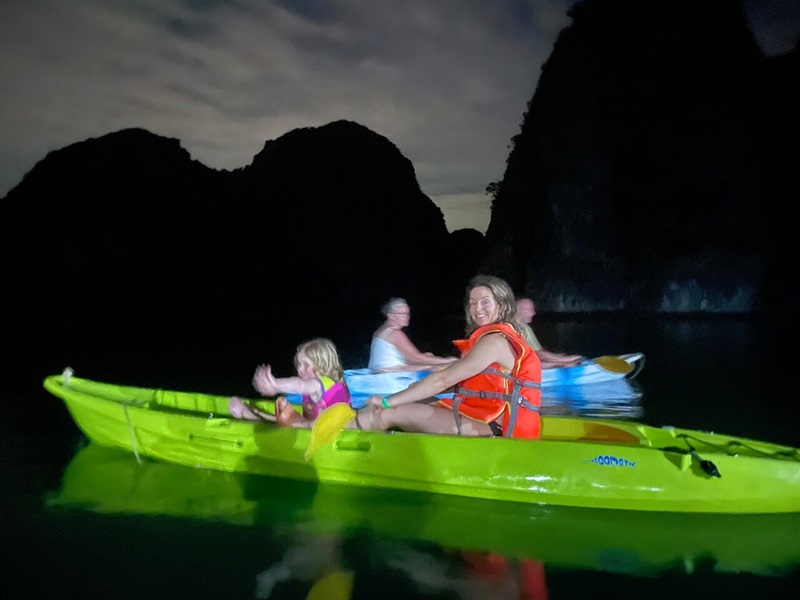
Night kayaking in Lan Ha Bay suits beginners, because the lagoons used for plankton viewing are sheltered and the water is calm. Guides keep the group close together in the dark and paddle a lead kayak with a small light, which keeps everyone oriented without washing out the glow.
Life jackets are standard for every guest, whatever their swimming ability. Families with young children can ask Beka about kayak seating and the minimum age before booking. The paddle takes place after dark, and every guest needs to stay seated in the kayak.
How does the plankton paddle compare with other Cat Ba night activities?
The plankton paddle is the only Cat Ba evening activity that depends on both the moon and the weather. A sunset cruise, a seafood dinner by the harbor and squid fishing can take place on most evenings. The plankton paddle needs a dark night and calm water instead.
| Activity | Moon or weather dependent | Typical timing | Best paired with |
|---|---|---|---|
| Bioluminescent plankton paddle | Yes, needs a dark, moonless night | After dinner, late evening | Sunset cruise |
| Sunset boat cruise | No | Early evening | Plankton paddle |
| Harbor seafood dinner | No | Evening | Either activity above |
| Squid fishing trip | Minimal | Night | Overnight cruise |
Many visitors combine a sunset cruise and the plankton paddle in the same evening. This brings both the golden-hour views and the glow after dark in a single trip on the water.
Which Beka tour includes night kayaking with bioluminescent plankton?
The Lan Ha Bay 2 Days 1 Night Adventure includes the plankton night kayak after dinner on the boat, for a maximum of 15 guests. The group then reaches Viet Hai village at around 20:00 and spends the night in a private jungle bungalow near Cat Ba National Park.
On Day 2, the tour continues with cycling around Viet Hai Village and a stop at Monkey Island. Lunch is served on the boat before the group arrives back at the harbor at around 11:30.
Guests who prefer to sleep on the water can compare this tour with a Lan Ha Bay overnight cruise, where the night is spent in a cabin on the boat. The plankton night kayak is part of the Adventure tour, so the two options suit different travel plans.
Frequently asked questions
Do you need swimming experience to join a plankton kayak tour?
No. You stay in the kayak for the whole paddle, and life jackets are provided, so swimming ability is not a requirement for seeing the glow from the surface. Guides keep the group together and paddle a lead kayak with a low light, so nobody drifts out of sight in the dark lagoon.
Can you photograph the bioluminescence?
It is difficult with a standard phone camera, because the light from the plankton is faint and moves quickly. A long-exposure shot on a proper camera with a tripod can capture a soft trail of light. A phone screen at full brightness also spoils the view for the rest of the group, so most guides suggest enjoying the moment.
Is it safe to swim in bioluminescent water?
Yes, contact with the water is not poisonous, because Noctiluca scintillans does not produce a toxin. A dense bloom can raise ammonia levels and lower oxygen in the water, which affects fish more than people. On the night paddle, guests stay in the kayak, so swimming in the bloom is not part of the activity.
When can you see bioluminescent plankton in Cat Ba?
Bioluminescent plankton in Cat Ba can appear in any month of the year. The best nights are dark and moonless, with clear skies and calm water inside a sheltered lagoon. Rain, bright moonlight and nearby boat lights reduce the glow, so the date within the lunar month matters more than the season.
Which Beka tour includes the plankton night kayak?
The Lan Ha Bay 2 Days 1 Night Adventure includes the plankton night kayak on Day 1, after dinner on the boat. The tour has a maximum of 15 guests and includes kayaking, swimming at Ba Trai Dao Beach and a floating fish farm. The night is spent in a jungle bungalow in Viet Hai village.
Can you go night kayaking in Lan Ha Bay in winter?
Yes, the night kayak runs in winter as long as the weather and sea conditions are safe. Air temperatures after dark are cooler from December to February, so a light jacket and a dry layer are useful. Plankton can still appear in cooler water, as the bloom recorded in March and April 2012 shows.
Planning your visit
Travelers who want to see bioluminescent plankton can plan the trip around a new moon date and keep one or two flexible evenings in Cat Ba in case of rain. To check night kayak availability and dates, contact Beka Travel directly or choose a cat ba boat tour that combines kayaking, swimming and calm lagoons in Lan Ha Bay.