hue.png
Trang chủ Travel Blog

Lan Ha Bay Travel Guide 2026 - Cruises, Kayaking & Beaches

Lan Ha Bay Travel Guide 2026 - Cruises, Kayaking & Beaches

Last updated: 5 September 2026

Quick Summary: Lan Ha Bay is a 70 sq km bay of 366 limestone islands and 139 natural beaches on the southern edge of the Ha Long Bay - Cat Ba Archipelago UNESCO site, reached via Cat Ba Island. Four official sightseeing routes connect its caves, beaches and floating villages, with entrance fees set by Hai Phong Resolution 47/2025/NQ-HDND from January 1, 2026. The most comfortable months are October-November and March-May, with day tours, 2D1N and 3D2N cruises available from Cat Ba.

Lan Ha Bay is one of the most beautiful coastal areas in northern Vietnam, surrounding Cat Ba Island with 366 green limestone islands, 139 natural beaches, calm waters, sea caves and fishing communities. Covering about 70 square kilometers, the bay is best explored from the water, whether by cruise, small boat or kayak. A visit can take you from Cai Beo fishing village and hidden beaches to cave passages and quiet overnight anchorages, with the option to continue inland to Viet Hai village and Cat Ba National Park. This Lan Ha Bay travel guide covers where the bay is, the weather throughout the year, official sightseeing routes, entrance fees, top attractions, things to do and practical itineraries for 2026.

Overview of Lan Ha Bay

Where is Lan Ha Bay?

Lan Ha Bay is located in Hai Phong, northeastern Vietnam, around Cat Ba Island and next to Ha Long Bay. For travelers searching where is Lan Ha Bay in Vietnam, Cat Ba Island is the main gateway, with Beo Pier serving as an important departure point for sightseeing boats and overnight cruises. The bay extends along the eastern and southeastern side of Cat Ba, while Ha Long Bay lies farther to the northeast. A Lan Ha Bay map is useful for orientation, since islands, caves and beaches sit across four separate routes rather than one single sightseeing loop.

Geography and landscape

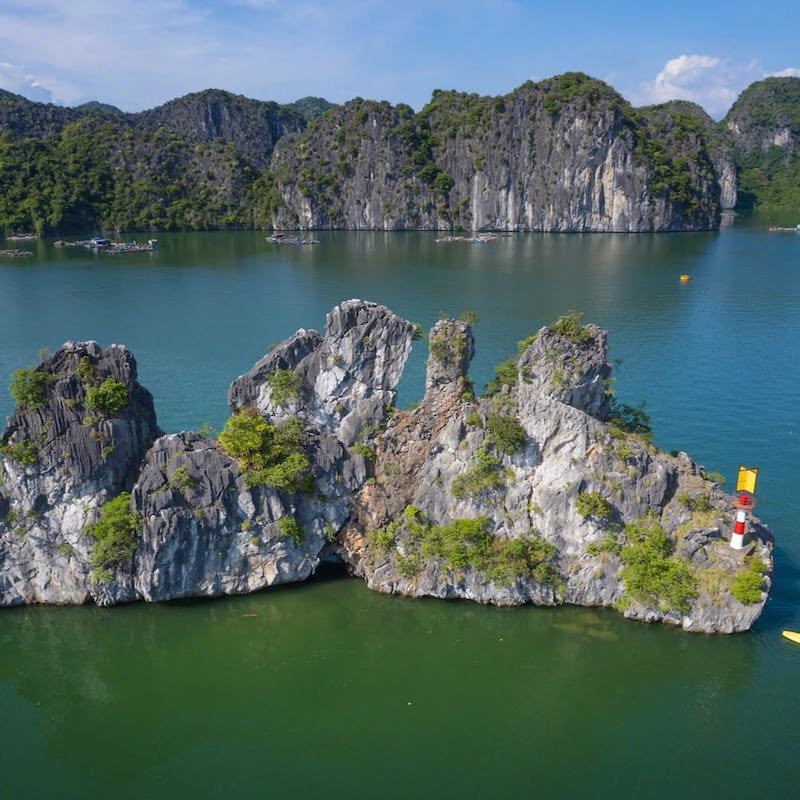
The landscape of Vietnam Lan Ha Bay is shaped by 366 limestone islands covered in green vegetation and surrounded by calm waters. The official tourism document describes the bay as covering about 70 sq km, with 139 natural beaches, many of them small and located beneath limestone cliffs. Sheltered waters around the islands make Lan Ha Bay especially suitable for kayaking, swimming, cave exploration and small-boat trips.

History and formation

People have lived from this bay for thousands of years. Archaeologists have identified 77 sites across Cat Ba Island, the most significant being Cai Beo at the water's edge, first recorded by the French archaeologist Madeleine Colani in 1938. Excavations revealed a fishing settlement occupied around 7,000 years ago, the largest of its kind found in Vietnam, and the site was recognized as a national heritage site in 2009.

UNESCO and international recognition

The Cat Ba Archipelago was recognized by UNESCO as a World Biosphere Reserve on December 2, 2004, and was listed by the Vietnamese Prime Minister as a special national heritage site on December 9, 2013. Lan Ha Bay itself joined the Most Beautiful Bays in the World association in January 2020 and received its certificate on June 6, 2020.

There is an important distinction for anyone searching Lan Ha Bay UNESCO. Lan Ha Bay is not a World Heritage Site under its own name. In 2023 the Cat Ba Archipelago was added to the existing Ha Long Bay property, creating a single site called Ha Long Bay and Cat Ba Archipelago, which now covers 65,650 hectares with a 34,140 hectare buffer zone.

Sightseeing routes and entrance fees

The official Cat Hai tourism document identifies four sightseeing routes connecting Lan Ha Bay with other parts of the Cat Ba Archipelago.

Route Main itinerary
Route 1 Ben Beo pier, fishing village, Monkey Island, Ben Beo pier
Route 2 Ben Beo, fishing village, Monkey Island, Hon Rua, Viet Hai entrance, Quai To, Ba Trai Dao, Dark Cave, Bright Cave, Ben Beo
Route 3 Ben Got, Gia Luan, Tra Bau, Ang Ong Cam, Dark Cave, Bright Cave, Gia Luan, Ben Got
Route 4 Cat Ba tourist center pier, Cat Ong Island, Thien Ung Pagoda, back to the pier

Overnight cruises operate on Routes 1, 2 and 4, with anchorages at Ang Vem, Quai To and Tung Gau, or Tung Trang. Boats on Route 3 stay overnight at Thoi Quyt or Tung Trang. The exact route and number of stops depend on the individual boat and product.

Entrance fees are set by Hai Phong in Resolution 47/2025/NQ-HDND, which applies from January 1, 2026. Most operators include these fees in the tour price.

Fee Adult Child aged 6 and over
Day sightseeing on the Cat Ba bay routes 120,000 VND 60,000 VND
Sightseeing plus 1 night on the bay 400,000 VND 300,000 VND
Sightseeing plus 2 nights on the bay 600,000 VND 500,000 VND
Sightseeing plus 3 nights on the bay 650,000 VND 550,000 VND

Lan Ha Bay weather overview

Best time to visit Lan Ha Bay

The Lan Ha Bay weather changes throughout the year, from cool and quiet winter days to warm summer weather. You can visit in every season, but the best time depends on whether you prefer swimming and kayaking or cruising and sightseeing.

March - May

Spring brings warmer temperatures and generally comfortable conditions for outdoor activities. The bay is well suited to cruising, photography, kayaking and cave visits, while swimming becomes more enjoyable as the weather gets warmer toward May.

June - August

Summer is warm, humid and ideal for swimming, kayaking and relaxing on the beaches. Rainfall is higher during this period, so check the Lan Ha Bay weather forecast before your trip and allow some flexibility in your itinerary.

September - November

Autumn brings milder temperatures and comfortable conditions for exploring the bay. September can still see periods of rain, while October and November are especially pleasant for cruising, kayaking, photography and visiting the caves.

December - February

Weather in Lan Ha Bay turns cooler and quieter from December to February, a good stretch for scenic cruises, sightseeing and cave exploration. Swimming suits fewer of these cooler days, but kayaking stays possible when the sea is calm, and the bay's sheltered waters keep suiting small boats and kayaks through the coldest months.

Month High and low Conditions on the water Best for
January 20C / 12C Cold, often gray, very calm sea Cruising, caves, photography
February 20C / 14C Light drizzle, cliffs partly hidden Scenic boat trips
March 22C / 16C Mist clearing, water still cold Kayaking and caves
April 27C / 20C Warmer, clearer water Kayaking, first swims
May 29C / 22C Hot and bright, local crowds begin Swimming, kayaking
June 32C / 24C Hottest month, afternoon storms possible Beaches and water activities
July 31C / 25C Warm sea, humid, storm season begins Water activities when conditions allow
August 31C / 25C Wettest month, highest storm risk Flexible itineraries
September 31C / 24C Storm risk easing, fewer visitors Cruising, kayaking
October 27C / 21C Dry, clear air, calm sea, warm water One of the most comfortable months
November 26C / 18C Cooler, very clear, sea still pleasant Cruising and outdoor exploration
December 21C / 14C Driest month, cold but bright Cruising and sightseeing

Is Lan Ha Bay worth visiting?

Why Lan Ha Bay is worth visiting

Yes. Lan Ha Bay is worth visiting for travelers who want quiet scenery, natural beaches and an active way to explore the islands. Compared with Ha Long Bay, which carries a large share of northern Vietnam's cruise traffic through a small number of main channels, Lan Ha Bay has fewer boats spread across four routes, two of which barely overlap. On Route 3 through the northern bay, boats can travel for an hour without passing another tourist vessel. The islands also divide the sea into smaller sections, so the scenery changes continually as the boat moves.

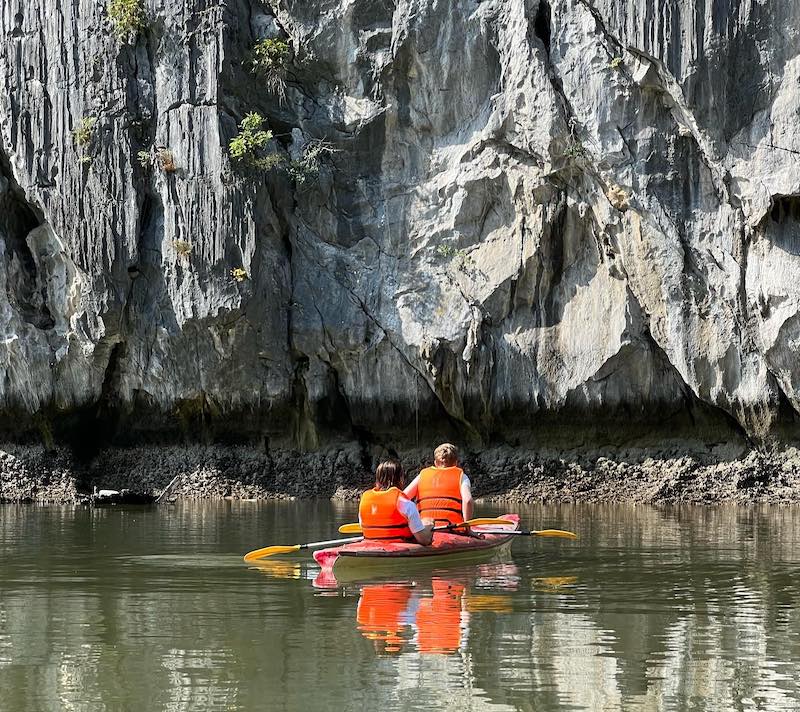
Lan Ha Bay is particularly rewarding when explored by kayak. Kayaking rules are less restrictive than in the neighboring bay, allowing visitors to paddle close to limestone cliffs, pass through small openings and enter water caves independently rather than following a guide in a fixed loop. Swimming from the boat and landing on the beaches are also possible.

The bay has 139 natural beaches at the foot of the cliffs, formed over thousands of years from shell, coral and worn rock. The largest concentration is around Ba Trai Dao, Ba Cat Bang, Monkey Island, Van Boi and the eastern side of the bay toward Dau Be. Some beaches appear only at lower tide, while others can be reached only through a cave passage, so the coastline changes throughout the day. For a direct comparison of the two bays, see our Halong Bay and Lan Ha Bay article.

Top attractions on Lan Ha Bay

Cai Beo floating village

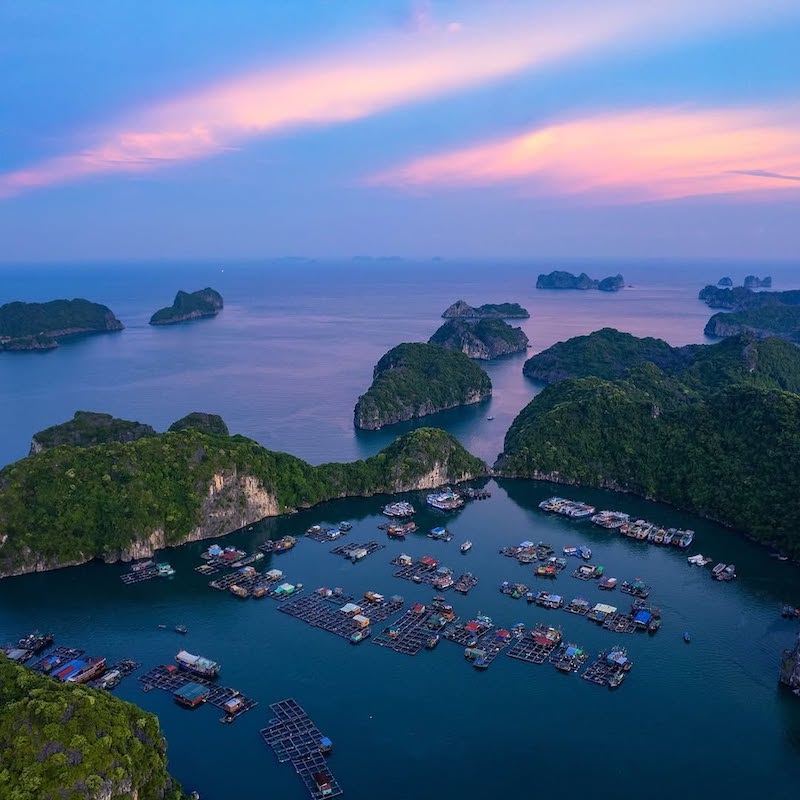
Known locally as the Lan Ha Bay fishing village, Cai Beo is one of Vietnam's oldest floating communities, with around 300 rafts surrounded by calm waters and limestone islands. This Lan Ha Bay floating village dates back to a prehistoric settlement first recorded around 7,000 years ago, and boat visits here show local fishing, cage aquaculture and daily life on the water.

Dark and Bright Cave

Dark and Light Cave in Lan Ha Bay is a scenic karst cave system shaped by seawater and limestone, including Dark Cave, Bright Cave, Bat Cave and Jellyfish Cave. Kayaks and small boats pass through the cave passages, surrounded by cliffs and calm water, on a full route of around 1.5 hours depending on the tide.

Ba Trai Dao beach and Van Boi beach

Swimming at Ba Trai Dao and quiet beaches

Ba Trai Dao is known for its three distinctive limestone peaks, natural sandy beaches and clear, sheltered water. Visitors come here to swim, kayak, relax on the sand and explore nearby coral reefs. Van Boi is another beach area, offering calm conditions for swimming and the scenery of Lan Ha Bay.

Monkey Island

Monkey Island in Lan Ha Bay, also known as Cat Dua Island, features forested hills, rocky coastlines and small beaches. Visitors can swim, relax by the sea, kayak around the island and take in views from higher ground, often as part of day tours that combine sightseeing with beach activities.

Tra Bau Lan Ha Bay

Tra Bau is a peaceful area of islands, inlets and sheltered water in the northeastern part of the Cat Ba Archipelago. Its calm conditions make it suitable for kayaking, swimming and overnight anchoring. After sunset, visitors can enjoy the quiet scenery while cruise boats gather in the bay like a small floating town.

Frog Pond area

Frog Pond area in Lan Ha Bay, locally known as Ao Ech, is a freshwater lake inside Cat Ba National Park, reached on foot from Viet Hai Village. Surrounded by forest and wetland habitats, this frog pond in Lan Ha Bay suits hiking, photography and a closer look at Cat Ba's inland landscape.

Things to do in Lan Ha Bay

Kayaking Lan Ha Bay

Kayaking through caves and hidden lagoons

Kayaking gives one of the closest views of the bay, moving around limestone islands, through narrow channels and into sea caves away from the larger cruise routes. The Dark & Bright Cave area suits this well. Independent travelers can arrange Cat Ba kayak rental, while first-time visitors often prefer a guided Cat Ba kayak tour or one of the Cat Ba kayak adventures offered along the bay.

Swim at secluded beaches

Lan Ha Bay swimming centers on small natural beaches around Ba Trai Dao, Van Boi, Monkey Island, Nam Cat, Thap Nghieng and Ba Cat Bang, each offering a place to relax and enter the water. Since tides can change the size and accessibility of some beaches, follow your boat crew's instructions before swimming.

Try rock climbing over the sea

Cat Ba is known for limestone rock climbing and Deep Water Soloing (DWS), an adventure activity where climbers move along cliffs above the sea before jumping into the water. Because this is a specialist activity, visitors should use proper equipment, choose experienced guides and check that weather and sea conditions are safe.

Visit Viet Hai village

Viet Hai is a traditional farming village of a few hundred people inside Cat Ba National Park, reached by boat and then 3.4 kilometers inland by bicycle or electric cart. From the village, a walk of 45 minutes to 1 hour leads up to Hai Quan Peak at 259 meters, with views over Viet Hai, Lan Ha Bay and the southern part of Ha Long Bay. A similar walk leads across to Ao Ech. Further detail is in our Viet Hai village guide.

Visit a floating village on the bay

Beyond Cai Beo, smaller groups of rafts are spread through the bay, and several of them operate floating restaurants. Grouper, geoduck, mantis shrimp and squid are kept in the pens below the tables. Boats can usually stop alongside, which makes this a practical lunch option on longer itineraries.

Relax on Lan Ha Bay beaches

The natural beaches of Lan Ha Bay are ideal for swimming, sunbathing, kayaking and quiet breaks between sightseeing activities. Many are hidden beneath limestone cliffs or tucked into sheltered coves, creating a peaceful atmosphere away from the main tourist areas.

Snorkeling and diving in Lan Ha Bay

Coral reefs extend from many beaches toward the seabed, which makes Cat Ba snorkeling straightforward at most beach stops. A mask is enough to see reef fish, sea urchins and coral in a meter or two of water, and conditions are best from May to October. Cat Ba scuba diving is more limited, operates through a small number of licensed centers and requires booking in advance. Visitors should ask about visibility, equipment and dive sites before booking.

Itinerary suggestion of Lan Ha Bay

Lan Ha Bay full day boat tour

Lan Ha Bay day tour

A full day trip is a practical choice when time on Cat Ba is limited. Boats leave Ben Beo in the middle of the morning and return around 16:00. A Route 2 day passes Cai Beo, stops at Monkey Island, continues to Ba Trai Dao for swimming, then follows the cave kayak route before returning. Lunch is served on board. Route 1 offers a shorter version. See the Lan Ha Bay day tour.

Lan Ha Bay 2 days 1 night

Lan Ha Bay 2 days 1 night cruise

Day 1: Boarding around midday, cruising past the fishing village, swimming and kayaking through the afternoon, then anchoring at Tra Bau or Ang Ong Cam. Sunset from the anchorage, followed by squid fishing after dark.

Day 2: An early kayak or swim before the day boats arrive, breakfast while the boat is moving, then Viet Hai village or a second cave route before returning around midday.

This format works well for travelers who want the cruise itself to be part of the holiday, because it includes the bay early in the morning and in the evening when the day boats have left. See the Lan Ha Bay 2D1N cruise, or the 2 days 1 night adventure for accommodation in a jungle bungalow rather than on a boat.

Lan Ha Bay 3 days 2 nights

Lan Ha Bay 3 days 2 nights itinerary is better suited to travelers who want to combine several experiences. You can include a longer cruise with Viet Hai Village, Cat Ba National Park, forest trekking, kayaking, beaches and local food instead of spending the whole trip on one route. 3 days 2 nights is the shortest itinerary that reaches the northern bay and still allows time for the forest. See the Lan Ha Bay 3D2N cruise.

Lan Ha Bay travel tips

  • Choose the right itinerary: A full-day tour suits a short visit, while a 2D1N cruise adds kayaking, swimming and an overnight stay. Adding Viet Hai brings in local village life alongside the bay.
  • Check weather and tides: Weather and tides affect which routes and caves are open, including access to Dark Cave. Checking the forecast and confirming sea conditions with the tour operator helps avoid a canceled trip.
  • Pack the essentials: Swimwear, sunscreen, sunglasses, a hat, water shoes and a dry bag cover most day trips. A light jacket helps from November to March.
  • Wear suitable shoes: Comfortable walking shoes matter for Viet Hai and Ao Ech, where forest paths turn slippery in rain.
  • Carry cash and medicine: Cash covers small expenses on the islands. Personal medication and motion-sickness tablets are worth carrying for boat transfers.
  • Protect the environment: Litter, coral collection and disturbing wildlife are avoided across the bay and Cat Ba Island, home to the Cat Ba langur, found only on the island.

How to get to Lan Ha Bay from Hanoi

From Hanoi

The easiest way is to travel from Hanoi to Cat Ba Island first, then continue to the departure pier for Lan Ha Bay. The journey by road and ferry takes about 4 hours, depending on the route and traffic conditions. The Hanoi to Cat Ba transfer guide compares every option for this route.

From Cat Ba Island

From Cat Ba Town, Beo Pier is a convenient gateway to Lan Ha Bay, with sightseeing boats and overnight cruises departing into the bay. Boat type depends on the itinerary and the areas travelers want to explore. The Cat Ba Island travel guide covers the island itself.

FAQ

Is Lan Ha Bay the same as Halong Bay?

No. They are neighboring but separate bays in different provinces, Lan Ha Bay in Hai Phong and Ha Long Bay in Quang Ninh, with their own boats, piers, tickets and regulations. Since 2023 they share one UNESCO listing called Ha Long Bay and Cat Ba Archipelago, but they remain two different trips.

Where is Lan Ha Bay located?

Lan Ha Bay is located in Hai Phong, northeastern Vietnam, around Cat Ba Island and next to Ha Long Bay, about 30 kilometers from central Hai Phong by sea and about 135 kilometers from Hanoi. For most visitors staying in Cat Ba town, Ben Beo pier is the main gateway.

What makes Lan Ha Bay special?

Lan Ha Bay combines limestone islands, calm water, natural beaches, caves and floating communities. The official tourism document records 366 islands and 139 beaches, and kayaking rules here allow visitors to paddle independently rather than in a guided line.

How do I get to Lan Ha Bay from Hanoi?

Travel to Cat Ba Island by road and ferry in about 4 hours, then board at Ben Beo pier. Cat Ba can also be reached by high speed boat from Hai Phong, or by ferry from Tuan Chau near Ha Long.

Can I swim in Lan Ha Bay?

Yes. Swimming is one of the main activities on the bay and is comfortable from roughly late April to early November. Swim at the natural beaches or from the boat with the guide's approval, and not in the shipping channels.

What is the best time to visit Lan Ha Bay?

The warmer months from April to October suit swimming, kayaking and beach activities, although July and August bring heavy rain and tropical storms. October and November offer the most comfortable combination of dry weather, calm sea and warm water. From November to March the weather is cooler and the bay is quieter, which suits cruising, photography and cave exploration rather than swimming.

Lan Ha Bay can be visited as a single day trip or as a cruise of several days, and the right length depends on how much time is available and whether the priority is scenery, water activities or the forest side of Cat Ba Island. Departures and current itineraries are listed at bekatravel.com.

DMCA.com Protection Status